
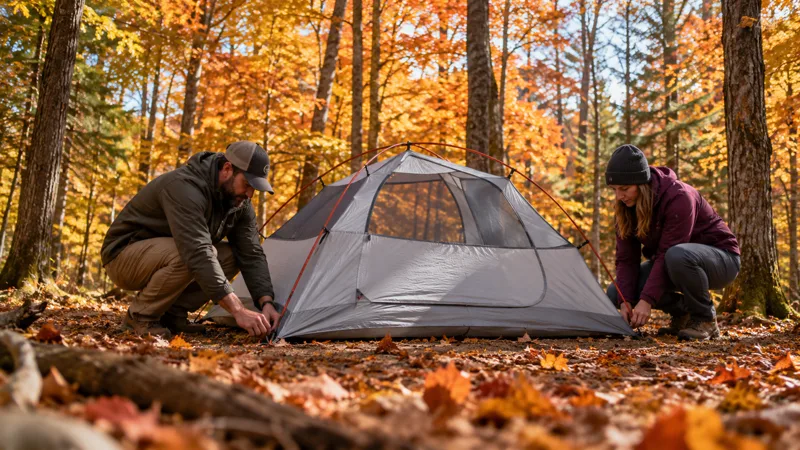
Weekend Survival Basic 101 is recorded for October 23–25, 2026, in West, Michigan. FeralSkills identifies the provider as Arcturus Primitive Skills Institute and describes the session as an introductory survival and bushcraft class. As of October 7, the dates are upcoming. The linked school website was not providing a usable class confirmation when checked, so the directory entry should be treated as a lead requiring direct verification. Do not make a nonrefundable travel purchase based on the directory alone.
What is recorded, and what needs confirmation
- Dates: October 23–25, 2026.
- Recorded location: West, Michigan, USA; this is not a precise meeting address.
- Provider named in the directory: Arcturus Primitive Skills Institute.
- Event source: Weekend Survival Basic 101 on FeralSkills.
- School link supplied by the directory: Arcturus classes.
Obtain a current response from the provider about whether the session is running, how to register, and where to arrive. Ask for the written kit list and the camping, meal, accessibility, and weather arrangements. This listing does not independently establish an instructor roster, admission price, available place, or credential. The following discussion is a separate beginner planning guide built around an introductory weekend. It does not claim to reproduce the October program or describe what previous students experienced.
A beginner weekend should answer beginner questions
The word “basic” can be reassuring, but people arrive with very different starting points. One person may camp regularly and want better decision-making; another may never have slept outside. Tell the provider what you actually know rather than choosing a label that sounds competent. Explain whether you have used your shelter, can manage your own camping equipment, and have concerns about walking or sleeping outdoors. A useful response will help you judge whether the activity fits your needs and what preparation is appropriate.
Choose one main outcome before deciding to attend. You might want to become more organized on day hikes, understand when to stop an outing, or learn how to ask for help with a map. These are concrete aims. “Be ready for anything” is not. Write down how you would recognize improvement afterward. Perhaps you could prepare a trip plan without missing a contact, explain why a piece of equipment belongs in your pack, or identify the point at which you would turn around.
Introductory learning should also make limits visible. Ask what a student is expected to do independently and what remains supervised. If a course demonstrates a specialized skill, ask whether you are observing, practicing with feedback, or being assessed against a stated standard. Those are different experiences. Attendance alone should not be interpreted as medical competence, rescue qualification, or permission to teach others. Clear expectations let you appreciate a weekend for what it actually offers.
Use an ordinary delay as the planning scenario
Instead of imagining an extreme wilderness story, consider a modest outing that runs late. A wrong junction adds distance, a piece of equipment fails, and daylight is shorter than expected. What preparations would make the delay less disruptive? Who knows the route? What information do you have offline? Can you stay comfortable while obtaining help? This scenario puts attention on prevention and communication, which are often more useful beginner goals than dramatic demonstrations of endurance.
Write the scenario in two parts: the decisions made before departure and the choices made when the plan changes. Before departure, you can set a realistic route, check official forecasts, leave an itinerary, and carry appropriate equipment. Once delayed, your options depend on the actual surroundings and available assistance. Do not invent a universal response from a short article. Use the course to ask how instructors assess uncertainty and how a beginner should recognize the need for professional help.
A contact plan should state what the person at home will do if you are overdue. A vague promise to “check in later” leaves both parties guessing. Give them the intended location, expected return, relevant vehicle information, and the appropriate way to contact local emergency services if necessary. Agree on the threshold in advance. This is an administrative task, but it can be practiced at home and improved without waiting for a field class or buying new equipment.
Navigation begins before the compass comes out
The directory lists land navigation among the broad skill categories, but that does not establish the exact October exercises. If navigation matters to your goal, ask what maps or equipment the provider expects. A beginner can prepare by learning how to describe the intended route in ordinary language: starting point, planned destination, notable junctions, and return plan. Keep the description realistic and tied to a published map rather than to memory of an old social-media route.
During any supervised navigation lesson, focus on the information used to make a decision. What does the instructor check before moving? What uncertainty remains? How is a mistaken assumption noticed? Recording these questions is more useful than memorizing a string of directions for one practice site. Ask for help if you do not understand a map symbol or a device setting. Moving confidently while misunderstanding the information is a poor substitute for slowing down and clarifying it.
Digital and paper navigation aids have different conveniences and weaknesses. A phone can hold detailed information but requires power and familiarity; a paper map does not require charging but still needs interpretation and protection. The best beginner choice depends on the activity and instruction, not on loyalty to one format. Ask how the course handles backups. At home, confirm that any approved digital material is actually available offline instead of discovering a missing download when service disappears.
Pack to remain teachable
The National Park Service's Ten Essentials offers a reference for thinking about outdoor preparedness categories, including navigation, insulation, lighting, first aid, food, water, and emergency shelter. Use it as a question framework, not as the school's official kit list. The provider may have requirements tied to its setting and exercises. A sensible pack for this weekend starts with those verified instructions and your personal needs, then removes items whose purpose you cannot explain.
Comfort supports attention. Familiar footwear and clothing are often a better choice than new equipment selected for its appearance. Protect dry clothing, check lights and batteries, and organize frequently used items where they can be reached. Ask whether there are weight or carrying expectations before bringing a large load. If gear will remain near a vehicle or base camp, that affects organization, but the answer must come from the provider rather than an assumption based on the course's introductory label.
Decide what you will do if equipment does not work as expected. A rain layer that wets through, a light with an unreliable switch, or a sleeping arrangement you have never assembled creates a useful pre-departure test. Set up ordinary equipment at home in a safe setting. Follow its manufacturer's instructions and avoid testing beyond its limits. Problems discovered there can be resolved calmly. You do not need to turn preparation into an uncomfortable simulation to learn that a strap is missing.
Ask about October conditions without predicting the weekend
A calendar date does not provide a forecast. Check the exact training location once confirmed, then consult current official weather information near departure. Ask the provider how weather changes the activities, what clothing it recommends, and when cancellations or adjustments are communicated. “West, Michigan” is too broad to select a campsite forecast or driving route confidently. Resolving the venue is therefore a weather-planning step as well as a travel step.
If overnight participation is required, ask about the expected sleep arrangements and backup options before committing. Bring up legitimate medical or accessibility concerns through an appropriate private conversation. Do not feel obliged to accept unnecessary deprivation because the class concerns survival. A well-prepared student can learn unfamiliar methods while still maintaining an agreed safety margin. The provider should explain what challenge belongs to the program and what support is available when conditions or personal needs change.
Schedule the return journey thoughtfully. A class ending on Sunday does not tell you whether you will be rested enough for a long drive. Confirm the actual departure process, consider the distance, and leave flexibility for packing and rest. If attending with another person, agree on driving responsibilities and how either person can request a stop. An introductory outdoor weekend is most useful when the ordinary travel surrounding it receives the same deliberate planning as the field activities.
Feedback is more useful than a dramatic test
When practicing a new skill, ask the instructor to identify one correction rather than collecting many comments at once. Repeat the supervised task with that correction in mind, then describe what changed. This creates a learning loop you can remember later. It also helps distinguish a result you achieved by understanding from a result you achieved accidentally. If you cannot explain why an attempt worked, treat that as a question to investigate rather than a skill already mastered.
Keep a concise daily record of a decision, a piece of evidence, and an unresolved question. For example, note what led the group to select a location for an exercise and what you still need to understand about the choice. Do not copy a complete technical sequence that you cannot interpret. The record should remind you where competent instruction matters. If an activity involves cutting tools, fire, water treatment, or medical topics, remain within the provider's rules and seek qualified guidance for later practice.
Make a useful plan after the class
On returning home, identify one change to your normal outdoor routine. You may write clearer trip information, improve equipment storage, or practice reading an appropriate map with further instruction. Keep the change modest enough to repeat on the next ordinary outing. Buying an entirely new kit can feel productive while leaving the original decision problem untouched. Evaluate purchases by the problem they solve and by your ability to use and maintain them.
Share lessons with companions as questions and agreed habits, not as claims of expertise. “Let's leave a clearer itinerary” invites a practical improvement. “I took a survival class, so follow me” can suppress the very questions that keep a group attentive. Continue to respect local rules, weather warnings, and the limits of your training. A beginner weekend should make you more willing to seek good information, not less willing to acknowledge uncertainty.
The immediate requirement for this October 23–25 listing is direct confirmation from Arcturus, including the status of the session and the precise location. Once those details are established, decide whether the class fits your learning goal and build a comfortable, realistic weekend plan. Keep prevention, communication, and feedback at the center. For other introductory options, browse the events and read Survival Skills, comparing each provider's current instructions before committing.