
Grid-down planning is a map of dependencies
Michigan Grid-Down Survival is listed for October 10, 2026, in West, MI, USA. As of October 7, 2026, the date is upcoming. The original FeralSkills entry describes a one-day intensive and links to Arcturus Primitive Skills Institute through Survival School Michigan. During review, that provider website displayed an account-suspension page, so the listing could not be confirmed there. Do not pay or travel on the assumption that the event is operating as recorded. Obtain direct confirmation of the organizer, meeting point, schedule, and booking status. The editorial guide below concerns household power-outage planning and does not invent a curriculum for the course.
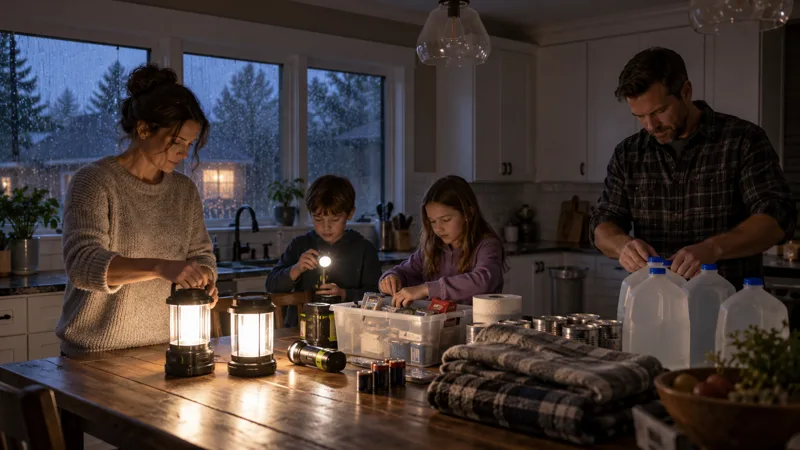
Grid-down is a dramatic phrase for a practical problem: many ordinary functions depend on electricity or connected services. The useful preparation question is what those functions do for your household and what safe alternatives exist. Start with a dependency map rather than a shopping list. A lamp supports seeing, a charged phone supports communication, and a refrigerator supports food storage. Medical equipment, heating, water access, and building entry may introduce other needs. Naming those functions makes it easier to recognize a gap that several impressive gadgets do not actually address.
Trace one ordinary evening
Follow the household from arriving home to going to bed. Which doors, lights, appliances, communication devices, and personal equipment are normally used? Which rely directly on electricity, and which depend on another service that may also be disrupted? Write a brief answer for each function. Do not attempt electrical work or turn off critical systems to make the exercise realistic. A conversation and observation walk can reveal much of the information without creating an unsafe condition. Specialist questions belong with qualified technicians, utilities, landlords, or the relevant equipment supplier.
Include everyone who lives there. A person who prepares meals may notice a dependency another person overlooks. A person who uses accessibility equipment may identify a need that a generic checklist does not contain. Ask about what must remain available, what can be delayed, and what alternate arrangement would be acceptable. Keep those distinctions visible. Planning every inconvenience as though it were equally urgent can bury the essential needs beneath optional comforts. A clear priority list helps the household make responsible choices when time and resources are limited.
Continuity for medical equipment needs professional advice
If a person depends on powered medical equipment, contact the clinician, supplier, and other relevant professionals about an appropriate continuity plan. This article cannot determine runtime, substitute devices, storage conditions for medicines, or when relocation is medically necessary. Record the actual advice and contact arrangements in a protected, accessible format. Confirm who assists the person and what happens if that helper is unavailable. A generic portable battery advertisement is not a medical plan, even when its description sounds reassuring.
Consider the timing of assistance. Transport or temporary accommodation may become harder to arrange after a widespread disruption. Discuss options early through appropriate local services and professional guidance. Avoid assuming that a nearby building, relative, or shelter has the capability required. Ask directly and confirm current arrangements. Keep private health details limited to the people who need them. The planning goal is reliable continuity for an individual, not the largest possible collection of equipment. A precise written arrangement can address questions that purchasing alone leaves unanswered.
Lighting should be understandable and reachable
Inventory lights already owned and check them according to manufacturer instructions. Determine where they are stored, whether compatible batteries or charging methods are available, and who can operate them. Do not count an item that cannot be found without a powered room light. Place appropriate equipment where the people who need it can reach it, while following product safety instructions. Consider readability and controls as well as brightness. A complicated mode sequence can make an otherwise capable device frustrating for the intended user.
Try a nonhazardous access exercise during ordinary conditions: ask another household member to locate a light and explain how it works. Do not darken a space in a way that creates a fall hazard. Notice whether storage, labeling, or operation causes confusion and make a simple correction. The exercise tests organization rather than endurance. Avoid using open flames as a casual replacement for an inspected lighting plan. Seek official fire-safety advice and choose arrangements suited to the household, especially where children, pets, or mobility limitations affect use.
Communication includes the information, not only the device
A charged phone is useful, but the plan also needs current contact details and a clear message. Write down who should be informed, what information they need, and what fallback exists if the primary channel is unavailable. Keep relevant utility reporting information accessible. Use official outage announcements for status rather than interpreting rumors as restoration estimates. If a device depends on a charger, cable, or compatible power source, inspect those connections as part of the system. Owning several phones does not help if they all rely on the same missing accessory.
Discuss communication with people outside the home who may worry about you or need assistance. Agree on a reasonable update method and explain what a delay means. Avoid a plan requiring every person to make repeated voice calls without considering availability. For radios or specialist communication equipment, obtain appropriate instruction and follow applicable requirements before transmitting. A device purchase does not establish operating knowledge or authorization. The useful outcome is a communication procedure that ordinary participants can explain and follow under the circumstances for which it was designed.
Backup power needs a qualified safety plan
Portable generators and other fuel-burning devices can create serious carbon monoxide hazards. The Centers for Disease Control and Prevention describes carbon monoxide as an odorless, colorless gas and gives specific generator safety guidance. Follow the complete current instructions and manufacturer requirements. Never operate a generator indoors or in a garage, even with doors or windows open; the CDC directs outdoor operation more than twenty feet from doors, windows, and vents. Use appropriate carbon monoxide detection and obtain qualified assistance for any electrical connection or installation. This article does not provide wiring instructions.
Evaluate power equipment through actual requirements rather than a broad promise to run a house. Ask a qualified professional which loads and connections are suitable and how the equipment is maintained safely. Follow rules for fuel storage and operation from authoritative sources and the manufacturer. Do not improvise a connection that can endanger workers, neighbors, or the household. A backup arrangement is only useful when its limits are understood. If the equipment cannot safely support an essential need, planning must identify another appropriate arrangement instead of relying on optimistic expectations.
Food storage decisions need official guidance
An outage may affect refrigeration and food preparation. Obtain current food-safety guidance from authoritative public-health sources for the actual situation. Do not rely solely on smell, appearance, or an anecdote about what someone ate during a previous outage. This article does not prescribe retention times or temperatures. Keep the information needed for responsible decisions available and follow official directions. If the household includes dietary restrictions or medical needs, discuss suitable supplies and alternatives with the appropriate professional before a disruption complicates access.
For ordinary shelf-stable supplies, choose foods the household already uses and can prepare safely under its planned arrangements. Check opening tools, storage requirements, and package usability. Rotate supplies through normal life so unfamiliar food does not accumulate. Label the inventory clearly enough that another person can understand it. A small, maintained system may be more practical than an extensive stock that nobody monitors. The goal is dependable access to suitable food, not a photo of filled shelves or a collection of products chosen primarily for their emergency marketing.
Water access depends on the building's system
Ask how your property receives water and whether any part depends on powered equipment. Obtain information through the water provider, landlord, or qualified professional as appropriate. Keep current advisory channels available. If a water notice occurs, follow instructions for that specific notice rather than applying a remembered response from a different problem. A treatment method suitable for one concern may not address another. This guide does not supply a water-treatment procedure or assess a private system from its general description.
Plan storage through relevant emergency guidance and product instructions. Consider drinking needs, other household uses, accessible containers, and maintenance. Keep categories clear so nobody guesses which supply is intended for which purpose. If an individual cannot lift or open the planned container, the arrangement needs adjustment. Practical accessibility is part of the system, not an optional detail. Ask more than one person to explain where water is stored and what the instructions say. Confusion found during an ordinary review can usually be corrected much more easily than confusion during a disruption.
Decide when remaining home is no longer the appropriate plan
A household plan should include circumstances requiring outside advice or another location, with thresholds determined by relevant professional and official guidance. Do not frame relocation as a failure of preparedness. The safe choice may involve moving earlier, particularly where essential equipment, health, or building conditions are involved. Identify possible destinations and confirm their actual capability. A relative's willingness to help is valuable, but it does not guarantee their home has the required access or services. Make the arrangement specific enough to use.
Include transport, pets, documents, and necessary personal supplies in that conversation. Respect official evacuation or access instructions. Keep essential items organized without creating an obstacle in an exit path. Assign ordinary responsibilities, but make the plan flexible if the usual person is absent. A household that can explain who does what is better prepared than one that assumes someone will handle everything. Practice locating information and items calmly; do not manufacture an outage or unsafe indoor conditions to test the arrangement.
A useful course should improve a real household decision
If the October Michigan event is directly confirmed, ask the provider which topics are taught, how safety is supervised, and what participants should prepare. The phrase one-day intensive should not be treated as a promise of comprehensive independence. Compare the course with the needs identified in your dependency map. It may be an appropriate introduction, while technical installation, medical continuity, or food-safety questions still require other expertise. Keep those roles distinct when evaluating the learning.
The original listing remains October 10 in West, Michigan, but the unavailable provider site is a reason to obtain direct confirmation before acting on it. For household planning, begin with functions, safe alternatives, current information, and agreed responsibilities. Review the map after a real outage or a calm discussion and correct specific gaps. Grid-down preparedness becomes credible when people understand what their equipment actually supports and where professional help is necessary. That is a stronger result than relying on a dramatic phrase or a device that promises more than the household has verified.