
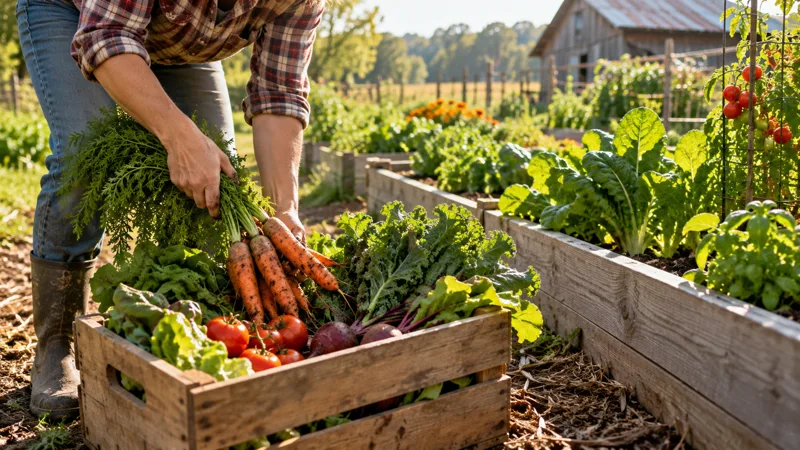
The 3rd Annual Farm & Homestead Days is listed for October 24, 2026, in Millington, Tennessee. Lightfoot Farm Market's own event page confirms the date and advertises a main event window of 9 a.m. to 2 p.m.; its published schedule also shows a later community gathering. As of October 7, the event is upcoming. Confirm the current schedule, admission arrangements, parking, and any separate workshop or guest-pass requirements with the organizer before planning the day.
A day at Lightfoot Farm Market
- Date: October 24, 2026.
- Location: Millington, TN, USA.
- Organizer site: Lightfoot Farm Market, which lists 7422 Ward Road on its main page.
- Recorded source: PrepperShowsUSA.
- Primary event information: Lightfoot Farm & Homestead Days and Lightfoot Farm Market.
The organizer advertises demonstrations, learning sessions, workshops, farm equipment and livestock displays, a handmade market, and family activities. It publishes a session schedule with overlapping choices. Check that schedule directly instead of assuming every topic can be attended in one visit. This independent guide focuses on turning a homestead event into a realistic household project plan. It does not promise a particular vendor, product, speaker, or hands-on place beyond the organizer's current information.
Begin with a household need, not an acreage dream
A homestead gathering can inspire projects much larger than the space, time, or money available at home. Start with an ordinary need: a pantry that is difficult to track, food waste from overbuying, a garden task that repeatedly fails, or an interest in understanding local producers. Those needs can be investigated during a single day without committing to land, livestock, or costly machinery. A clear problem helps you choose sessions and ask questions that produce useful answers.
Write your current situation in a few sentences before attending. Include what you already have, what frustrates you, and what a manageable improvement would look like. Someone living in an apartment may want a better food-storage routine; somebody with a yard may want help evaluating a small garden project. Neither situation is less legitimate than operating a farm. Avoid measuring your preparedness by how closely it resembles a demonstration designed for a different scale of property or household.
Pick two questions that would change a decision. “How much regular attention does this project require?” is often more useful than “What equipment should I buy?” Another good question is “What tends to surprise a beginner?” These invite discussion of maintenance, timing, and failure points. Keep notes on the answer and the conditions attached to it. A project suited to one soil, building, family schedule, or market may not be suitable for another.
Use the schedule to choose, not to rush
Review the organizer's current schedule and identify your highest-priority session before leaving home. Overlapping activities mean you may need to choose between a talk, workshop, or demonstration. Ask whether any activity requires advance signup and whether spaces are limited. Leave time for walking, food, toilets, and conversations. A schedule with no gaps can turn a friendly educational day into a race in which you arrive late and miss the explanation that makes a demonstration meaningful.
If attending with another adult, you can pursue different interests and compare notes afterward. Agree on meeting points and responsibility for children rather than assuming the split will organize itself. Do not treat a brief secondhand summary as equivalent to instruction, especially for a safety-sensitive activity. A companion's note can identify a useful reference or follow-up contact; it should not be used to teach you an unfamiliar procedure without qualified guidance.
For demonstrations involving machinery, livestock, hot work, or sharp tools, stay within the organizer's boundaries and follow staff instructions. Ask where observers should stand and whether any participation is permitted. A clear view is not worth crossing a working area or distracting the demonstrator. Children need an adult who is paying attention to their location, not merely to the performance. Plan a quieter alternative if a child is uncomfortable around animals, noise, or crowds.
Evaluate a project through its weekly chores
Ask about the ordinary week after the exciting first day. Who cleans the equipment? How are supplies replenished? What happens when the main caretaker is away? A new household project becomes dependable only when those duties have an owner and a realistic schedule. This is particularly important for activities involving living plants or animals. Admiring a demonstration is easy; providing consistent care through holidays, bad weather, and busy periods requires an arrangement that fits the household.
Create a simple project note with four items: intended benefit, recurring work, starting cost, and reason to postpone. The last item is useful because enthusiasm can obscure a missing prerequisite. You might postpone until you have storage space, another person's agreement, professional advice, or a reliable source of supplies. That is a decision, not a disappointment. A homestead day can be successful if it helps you avoid a project that would become an expensive or neglected burden.
Ask which parts of a demonstration are essential and which are conveniences at the demonstrator's scale. A larger producer may use equipment that saves labor across many batches but makes little sense for occasional household use. Conversely, a low-cost approach may require more time than you can offer. Compare options by total work and ongoing upkeep, not purchase price alone. The best question is whether the method fits your actual routine, not whether it looks traditional or technologically impressive.
Keep food preservation grounded in tested guidance
If the event inspires food-storage or preservation interests, seek verified instructions from appropriate food-safety and extension sources. Do not adapt a displayed recipe or brief conversation into an improvised canning process. The National Center for Home Food Preservation is a useful place to begin investigating tested home-preservation guidance. Ask the demonstrator which specific tested reference supports the method and which equipment or ingredient details must remain unchanged.
Separate learning about an ingredient from deciding how it can safely be stored. A food that is enjoyable fresh may require a particular preservation method, refrigeration, or professional guidance. A homemade label does not establish shelf stability. When purchasing food, ask the producer about storage, ingredients, allergens, and the intended period of use. Follow the instructions provided by a reliable producer and seek clarification if the answer is vague. Do not use taste as a test for safety.
For an emergency-food connection, think about how your household already eats. A dependable pantry can begin with familiar foods, a rotation habit, and a list that is easy to maintain. Buying large quantities of unfamiliar staples can create waste and preparation demands that were not considered. A small test purchase, used in ordinary meals according to safe instructions, can reveal whether the food fits. Record the result before expanding the quantity.
Consider refrigeration as part of the system
A farm-market visit can include perishable purchases, so plan how they will get home and follow safe storage guidance. An insulated container is useful only when used appropriately and paired with a sound plan for temperature control. Ask vendors about handling requirements before buying, especially if you expect to stay for additional activities. Do not let an afternoon in the market become an unplanned storage period for food that needs refrigeration. Choosing not to buy is a reasonable option.
The CDC emergency food-safety guidance explains how outages affect refrigerated and frozen food and why tasting is not a way to determine safety. Use its current instructions if the household loses power, rather than inventing a workaround from weather or appearance. In advance, consider appliance thermometers, a written outage note, and ordinary foods that do not depend on refrigeration. Keep this planning distinct from the event's demonstrations, which may not address emergency storage.
Livestock and garden interests need local follow-up
If a display encourages you to consider animals, ask questions about routine care, veterinary support, fencing, backup caretakers, and the applicable local requirements. Do not buy an animal or equipment solely because the demonstration made the work look straightforward. Consult qualified local advisers and the responsible authorities before making a commitment. The purpose of an introductory visit can be to identify the right questions and contacts, leaving the purchase decision until you understand the obligations.
For gardening, bring an honest description of space and constraints. Describe sunlight, access to water, who maintains the plot, and whether the site is rented or owned. Ask how to obtain locally appropriate advice and whether soil testing or another assessment would help. Avoid importing a successful display directly into your own setting. A small, permitted trial with a clear maintenance plan can teach more than expanding quickly based on one day's inspiration.
Medicinal or herbal topics deserve an additional boundary. A historical discussion, household craft, or vendor claim should not be interpreted as personalized medical advice. Ask a qualified clinician or pharmacist about medication interactions and health concerns, and do not substitute a preparation for prescribed treatment. You can appreciate the cultural or botanical discussion without consuming or administering a product. Keep ingredient information and producer details for any purchase, especially when allergens or vulnerable household members are involved.
Buy for a defined next step
Set a spending limit before browsing handmade goods and tools. For each possible purchase, ask what job it serves, whether you have a place to store it, and whether you can maintain it. A tool that requires another tool, special supplies, or training has a larger practical cost than its price tag. If you cannot answer those questions, take the vendor's information and wait. A thoughtful conversation can be the valuable result of the visit even when no money changes hands.
Check return policies, warranties, and contact details for substantial purchases. Do not assume a temporary market booth will offer the same after-sale support as a permanent retailer. Keep receipts and product instructions together. If a demonstration depends on a consumable, ask where it can be obtained reliably and how it should be stored. These mundane questions are central to preparedness because a system that cannot be maintained becomes less useful when you need it most.
Leave with one project and one reference
After October 24, review the notes before buying anything else. Choose one project you can complete or evaluate on a realistic timetable. Name the intended benefit, the person responsible, the qualified reference you will use, and the point at which you will review it. A pantry inventory or a consultation with extension can be as useful as a new craft. Keep other ideas on a later list so they do not compete with the selected task.
Confirm Lightfoot Farm Market's current schedule and admission details, prepare for an outdoor community day, and choose questions tied to your household's real needs. The lasting value of Farm & Homestead Days can be a clearer understanding of work, limits, and local resources. Build from that understanding at an achievable scale. Browse other learning events and Survival Skills for further ideas, checking safety-sensitive practices with qualified sources before putting them into use.