
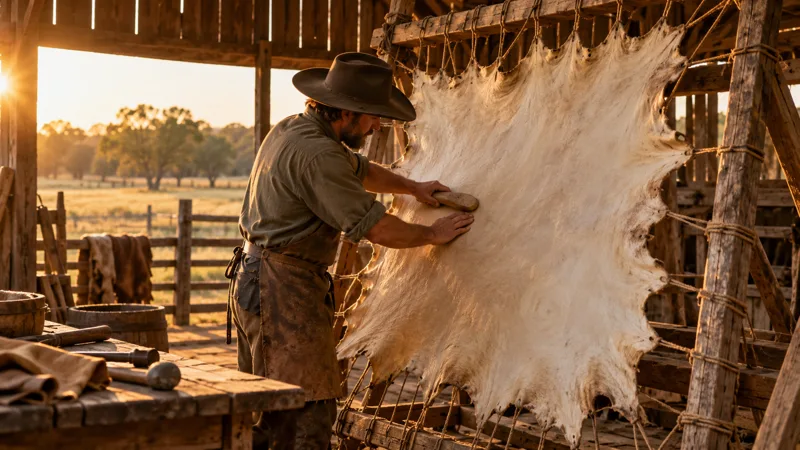
Hide Tanning in Chico: approach a material craft with a useful learning record
Hide Tanning was listed for September 25–27, 2026, in Chico, TX, USA. Those dates are now past, so this is an archived listing and an independent guide to preparing for material craft instruction. The original FeralSkills entry points to Primitive Wilderness Survival. Consult the school for future offerings, current material requirements, and exact venue instructions. This article does not supply a tanning recipe or claim that a particular method, instructor, or finished product was included in the archived event.
Hide work can be interesting because it turns an unfamiliar material into something with a practical purpose. A beginner may focus on the finished object and overlook the decisions behind it: sourcing, condition, tools, supervision, handling, and intended use. A productive course helps you understand those questions instead of simply copying a sequence. The best preparation is a clear learning goal and an honest record of what you observe. That approach remains useful even when a sample does not turn out as expected.
Define what you want the material to do
Describe the purpose of a possible project before asking which process is best. A display sample, a small craft item, and material intended for repeated outdoor use have different expectations. Ask an instructor how the intended use affects the choice of material and method. Do not assume one result is suitable for every purpose. A finished piece can look attractive while failing to meet the requirements of an imagined project. Learning to identify that distinction is more useful than collecting impressive photographs.
Keep the goal modest for an introductory experience. You may aim to understand the vocabulary, recognize the stages an instructor discusses, and know what further practice would require. Avoid promising yourself a particular finished item unless the organizer explicitly confirms that outcome. A course may involve shared demonstrations, variable materials, or processes whose completion extends beyond the session. Ask about those details directly. Clear expectations allow you to appreciate the learning without judging the experience by an unsupported assumption.
Treat sourcing as part of the craft
Ask where teaching materials come from and how their suitability is established. Do not bring an unknown animal material to a future class without the organizer's explicit instructions. Ownership, wildlife rules, transport, and health considerations can vary; consult responsible authorities and the organizer for the specific situation. A craft title does not grant permission to obtain material in any manner. Record the relevant guidance rather than relying on a story about what another person did elsewhere.
Keep provenance with the sample when appropriate. A simple label can identify the source provided by the instructor, the date, and the process discussed. Do not invent certainty about a material you cannot verify. Good labeling helps later questions about condition or handling and prevents samples from becoming an anonymous pile in a workshop. The label should be useful without exposing private information about someone else's property or arrangements. Ask what the organizer considers appropriate to retain or share.
Handling instruction belongs before the practical task
Animal products can require specific health precautions. The CDC notes that some activities involving animals or animal products can increase anthrax exposure risk, although the disease is rare. That is a reason to seek appropriate handling guidance, not a reason to improvise treatment or a disinfection procedure from a general article. Discuss materials, personal protection, workspace, and any health concerns with qualified instruction and relevant public health guidance before beginning. Follow the organizer's actual safety requirements.
Keep craft work separate from food preparation and other household activities according to the applicable guidance for the materials. Ask what must be cleaned, stored, or disposed of and who is responsible. Do not guess that a household product is suitable because it smells strong or is commonly described as a cleaner. If an exposure concern arises, seek appropriate professional assistance. This article intentionally provides no chemical formula or hazardous processing sequence. The educational objective is understanding the supervised method and its limits.
Observe the instructor's decision points
During a demonstration, note where the instructor pauses to evaluate the material. Ask what they are looking for and how they decide the next step is appropriate. A list of actions alone may not capture the reasoning. If you later repeat the sequence with different material, the conditions may differ. Record the evidence discussed rather than translating every pause into a fixed time rule. Ask which parts of the demonstration are specific to the sample and which principles apply more broadly.
Leave uncertainty visible in your notebook. If you do not understand why a change occurred, write the question and ask for clarification. Do not turn an uncertain note into an instruction for another beginner. Photographing a demonstration, if permitted, can help memory but does not capture every safety or judgment detail. Include the relevant explanation beside the image. A useful record says what was observed and what still requires supervised instruction, rather than implying the learner can now teach the whole process.
Choose tools according to the supervised task
Follow the organizer's current requirements rather than arriving with a collection of sharp or specialized tools selected from unrelated videos. Ask what is provided, what may be brought, and what the instructor expects you to know before using it. Read manufacturer guidance where applicable and raise questions about unfamiliar equipment. A tool's appearance does not establish its suitability. A product promoted for ancestral skills may still require the same careful attention to handling and maintenance as any other workshop item.
Organize tools so their condition and location are clear to everyone using the workspace. Report damage or a missing component instead of returning it quietly. Shared work areas need deliberate handoffs, particularly when participants have different experience. Ask before using another person's equipment and respect their instructions. The goal is a controlled learning environment, not a display of how quickly you can work. A careful pause to understand the task is useful progress, even if someone else has already moved on.
Compare samples by purpose rather than appearance alone
If the instructor provides examples, ask how they should be evaluated and which characteristics matter for their intended use. Do not assume the prettiest sample is the most suitable one. A learning piece may show a deliberate contrast or an imperfect result that reveals something important. Record the comparison in plain language. Distinguish the instructor's explanation from your own preference. This helps you understand why a material decision was made without pretending that personal taste establishes technical quality.
When your own sample differs, describe the observation accurately. Avoid announcing failure before understanding what happened, but avoid declaring success only because the piece looks complete. Ask which factors could explain the difference and what further evidence would be needed. Do not change several variables at once in an unsupervised experiment. A focused question is more likely to produce useful instruction than a broad request for a secret trick that guarantees a result regardless of material or conditions.
Respect the cultural context without claiming authenticity
Hide work appears in many traditions and contemporary crafts. A short class does not make a learner an authority on those histories. Ask the instructor how they describe the method and where further reliable learning can be found. Avoid labeling your first sample as an authentic representation of a culture merely because a tool or material seems old. Credit the specific instruction you received and distinguish your own adaptation from a documented tradition. That precision respects both the craft and the people connected to it.
When sharing photographs or notes, seek permission and avoid reproducing course materials wholesale. An original description of your learning experience should not imply endorsement by the school or another community. Do not claim personal attendance if you did not attend. This archived guide makes no such claim. Its role is to help a prospective learner prepare thoughtful questions and a responsible practice plan. Interest in history can deepen the experience without turning limited knowledge into a broad statement of expertise.
Plan storage and cleanup before taking a sample home
Ask the instructor what condition the material will be in at the end of the session and what current instructions apply to transport, storage, maintenance, or disposal. Do not assume that a partly processed sample can be treated like a finished consumer product. Keep the instructions with it. If the required arrangements cannot be provided at home, tell the organizer before committing to a take home project. It may be more appropriate to observe or choose another learning format.
Review the workspace responsibilities as well. Who supplies appropriate cleaning materials, where do tools belong, and how is unfinished work labeled? Clear answers prevent the end of a busy session from becoming a hurried improvisation. At home, keep the project within the agreed instructions and away from unintended users such as children or pets. If uncertainty arises, contact the instructor or an appropriate professional rather than inventing a handling method based on an incomplete memory.
Leave with a question you can pursue responsibly
A useful outcome is one specific question for further instruction. Perhaps you want to understand how a material is selected, how a sample is evaluated, or which maintenance requirements follow from an intended use. Write the question with the context of the demonstration. That makes a follow up conversation easier. Do not mistake exposure to a process for independent competence in all its variations. Craft learning develops through appropriate instruction, accurate observation, and practice suited to the material and setting.
The past September Chico listing can still introduce a school and a subject worth exploring. Future dates and details should be verified directly. The continuing value of hide tanning study lies in understanding materials, documenting decisions, and respecting handling requirements. A careful learning sample does not need to become a dramatic survival claim. It can simply be evidence that you have begun to ask better questions and know which parts of the work still require qualified guidance.
Sources
See the archived Hide Tanning listing, Primitive Wilderness Survival programs, and CDC anthrax prevention information. Browse future events for current offerings.