
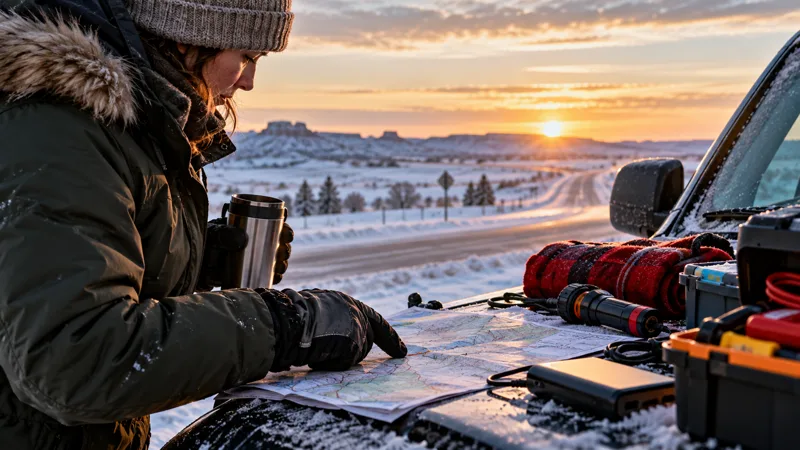
South Dakota Winter Weather Preparedness Day is recorded for October 28, 2026. The National Weather Service's current awareness calendar and Sioux Falls winter-preparedness page support that date. As of October 7, the day is upcoming. It offers a focused opportunity to review travel decisions before the winter season: not just whether the vehicle contains supplies, but whether a proposed journey has reliable information, an acceptable cancellation option, and a clear communication plan.
The date to use for this listing
The location is South Dakota, USA, and the category is Weather Safety and Preparedness. Verify the date using the NWS national awareness calendar and Sioux Falls winter preparedness resources. Some older regional material refers to October 22. That older date should not replace the supported October 28, 2026 date in this listing. Neither source establishes a statewide in-person meeting address, registration fee, instructor, or certificate. This is an awareness day. Any local class or public presentation needs its own current announcement. The NWS winter safety hub remains the general original resource link, while the practical travel guide below is independent editorial advice.
Ask whether the trip is necessary
Begin a travel plan by stating why the trip is needed and what happens if it is delayed. That question may produce more useful preparation than immediately adding equipment to the vehicle. An appointment might be rescheduled, a work task handled remotely, or supplies obtained before deteriorating conditions arrive. Other travel involves urgent needs and requires direct coordination with the relevant provider or emergency services. Avoid calling every routine obligation essential simply because changing it is inconvenient. Discuss alternatives with employers, schools, and care providers in advance. A driver should not have to negotiate the cancellation policy while already on a difficult road. Record the contact method and the earliest time a decision can be made. The goal is to preserve safe options before the schedule, weather, and distance create pressure to continue.
No new snowfall does not mean no winter hazard
The NWS ground-blizzard explanation describes wind lifting previously fallen snow and reducing visibility. This distinction matters because a person looking only for fresh precipitation can miss an important travel concern. A forecast review should include wind and official warnings, not only the expected snowfall amount. Conditions outside a sheltered building may also differ from those on an exposed road. Do not treat your driveway as a complete observation of a long route. The useful lesson is conservative information gathering: examine conditions for the journey, consult transportation notices, and be prepared to postpone. This article does not teach readers to diagnose a blizzard from a window or to drive through one. Current official instructions and the actual route information should guide the decision.
Make the route understandable to another person
Before an important journey, tell a trusted contact where you are going, the intended route, and the expected arrival arrangement. Be specific enough that a missed check-in can be interpreted sensibly. Include planned stops when they affect timing, and agree on what the contact should do if communication is overdue. A generic message saying that you are heading out leaves many unanswered questions. Save essential numbers outside a single app and keep an appropriate map or offline route information available. Do not assume a navigation service's shortcut is suitable for current conditions; verify road status and local restrictions through official channels. If plans change, update the contact when it is safe to do so. Communication while driving must follow applicable rules and should never distract the driver from the road.
Schedule the vehicle check before buying accessories
Have unresolved maintenance problems assessed by a competent mechanic. Review tires, lights, visibility equipment, battery condition, heating, and defrosting with the vehicle's requirements in mind. Follow the manual for compatible accessories and safe operation. A powerful engine or all-wheel-drive system cannot guarantee stopping distance or clear vision. Ask the mechanic to explain warning signs and service priorities if you are unfamiliar with the vehicle. Make sure every driver knows the ordinary controls and where the manual is stored. Maintenance should not be a last-minute attempt to make an unsuitable journey feel acceptable. It supports routine use when travel is otherwise appropriate. The campaign day can serve as a deadline to arrange service, document unresolved issues, and decide whether a vehicle should remain unused until a fault has been repaired.
Pack for waiting, not for a heroic rescue
A practical vehicle kit should help occupants during an unexpected delay. Think about dry clothing, suitable insulation, usable lighting, personal medications, communication support, and food and water that remain appropriate to storage conditions. Include the needs of children, pets, or passengers with disabilities. Place critical items where occupants can reach them without relying on a blocked cargo area. Follow manufacturer instructions for batteries and other stored equipment. Check supplies periodically rather than assuming a tote remains ready because it has a lid. Recovery tools need compatibility and training; a tow strap or shovel should not encourage an untrained person to attempt a hazardous roadside operation. Contact appropriate roadside assistance or emergency services and follow their directions. Equipment provides support while help or a safe alternative is arranged; it cannot guarantee that rescue will be immediate.
A charging plan should include the cable
Test the actual phone, charging cable, and power source together. A power bank with charge remaining is still unhelpful when the connector does not fit. Consider where the equipment will be kept and whether another passenger can operate it. Keep a short printed contact list available in case the phone is unavailable. If a separate communications device is appropriate, understand its coverage, service requirements, and limitations before depending on it. Practice permitted functions at home and read the manual, particularly for emergency activation. A satellite product is not permission to disregard a closure or warning. Outside assistance may face difficult weather and distance too. The plan should remain conservative even when communication equipment is capable, because contacting someone and reaching safe shelter are different problems.
Passengers should know their part
A group journey is easier to manage when passengers understand the arrangement. Tell them where necessities are stored, who holds the contact information, and how plans may change. Children can have simple roles, such as keeping personal warm clothing together, without being asked to make emergency decisions. An adult passenger can help review information before departure and make a safe call when the driver cannot. Discuss individual needs privately, including mobility, medication, and the ability to tolerate a delay. A person who needs a particular care arrangement should obtain professional advice about an appropriate contingency. Do not promise that the vehicle's heater will always solve those needs. Before leaving, confirm that everyone has suitable clothing rather than assuming a short planned drive makes it unnecessary.
Home readiness supports the no-travel decision
Postponing travel is easier when the household can manage ordinary needs at home. Keep familiar supplies and plan meals that fit available preparation options. Arrange medication continuity with the relevant professional. Consider the heating system, electricity-dependent needs, and an alternate destination if the home becomes unsuitable. A household should not be forced onto a difficult road for a nonessential purchase that could have been planned earlier. At the same time, staying home is not automatically safe for every person or building. Identify who monitors local emergency announcements and how the decision to relocate would be made. Maintain alarms and have heating faults serviced. Outdoor combustion devices must remain in their approved outdoor setting; they cannot become indoor backup heat because the weather makes a trip inconvenient.
Outdoor work needs a separate risk review
Some residents have responsibilities that involve equipment, animals, or work outdoors. Review these tasks with the people responsible and the appropriate professionals before severe conditions. Ask which work can be completed earlier, which can be postponed, and which requires a staffed contingency. Make access arrangements realistic for the people and vehicles involved. Protect essential animal needs under veterinary or agricultural guidance when necessary. Do not replace a workplace procedure with advice from a general article. Employers should provide suitable instruction, equipment, and a way to communicate concerns. Cold exposure, unfamiliar machinery, and poor visibility can combine to make ordinary work harder. A written check-in arrangement and permission to stop when conditions exceed the plan are more useful than expecting workers to improvise because the task is familiar in summer.
What to do with a conflicting old page
Weather-awareness pages sometimes remain online after a campaign year ends. If a page lists a different day, inspect the year and its surrounding context. Prefer a current official calendar and a current local confirmation over an undated search snippet or an old shared graphic. The date disagreement noted here is a reason to verify information, not evidence that every winter resource on the older page is useless. Educational material and event timing need separate judgments. If attending a specific local presentation, ask its organizer directly about the current date. Keep that confirmation with the meeting information. This habit also applies to road notices and forecast images: a statement can come from a trustworthy source and still be out of date for the decision you are making today.
A thirty-minute preparedness-day exercise
On October 28, choose one normal trip and test the plan on paper. Imagine that the return route deteriorates and a routine stop is unavailable. Ask whether the journey can be postponed, which official information sources are checked, who is informed, and whether passenger needs remain manageable. Inspect the vehicle kit without creating a real emergency or taking a demonstration drive. Check a light, connector, spare layer, and contact sheet. Write down the few repairs or agreements that would improve the plan and complete them. Browse other events for learning opportunities that need their own confirmation, or use Survival Skills for further study. The strongest result is a travel decision that remains workable when the original schedule stops being the safest choice.