
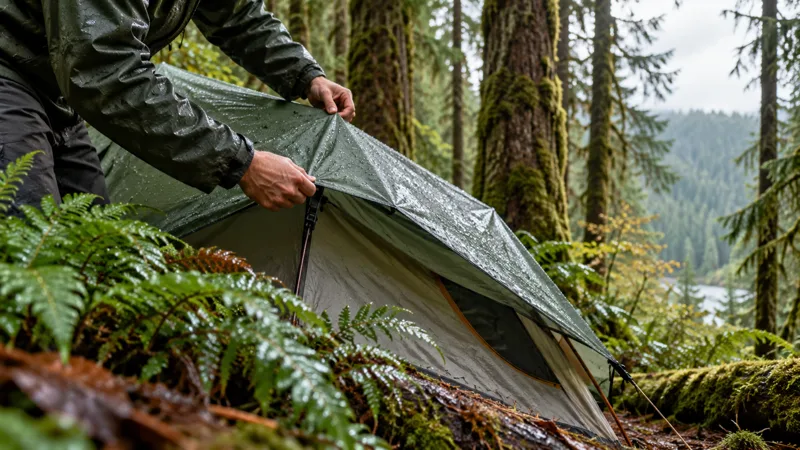
Survival basics should make a simple outing easier to manage
A beginner wilderness workshop is useful when it helps you make ordinary decisions more clearly. You do not need to start with a dramatic lost-in-the-woods scenario. Consider a short outing that takes longer than planned: someone needs another layer, the group is unsure about a junction, or an item cannot be found easily. These small problems give a learner concrete questions and give an instructor something practical to address.
This archived listing records Wilderness Survival Basics for October 3–4, 2026, in Duvall, Washington. Those dates are past as of October 7, 2026. The directory identifies Wilderness Awareness School as the host. This article is an independent beginner planning guide, not a description of the actual workshop lessons or a report from participants. Another session's curriculum and requirements must be confirmed directly.
The Duvall listing in context
- Event: Wilderness Survival Basics.
- Recorded dates: October 3–4, 2026.
- Recorded location: Duvall, Washington, USA.
- Category: Bushcraft & Wilderness.
- Listing source: FeralSkills.
- Host named by the directory: Wilderness Awareness School.
- Status: archived October dates.
Read the historical source. Obtain the exact arrival location, access instructions, and current session requirements from the organizer before booking another course. A workshop title does not establish an overnight stay, meals, or a particular equipment policy. Keep this historical page separate from current registration instructions.
Start with a route you can explain
Before a familiar outing, try describing the plan without saying “the usual trail.” Identify the starting point, intended route, expected return, and places where a choice must be made. If the description becomes vague, that is a learning opportunity. You may need a better map, a clearer route plan, or qualified navigation instruction. Do not resolve the problem by assuming someone in the group will remember everything.
Ask the relevant land manager about current access and restrictions. Save information in an appropriate format and make sure it refers to the actual route rather than a nearby destination. A navigation device can help, but you still need to understand the plan and its limits. A basic workshop may offer a place to ask those questions; the event title alone does not prove which navigation topics were included.
Give a delay a practical meaning
A plan becomes clearer when you ask what a delay would change. Would the group miss a transport arrangement? Would a trusted contact worry? Would needed personal supplies become difficult to access? These questions show where a little preparation matters. They do not require predicting exactly how long an outing will take under every condition. They require knowing what decisions should happen when expectations change.
Agree on a time or situation for reviewing the plan, based on the actual activity and current official guidance. Avoid borrowing an arbitrary rule from an unrelated trip. Discuss who can request a change and how the group will communicate it. A beginner should not feel obligated to continue because other people seem relaxed. Clear review points make it easier to adjust an outing before everyone becomes rushed.
Organize for the first small need
Lay out your current equipment and think about the order in which it is likely to be needed. A layer, a light, a personal item, and route information may each deserve an accessible location. You do not need a large collection of specialized products to test that arrangement. Pack the items you appropriately carry and rehearse retrieving them in comfortable circumstances. Follow all manufacturer instructions and any course requirements.
Notice whether you must put equipment on the ground or ask a partner to hold loose items during a simple adjustment. Those details can reveal a packing problem. Change one thing and test again. A consistent arrangement also helps you inspect the bag before another outing. Familiar organization supports attention; it does not replace instruction or prove that you are prepared for unfamiliar conditions.
Use general lists as questions, not guarantees
The National Park Service Ten Essentials presents a framework of outdoor equipment systems and notes that activities may require additional items. Use the reference to ask whether your plan has a missing function. Then compare it with the land manager's information and the actual course requirements. A general list cannot decide every detail of your activity, and checking every category does not establish competence.
For each item, ask what task it supports, whether you understand its use, and how it will be checked or maintained. An unfamiliar item still in its packaging is a pending learning task. If use requires instruction, arrange that before depending on it. Resist the idea that buying a more expensive version automatically solves uncertainty. The practical relationship between equipment, user, and setting matters more than a list of specifications.
Learn to describe a problem early
When something feels confusing, state the issue in plain language. “I do not understand which route we are following” is more useful than quietly hoping a companion knows. “I need a pause to adjust my bag” is clearer than continuing while uncomfortable. A beginner workshop can be a good place to practice such communication because questions are an expected part of learning.
Ask an instructor how to request help or pause during an activity. Follow that process. In a group outside instruction, agree beforehand that any participant can raise a concern and receive attention. The goal is not constant interruption. It is a normal way to make small corrections. A group that communicates uncertainty clearly is less dependent on guessing what each person is experiencing.
Recognize the limits of a demonstration
Watching an instructor complete a task can make it appear simpler than it is. Notice the preparation and the checks surrounding the result. Ask why a particular method fits the setting and what would make it unsuitable. Do not reduce the demonstration to a few steps stripped of context. The important lesson may be a boundary that prevents a beginner from applying the method elsewhere.
If a course introduces fire, edged tools, water treatment, or another safety-sensitive subject, keep practice under the stated supervision and permissions. This article offers no technical procedure for those activities. Medical training is also a separate subject; a basic wilderness class should not be assumed to provide first-aid qualification. Ask the provider which additional recognized instruction is appropriate for the activities you actually plan.
Write notes that distinguish watching from doing
Keep a simple record of what you observed, what you personally practiced, and what an instructor assessed. These are different kinds of experience. A beginner may remember a detailed explanation vividly without having performed the task independently. Accurate notes help you choose the next lesson and explain your experience honestly to another provider. They also prevent enthusiasm from becoming an unsupported claim about ability.
For a practiced task, record one piece of feedback and one unresolved question. Avoid trying to transcribe every word of a session. If you are unsure about a technical point, ask rather than reconstructing it later from memory. Mark personal interpretations as interpretations. A notebook that preserves uncertainty is more useful than a polished summary that quietly changes a tentative understanding into a fact.
Prepare the travel and participation details separately
For a future Duvall workshop, ask the organizer about the exact site, parking, expected movement, breaks, and access needs. Discuss concerns privately before payment. A course can be educationally suitable while its practical arrangements do not fit a particular participant. Get clear information about what is included and what you must arrange. The word basics does not necessarily mean every activity will be effortless or accessible.
Plan the journey to and from the session without relying on assumptions about phone coverage or pickup arrangements. Share relevant details with a trusted contact. Keep personal needs appropriately supplied and stored. A rushed arrival with unresolved logistics can consume attention that would be better spent learning. Good participation begins with an arrangement you understand, not merely a place reserved in a class.
Make the next outing a modest check
After a future beginner course, choose a familiar, permitted outing to test one appropriate change. You might share a clearer itinerary, retrieve equipment more easily, or stop at a planned review point. Keep conditions comfortable and the activity within your abilities. Do not remove supplies or seek hardship to make the exercise feel like survival. The goal is to observe whether the change improves an ordinary experience.
Ask your partner what they noticed and compare it with your own record. If the arrangement remains confusing, revise it. If a task needs more instruction, arrange that instead of repeating an uncertain method. Repeated small checks can produce better habits over time. A beginner's strongest progress may be knowing which question to ask before making a larger commitment.
Choose further learning by the gap you found
A general introduction can help identify a specific next subject. You may need navigation instruction, recognized first-aid training, or help understanding the demands of a particular activity. Choose that next step based on the gap you observed rather than the appeal of a more advanced title. Ask providers how their course fits your existing experience and what it actually assesses.
Read the National Park Service Ten Essentials for a general equipment framework and Leave No Trace for broad impact principles. Keep October 3–4, 2026, identified as archived dates. For another Wilderness Survival Basics session, confirm current details directly and arrive with practical questions drawn from your own routine. Better preparation often begins with a clearer plan and an earlier conversation.