
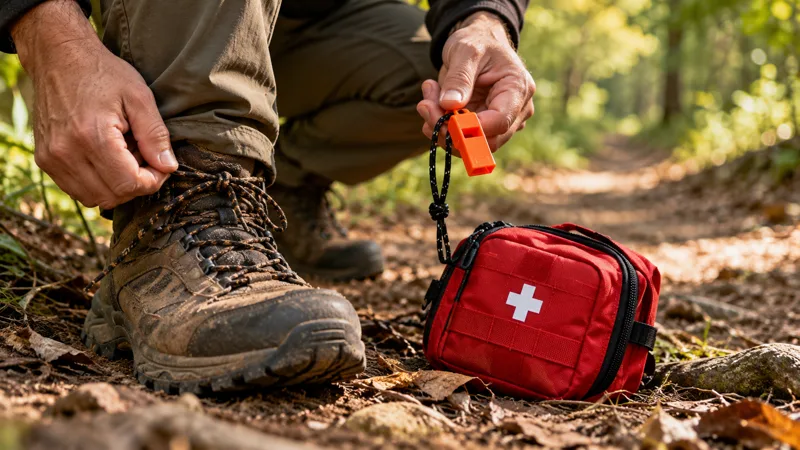
Wilderness Safety and Survival Level 1 is recorded for October 23–25, 2026, in the United States. Nature Reliance School's course page includes that October date option, while FeralSkills identifies the provider but says a location has not been published. As of October 7, the session is upcoming. The school page displayed “Sold out” when checked; that display should be treated as an availability warning, not a promise of admission. Ask the school about the selected session, any waiting list, and the exact venue before arranging travel.
Dates are specific; the venue is not
- Recorded dates: October 23–25, 2026.
- Recorded location: United States; no precise venue is established by this listing.
- Provider: Nature Reliance School.
- Directory: Wilderness Safety and Survival Level 1 on FeralSkills.
- Provider page: Nature Reliance Level 1 course.
The provider describes a foundational outdoor course with practical topics such as navigation, shelter, knots, fire, water, and introductory emergency care. It also describes a base camp near vehicle parking and the possibility of using familiar camping equipment. Confirm how those general descriptions apply to the October booking. This article supplies an independent framework for preparing for broad introductory training; it does not certify the course, reproduce its lesson plan, or assume that every advertised topic receives the same depth of instruction.
Readiness is a chain of decisions
A broad survival course can be most useful when you connect its subjects instead of treating them as separate tricks. Navigation affects how long an outing takes. Time affects exposure and the need for lighting. Shelter choices affect sleep and the energy available for the next decision. Start with a normal outing you want to manage more thoughtfully, and ask where that chain becomes weak. The goal is not to master every subject in one weekend, but to recognize how small choices influence later options.
For example, consider a short walk with a friend who tires sooner than expected. An equipment-centered answer might begin with adding gear. A decision-centered review first asks whether the route matched the group's needs, whether a shorter option was available, and whether the group discussed turning around. Equipment still matters, but it supports the plan instead of replacing it. Bring a similar real question to the course, with personal details kept private where necessary.
Distinguish prevention, routine adjustment, and emergency response. These categories can overlap, but they require different levels of competence. Checking a forecast is ordinary preparation. Changing a route because conditions have worsened is an adjustment. Treating a serious injury or organizing rescue requires appropriate professional assistance and training. A course discussion should help you recognize the boundary rather than encourage you to interpret a brief introduction as authority to handle every problem alone.
Clarify scope before interpreting “Level 1”
Level numbers are meaningful within a provider's own program, not as universal qualifications. Ask the school what prior experience is expected, how students practice, and whether any formal assessment or credential is involved. Do not assume a medical certification from a class that includes wilderness first aid among several topics. If you need a recognized credential for work, volunteering, or another course, verify the requirements with the organization that will accept it before choosing this session.
Ask how the program balances subjects. A beginner interested primarily in navigation may need a different amount of practice from someone interested in camp organization. You can respect the provider's broad offering while still asking whether it fits your priorities. Request the current joining instructions and any recommended preparation. Clear scope also reduces the risk of bringing equipment or expectations borrowed from an unrelated course whose similar name conceals a different format.
The provider's location must be resolved before you can sensibly choose lodging, driving routes, or a forecast. The phrase “United States” is a recorded geographic placeholder, not a destination. Ask for the actual training site, check whether arrival occurs there or at another meeting point, and clarify parking and access. If admission is unavailable, wait for the provider's confirmed alternative rather than assuming the listed October date can be booked through a directory.
Build a base camp that leaves attention for learning
A base camp near vehicles can make broad introductory practice more accessible, but it should not be used as an excuse to bring unorganized piles of equipment. Pack by function and label personal items. Decide where dry clothing, sleep equipment, water, and lighting belong. If the school permits familiar camping gear, use equipment you can assemble and manage reliably. A comfortable foundation lets you compare an unfamiliar method without having every ordinary need depend on your first attempt.
Ask how the base camp handles water, toilets, food storage, charging, and waste. Those practical details matter to students with dietary needs, mobility considerations, or medical equipment. Discuss accommodations through the school's appropriate contact before registering. Keep the questions specific enough to answer: ask about distance and surface rather than simply asking whether the course is accessible. The provider can then explain the site and activity demands without guessing what a broad label means for you.
Choose a sleep arrangement for the verified weather and school instructions. A tent, tarp, or hammock is not automatically better because it looks more closely associated with survival. Consider your familiarity, the available site, and the allowed backup. An educational experiment should have a clear boundary and appropriate supervision. If you are unsure whether the system is suitable, obtain guidance rather than using discomfort as a test of determination. Being rested improves the quality of questions and practice.
Carry essentials with a reason for each item
The National Park Service Ten Essentials provides a useful way to review outdoor equipment categories. Its role here is to help identify questions, not to replace Nature Reliance's required list. For each item you pack, name the situation it addresses and how you would use it within your experience. If an item has no clear role, check whether it is required or simply occupying space. If a need has no dependable answer, raise it with the school.
Keep manufacturer instructions relevant to your equipment available before the trip. A water-treatment device, stove, or power bank should not be used through guesswork just because it is sold for outdoor recreation. Ask the instructor about its suitability if the activity involves it, and do not assume a demonstration using one model applies to another. Avoid adding improvised components or modifying safety features. Familiarity with ordinary operation is a reasonable pre-class task; specialized use belongs within competent instruction.
Consider the difference between carrying a backup and being able to locate it. A spare light buried under clothing may be technically present but awkward to use. A printed contact sheet becomes less useful if rain destroys it. Improve the organization through a calm practice at home: unpack what you need, verify that it works, and repack it so another responsible person can understand the arrangement. This is a low-risk exercise that can expose problems without a demanding outdoor simulation.
Handle high-consequence subjects with clear limits
For first-aid discussion, ask what is introductory awareness and what requires a dedicated medical course. Keep emergency-service contact and evacuation decisions visible in your plan. Do not change prescribed medication, invent treatment, or treat a classroom demonstration as a substitute for professional assessment. If your goal includes assisting others medically, seek the appropriate recognized training and learn the scope in which it is intended to be used. A broad weekend can help you identify that next step.
For edible or medicinal plant subjects, separate observation from consumption and home treatment. Ask how identification is verified and which limitations beginners should retain. Do not use a short explanation or a phone image as permission to taste an uncertain specimen. The Poison Control wild mushroom warning illustrates the stakes of mistaken identification. If a possible poisoning occurs, obtain professional guidance promptly; in the United States, Poison Control is available at 1-800-222-1222.
For hunting, trapping, or other wildlife-related subjects mentioned by the provider, ask how teaching complies with the site's permissions and applicable rules. Do not assume classroom exposure grants permission to practice elsewhere. This article gives no trapping instructions or legal interpretation. If you want to pursue those subjects, consult the responsible wildlife agency and a qualified instructor for the relevant location. Appropriate restraint protects wildlife, other visitors, and the learner's understanding of what was actually taught.
Ask for the reasoning behind a choice
A useful question after a demonstration is “What would make you choose a different approach?” It reveals the conditions that limit the example. Ask that question about a shelter, a knot, a route, or an equipment arrangement without expecting one answer to cover every environment. Write the limit beside the technique in your notes. A method remembered without its conditions is easy to overapply, especially when the name sounds authoritative or the demonstration looked straightforward.
Another useful question is “What should a beginner notice before stopping?” The answer can help you recognize when fatigue, uncertainty, damaged equipment, or changing conditions justify a pause and further guidance. Do not treat stopping as failure. An outdoor decision that preserves options can be more valuable than finishing an exercise at any cost. If the instructor gives feedback, focus on the observation or judgment you can improve rather than on proving that your first attempt was correct.
Review the weekend by the decisions it improves
Keep a brief note after each day describing one choice you understand better. Include the evidence used, the alternative considered, and what still requires guidance. This record is different from a list of subjects attended. It can reveal whether the course helped with your original goal and where you should seek more focused instruction. Avoid claiming mastery from exposure alone. A realistic account is valuable when discussing future learning with another provider or an outdoor companion.
At home, choose one practical improvement to apply on the next suitable outing. It might be a clearer itinerary, better pack organization, or a more realistic route for the group's needs. Evaluate it afterward in ordinary conditions. For specialized skills, follow up through additional qualified instruction instead of constructing a high-stakes test. Progress can be gradual and still meaningful. The reliable habit is reviewing a plan before acting and acknowledging when the information or experience is insufficient.
For this October 23–25 session, resolve admission availability and the unpublished venue directly with Nature Reliance School. Once those facts are clear, use its joining instructions to prepare a dependable camp and a focused set of questions. A foundational course can help connect equipment, observation, and judgment when approached with realistic expectations. Continue through related event listings and Survival Skills, while keeping the limits of introductory training explicit.