
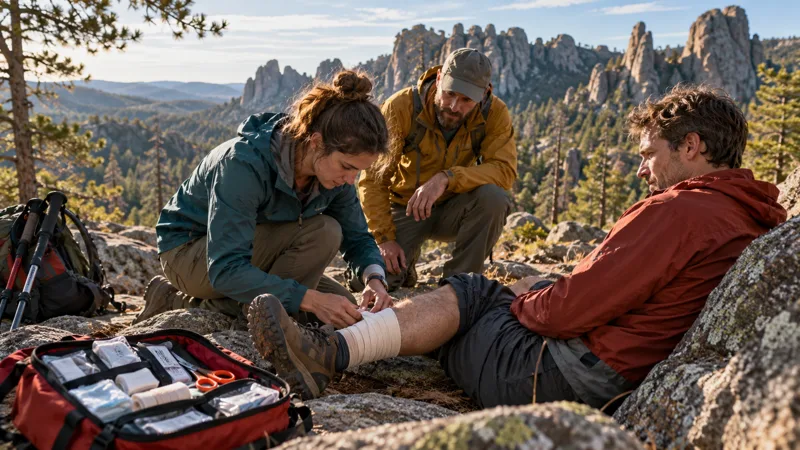
Wilderness First Responder in Custer: archived dates, current planning questions
The supplied Wilderness First Responder listing covered September 11–20, 2026 in Custer, South Dakota. This is an archived event because those dates have passed. It does not establish registration availability for another edition. The FeralSkills entry describes a certification course and provides a registration link. Readers should contact the actual training provider about future dates, prerequisites, certification recognition and the division between independent study and classroom time. The guide below concerns choosing and preparing for extended wilderness medical training; it is not medical instruction or a reconstruction of the September class.
Start with the responsibility you expect to carry
The phrase wilderness first responder can attract people for very different reasons. A trip leader may need a qualification required by an employer. A volunteer may want more confidence during organized outings. A parent may be considering a demanding family expedition. These are distinct needs, and a course should be evaluated against the responsibility you actually expect to carry. Write a short description of your likely activities, group size, access to emergency services and role in making decisions. That description gives an instructor something concrete to discuss when advising you about training.
Do not choose solely by course length or an impressive title. Ask which organization issues the credential, how its assessment works, how long recognition lasts and what renewal requires. An employer, insurer or land manager may have particular requirements. Confirm those directly before paying; a provider's general claim that a course is widely accepted may not answer your specific obligation. If you are seeking personal education rather than a work qualification, the same questions still help you understand what you will receive and what further practice will be needed.
Distinguish preparation from clinical competence
A preparatory article can help you organize questions, equipment and study time. It cannot teach the assessment, judgment and supervised techniques of a medical course. Avoid practicing procedures on friends after watching a short demonstration online. Instead, use the provider's approved pre-course material and ask what may safely be rehearsed before class. If CPR or another credential is a prerequisite, confirm whether you must already hold it or whether it is included. A mismatch can make an otherwise well-planned training trip impossible to complete.
The American Red Cross wilderness first-aid training page is one reference for understanding that remote-care education is a training discipline with its own learning resources. It does not certify this particular Custer event or establish equivalence between different organizations. Use recognized training descriptions to formulate better questions, then obtain answers about the specific program. You are looking for clearly defined teaching, supervised practice and honest boundaries, rather than promises that a short period of study will make every emergency manageable.
Build a realistic study calendar
Extended courses may include reading or online work before arrival. Obtain the actual requirements early and put them on a calendar. Reserve time for reviewing unfamiliar vocabulary as well as completing assignments. Merely clicking through material at the last minute can leave you unable to follow the first practical session. If you work full time, have caring responsibilities or need accessible learning formats, discuss these constraints with the provider before booking. Preparation is easier when the workload is visible and expectations are agreed rather than discovered after travel arrangements are made.
Create a small question notebook. Use one page for terms you cannot explain, another for course logistics and a third for situations relevant to your usual activities. Keep those categories separate. A question about the examination belongs in a different conversation from a question about evacuating from your local trail. Specific questions help instructors target their answers and help you notice gaps in your own understanding. Resist assembling an enormous binder of unvetted advice. A manageable set of provider-approved references is easier to use and less likely to introduce contradictory instructions.
Check the format behind the date range
A calendar entry spanning several days may not mean that every day is spent in the classroom. Confirm the actual arrival date, in-person schedule, breaks, assessments and independent components. Ask whether field exercises occur outdoors and whether sessions continue after dark. That information affects clothing, accommodation, meals and transport. In the Custer listing, the date range should remain an archival fact, while any future booking should be based on a current timetable. It is reasonable to request a written schedule before committing to a substantial block of time away.
Also clarify what happens when a participant becomes ill, misses a session or cannot complete a practical activity. Will the provider offer a make-up option, partial attendance documentation or a transfer? Read the cancellation terms yourself. Ask how accommodation requests are handled and which demands are essential to the qualification. Honest conversations about mobility, communication needs or other constraints support safer learning. They should happen before arrival, when there is time to plan, rather than during a scenario where classmates and instructors are already balancing several responsibilities.
Prepare for learning outdoors without turning it into an endurance test
For field sessions, pack the clothing and equipment specified by the provider. A medical training event may require sitting, kneeling, writing and moving between stations rather than continuous hiking. Clothing that feels comfortable while walking may be less comfortable during a long stationary exercise. Ask about ground conditions and weather exposure. Bring spare items only when they serve a known purpose; an overloaded pack can create inconvenience without improving learning. Label personal equipment so that it does not disappear into a group pile during repeated scenarios.
Protect the ability to concentrate. Plan familiar meals, drinking water, sleep and any personal medication arrangements. These ordinary details affect how much information you retain. Avoid adding demanding sightseeing or long late-night drives to an already full training schedule. A course is a significant investment of attention, not just money. If a session ends with a difficult topic, leave time to review it or ask a follow-up question. The best travel plan gives you room to absorb the material instead of rushing immediately to the next commitment.
Ask how scenarios are debriefed
Practical exercises can be memorable, but the feedback afterward is where assumptions become visible. Ask how instructors structure debriefs and whether students receive individual feedback. A useful debrief separates the information available at the time from information revealed later. Otherwise, hindsight can make a decision look obvious when it was not. Listen for discussion of communication, priorities, reassessment and the decision to seek additional help. These are learning themes, not a substitute for provider protocols, and their precise application belongs in the supervised course.
During a scenario, tell the instructor what you are thinking when invited to do so. Quietly performing an action may conceal the reasoning that needs correction. Afterward, write down one concrete change you would make next time. That might involve organizing information more clearly, asking a missing question or recognizing when your knowledge is insufficient. Avoid measuring success only by whether the scenario ended favorably. Training is valuable when it exposes a weakness safely and provides a specific way to practice it, even when the exercise feels uncomfortable.
Make documentation part of the learning goal
A field medical kit is easier to photograph than a communication plan, but clear information can matter greatly during a handover. Ask the instructor what record format the course teaches and how to communicate with emergency services. Practice writing legibly in the equipment and conditions appropriate to the exercises. Keep training records separate from real personal medical information. In a group setting, do not circulate another participant's health details casually. Privacy, consent and accurate documentation deserve attention alongside the more visible aspects of a scenario.
Think about how your ordinary trip group shares responsibilities. If one person handles all equipment, all notes and all communication, an incident involving that person can expose a weak plan. Discuss roles before a real outing and ensure companions know where essential information is kept. These are organizational improvements you can make without performing medical procedures. A trained person still benefits from teammates who can provide a clear location, retrieve supplies or contact help under direction. The course should help you understand these dependencies, not encourage a lone-expert mindset.
Buy a kit after learning its purpose
Before class, follow the required list rather than building a large medical bag from product advertising. Ask which items are supplied for exercises and whether personal equipment is appropriate. After training, discuss a kit suited to your activity and level of qualification. Quantity alone does not establish capability. An item that you are not trained or authorized to use may add confusion, while a simple organizational improvement can make familiar supplies easier to find. Maintenance also matters: packaging, storage conditions and replacement routines belong in the plan.
Budget for recurrent costs. Training can require renewal, travel, replacement consumables and periodic practice. A one-time purchase does not solve those needs. Keep a record of your credential, expiration information and the provider's current recertification requirements. Set a reminder with enough time to find a suitable course. If your responsibilities change, revisit whether the qualification still fits. Leading a remote multi-day activity may raise different questions from attending a local outing with an established organization. Discuss the change with the appropriate employer or training provider.
Turn a qualification into a maintained practice
After a course, arrange supervised refreshers or practice opportunities consistent with the provider's advice. Review communication and equipment organization with your actual companions. Use hypothetical situations to discuss who calls for assistance, what location information is available and how the trip plan would change. Keep those discussions focused on preparation rather than improvising treatment. When uncertainty concerns medical care, seek qualified instruction or professional advice. Confidence should be supported by an accurate understanding of your limits, not by the memory of having once passed an assessment.
The Custer course dates are historical. Their lasting value for a reader is a prompt to choose training thoughtfully and prepare to learn well. Confirm the credential, check the format, make space for study and sleep, ask for constructive feedback and plan renewal. A wilderness first responder course is most useful when it fits a real role and becomes part of an ongoing safety system. The certificate, kit and notebook are supports for that system; none removes the need to summon professional help or follow the standards of your training.