
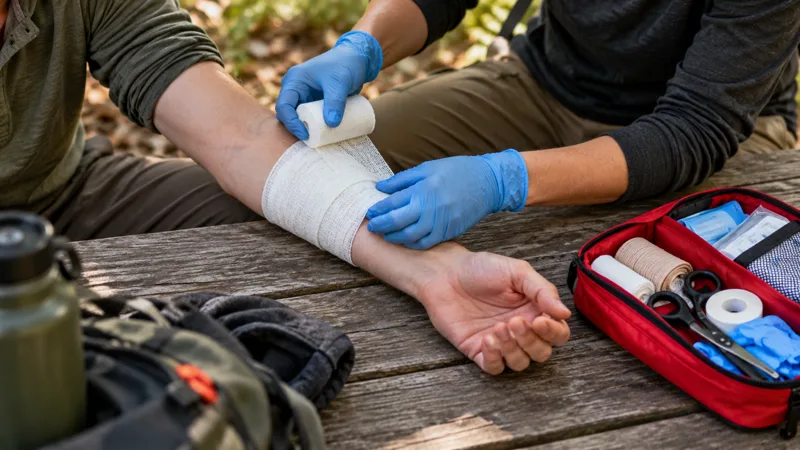
Pennsylvania Wilderness First Aid: an archived weekend and a practical next step
The supplied Wilderness First Aid listing covered September 19–20, 2026 in Pennsylvania. Those dates have passed, so this is an archived event page. Pennsylvania is the supplied location, not a confirmed meeting address. The FeralSkills source entry should lead readers toward the actual provider for questions about a future course. This article does not claim that the September event remains available or specify its curriculum. It offers independent preparation for people considering introductory wilderness first-aid education, with particular attention to the ordinary hiking group that wants a clearer emergency plan.
Ask what your group currently assumes
A weekend hiking group may feel organized because everybody owns a pack and someone carries first aid. That arrangement can conceal several unanswered questions. Who knows the exact route? Who can contact help? Does anyone know whether another member has a relevant medical concern? What happens if the person carrying the kit is injured? Discuss these matters calmly before choosing a course. A training goal becomes more useful when it addresses a recognizable weakness rather than a general desire to feel prepared. You do not need to share private health information publicly to identify communication gaps.
Write down a typical outing: its length, usual group size, terrain, expected access to services and the roles people already take. Explain that outing to a provider when asking which course is appropriate. Avoid assuming that wilderness first aid and wilderness first responder are interchangeable titles. Course requirements, assessment and recognition vary. If a club or employer requires a particular qualification, verify the requirement directly. If the goal is personal education, ask what knowledge the course expects at the start and what practice it recommends afterward.
Choose instruction with clear boundaries
The American Red Cross wilderness training resource provides an official reference for understanding remote first-aid education. It does not verify the provider of this archived listing. Ask the actual course organizer who teaches, which organization issues any credential, how hands-on skills are assessed and whether CPR or another prerequisite is required. A responsible provider should be able to explain what participants will learn and what remains outside their scope. Be cautious about promises that a brief class eliminates the need for professional care.
Read the syllabus before buying medical equipment. Online discussions can encourage beginners to assemble a collection of tools before understanding their purpose. An introductory course is a place to learn decision-making and supervised skills, not an invitation to perform unfamiliar procedures on real people. Follow the provider's approved materials. For medical concerns or actual emergencies, obtain appropriate professional assistance. Keeping that boundary clear makes the training more useful because your attention goes toward recognizing limits, communicating effectively and applying the instruction you have actually received.
Prepare to participate in scenarios
Ask whether the class includes outdoor exercises and what clothing is appropriate. A participant may spend time stationary, writing, kneeling or working in small groups. Comfortable hiking clothes alone may not answer every practical need. Bring the specific equipment requested and leave unrelated items at home. If mobility, hearing, language or another access need affects participation, discuss arrangements with the provider in advance. An early conversation creates time for realistic planning and avoids making an accommodation request only when an exercise is already under way.
Arrive rested and with basic logistics settled. Confirm the address, parking, breaks and meal arrangements. The supplied statewide location is not enough to book transport confidently. A weekend course can feel busy because new vocabulary and scenarios compete for attention. Familiar food, water and an uncomplicated travel plan reduce avoidable distractions. Leave some time at the end of the day for questions or review. Adding a demanding outing immediately after class may leave you too tired to organize what you learned or notice the topics that need clarification.
Use a notebook to capture reasoning
Instead of transcribing every sentence, record the question an instructor is trying to answer and the information needed to answer it. Ask how the course organizes observations, decisions and communication. Do not create your own medical protocol from fragments of a demonstration. Keep the approved reference alongside your notes and ask about anything that appears inconsistent. A short, accurate explanation you can understand later is better than pages of technical terms copied without context. Mark uncertain points clearly so they receive attention before the course ends.
When a scenario is debriefed, identify the assumption that shaped your decision. Perhaps you did not know where the group was, or you thought another person had already contacted help. These are organizational errors that a hiking group can address without advanced equipment. Discuss how the instructor distinguishes a useful observation from a guess. Practice stating uncertainty plainly. A team can respond to “we have not confirmed the location” more effectively than to an confident-sounding answer whose basis nobody has checked.
Put location information beside the medical kit
During an actual incident, contacting help requires more than naming the park. Ask the course how it teaches reporting location and circumstances, then practice organizing the information for your normal outings. The National Park Service trip-planning guide is a useful official framework for route and emergency planning. Confirm local procedures with the land manager where you travel. A clear itinerary, parking information and expected return give a trusted contact a better basis for acting if the group fails to check in.
Distribute essential knowledge. At least the practical plan should be understandable to more than one participant, especially the route and the agreed contact arrangements. Do not store everything on a single phone whose owner is the only person who knows how to open it. A written copy can support the plan, provided it is kept current and protected. Test whether companions can retrieve the relevant information when asked. If they cannot, reorganize it before the next trip. The test should be calm, with no staged medical emergency or risky exercise.
Organize supplies around training and access
After the course, ask the instructor about a kit suited to your group and activities. Consider how supplies are labeled and how easily they can be found. A pouch full of loose items can slow a trained person, while a modest kit arranged clearly may be easier to use. Follow instructions for storage, replacement and packaging. Keep personal medication arrangements separate and consult the relevant health professional about individual needs. A generic list cannot resolve every member's medical dependencies or tell the group how to manage a particular condition.
Choose a regular inspection date and a responsible person, but make the routine visible to the group. Record missing or used items promptly. If the kit is shared, establish where it lives between trips and who brings it. Avoid the recurring assumption that someone else packed it. Practice finding ordinary items without opening sterile packaging unnecessarily. Discuss with the provider which supplies should be available to the group and which require particular training. More equipment is not automatically a safer arrangement if it creates false expectations about capability.
Practice role clarity without dramatics
A useful group review can take place around a table. Consider a hypothetical delay or an injury scenario described in the approved training materials. Ask who would provide information, who would contact assistance under direction and who would keep the rest of the group organized. The purpose is communication, not unsupervised treatment practice. If an uncertainty becomes medical rather than organizational, write it down for a qualified instructor. Do not settle clinical questions by whichever group member speaks most confidently or has watched the most videos.
Make room for the quiet participant. Someone may notice a missing detail but hesitate to interrupt the perceived leader. Establish that questions and concerns are welcome. A leader's role includes making information easier to share, not demonstrating certainty at every moment. In a debrief, discuss what communication helped and what created confusion. Avoid turning mistakes into jokes at a person's expense. Constructive review makes people more willing to raise concerns on the next outing, which can be more valuable than an impressive performance during one exercise.
Review trip ambition after training
New education can increase confidence, but it should not automatically increase the difficulty of the next trip. A first-aid class may reveal how demanding a remote incident could be and encourage simpler route choices. That is a sensible result. Consider access, group experience, weather, time and communication as part of route selection. When a plan depends on excellent conditions or one person's unsupported ability, change it. Training is meant to improve judgment, including the decision to choose an easier outing or postpone one that is unsuitable.
Ask what further education matches the responsibilities you want. Some people will benefit from maintaining introductory skills and CPR. Others may need a different level of wilderness medical training for employment or organized leadership. Obtain advice from the appropriate provider and organization. Keep certification and renewal information accessible and set reminders early. Avoid letting a qualification expire simply because it is rarely discussed. A maintained routine of instruction and review is more credible than treating an old attendance record as permanent evidence of readiness.
Make the next hike a check of the plan
For the next ordinary outing, review the itinerary, contacts, equipment and group roles before leaving. Ask every member to explain one part of the plan. Keep the route within the group's experience and current conditions. Afterward, note any confusion that occurred, even if nothing went wrong. A missed check-in, unreadable map or misplaced kit is useful evidence. Correcting those problems after a calm day reduces friction if a difficult day ever arrives. You do not need a crisis to discover whether an emergency plan is usable.
The archived September Wilderness First Aid listing is a starting point for finding suitable instruction. Its broader lesson is that care in remote settings depends on organization as well as supplies. Confirm future event details, choose a credible provider, learn within the stated scope and give companions a clear role in the plan. A small group that knows its route, can communicate uncertainty and seeks professional help appropriately is better prepared than a group that relies on one overloaded medical bag. Keep training current and keep the planning understandable.