
The unexpected extra night is a useful planning question
Survival was listed for September 25–27, 2026, in Pennsylvania, USA. Those dates are past as of October 7, 2026; this page is an archived event guide. The original directory identifies Coalcracker Bushcraft and links to its registration information. Check the provider's current school pages for future opportunities and exact meeting instructions. The editorial discussion here uses an unexpected delay as a way to think about preparedness. It is not a report of a scenario performed during the archived course, and it does not substitute for supervised instruction or emergency assistance.
Imagine an ordinary outdoor day ending later than intended. The cause might be a transport problem, an access closure, or a group decision to stop rather than continue into unsuitable conditions. The important planning question is not whether you can endure a dramatic ordeal. It is whether the group can make sensible decisions during an unplanned extension. What information would you need? Who should be contacted? Which essentials are already available? A modest hypothetical delay is useful because it exposes the difference between a plan that works only on schedule and a plan that has some room for change.
Distinguish inconvenience from an emergency
A late return does not always mean the same thing. A stalled shuttle at a staffed site differs from someone missing in unfamiliar terrain. Discuss with qualified instructors how the context changes the response and when professional help should be sought. Do not let a fictional practice scenario become an excuse to delay real assistance. If there is an immediate threat or medical emergency, contact emergency services and follow current official instructions. This article does not provide a field triage method, rescue protocol, or universal decision rule for every situation.
For advance planning, record the circumstances that make your own outing more vulnerable. A remote location, limited communication, dependence on one vehicle, or a participant's individual needs can affect the available options. Recognize those dependencies before departure. The exercise should encourage prevention and clear communication rather than romanticize hardship. If a simple change reduces the likelihood of a problem, such as confirming transport or allowing more time, make that change. Preparing for a delay is sensible; deliberately creating one to prove toughness is a different and unnecessary activity.
Give a trusted contact useful information
Before a trip, agree on what a person at home should know and when they should expect an update. Include the information appropriate to the outing, such as intended locations, timing, participants, and relevant contact arrangements. A vague statement that you will be somewhere in Pennsylvania gives little practical context. Do not overload the contact with unexplained abbreviations or assume they know the trail names you use casually. Ask whether the plan is understandable. The contact should know the agreed way to respond to a missed communication rather than invent a procedure under stress.
Keep the plan current when circumstances change. If the group uses an organizer's established communication arrangements, follow those rather than creating conflicting private expectations. Avoid sending an ambiguous message that sounds like an emergency when you only mean the schedule changed. Conversely, do not soften a real concern so much that the recipient misunderstands it. Practicing a clearly labeled, agreed exercise message can reveal outdated numbers or unclear wording. These organizational improvements are worthwhile without requiring the group to enter hazardous conditions for realism.
Inspect the pack for actual accessibility
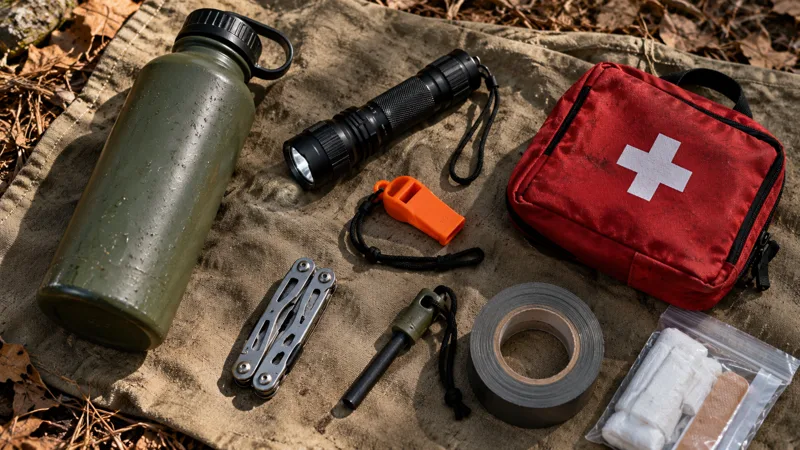
List the essentials you would want during an unexpected extension and compare that list with the items in your normal outing bag. Do not count something that remains in a vehicle you might not be able to reach. Check where lighting, necessary personal supplies, communication equipment, food, and appropriate clothing are stored. An item buried beneath everything else may be difficult to retrieve when the group needs it. Organize the pack so a familiar person can identify key items without emptying it onto wet ground or relying on memory alone.
Then test the ordinary controls at home. Can you operate the light, open the container, and locate the instruction sheet? Are batteries or compatible charging accessories present? Is any item damaged? Follow product instructions and obtain help for unfamiliar equipment. Avoid treating an unopened purchase as a completed capability. The value of an equipment inspection is finding the mundane problems that can be corrected calmly. A stuck closure or missing cable may matter more during a delay than the absence of a specialized gadget you have never needed.
Clothing is a plan for changing circumstances
Use the forecast, activity, provider guidance, and individual needs to choose clothing. An outfit comfortable during movement may not serve the same purpose during a pause. Ask instructors how they think about that difference in the actual training environment. Carry suitable additions as required rather than assuming that more effort will always keep you comfortable. Keep spare items protected according to their storage needs. A spare that is soaked with the rest of the bag may no longer provide the function you expected.
Do not turn clothing selection into a contest over minimal equipment. Beginners benefit from understanding why an item belongs in the system. Experienced participants can still have gaps if their habits were developed under different conditions. Individual medical questions about exposure, exertion, or suitable activity belong with qualified professionals. This guide does not establish safe limits for a person or forecast. It encourages a precise conversation with the provider and appropriate preparation before an activity, when changes are still straightforward to make.
Food and water should support the original trip and its margin
Plan ordinary food and drinking supplies around the actual activity and relevant guidance. Include the practicalities: foods you tolerate, packages you can open, and storage that fits the outing. Do not assume that a course title means students should begin depriving themselves of food before arriving. If the provider describes a restricted or demanding exercise, discuss suitability and medical concerns in advance. Follow the specific program's instructions rather than making independent experiments with hunger or hydration. Preparation should protect attention and judgment, not impair them before learning starts.
Water equipment also needs accurate expectations. Learn the manufacturer's complete instructions and ask qualified instructors what the planned method addresses and what its limitations are. This article does not provide a treatment recipe. Different water concerns call for different responses, and a familiar product name does not answer all of them. Keep supplies organized to avoid confusion about their status. If reliable drinking water arrangements are unclear, resolve the issue before the outing rather than assuming the landscape or an improvised technique will provide a safe answer.
Use supervised scenarios to understand priorities
A training exercise can help students see how decisions interact. Ask the instructor what the scenario is designed to teach and what safety boundaries apply. Learn how to stop the activity or report a concern. Do not infer that a supervised challenge can be recreated independently in a remote place. Staff, communications, site arrangements, and intervention options may be part of what makes the training suitable. Removing those supports changes the exercise even if the equipment and scenery appear similar.
During a scenario, notice how the group identifies missing information. A decision may depend on the forecast, the condition of a participant, or an instruction from the provider. Ask how uncertainty is handled rather than demanding an immediate answer to every hypothetical. A responsible response may be to seek information, postpone a task, or obtain help. The teaching value is in understanding those choices. Completing every action quickly is not necessarily better than recognizing that the available information does not support proceeding.
Make group roles explicit
Discuss who holds key information and how it is shared. If one participant keeps every contact detail, what happens when that person is occupied or their device fails? If one bag contains all supplies for an essential function, how does the group account for that dependence? Ask the instructor about suitable organization in the actual activity. Do not independently redistribute critical equipment or assign rescue duties without agreement. The purpose of the discussion is to recognize responsibilities, not create a pretend command structure that distracts from the provider's procedures.
Ordinary roles matter too: keeping track of shared belongings, reporting that a task is complete, and ensuring nobody mistakes an assumption for an agreed plan. Explain your own needs clearly and listen when someone else's differ. Avoid pressuring a participant to continue because the group wants a tidy outcome. Learning to communicate a limit is useful practice. A respectful group can respond to an issue early, while a group that rewards silence may discover the same issue only when it has become much harder to manage.
Review the decision, not the drama
After practice, write down the decision that changed the outcome and what information supported it. Separate a skill difficulty from an equipment difficulty and from a planning assumption. If a task failed because nobody understood who owned it, buying a better tool will not fix the underlying problem. If an item was unsuitable, record the exact reason before replacing it. Ask the instructor which lessons apply to your own outings and which depend on the supervised training environment. That distinction keeps the exercise useful without encouraging inappropriate imitation.
For the archived Survival course, use the original link for historical context and Coalcracker's current school information for later training. Confirm prerequisites, conditions, equipment, and any demanding exercises directly with the provider. The unexpected extra night is not a goal to seek. It is a question that helps an outdoor traveler notice where an otherwise ordinary plan depends too heavily on perfect timing. Better communication, accessible essentials, appropriate instruction, and willingness to change the plan can reduce those dependencies before the next trip begins.