
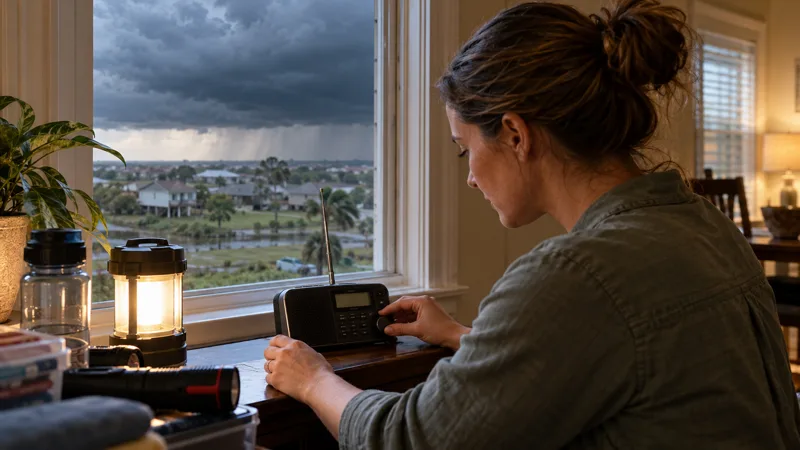
Louisiana severe-weather awareness is a chance to connect alerts with action
Severe Weather Aware Week is listed for October 11–17, 2026, in Louisiana, USA, and that range appears on the National Weather Service's official awareness calendar. As of October 7, 2026, the week is upcoming. An awareness campaign is not automatically an in-person class, ticketed gathering, or statewide drill at a particular hour. Check the relevant local forecast office and emergency management announcements for specific activities. The original event source is retained below, alongside working official safety resources. The editorial discussion here concerns household and community planning rather than a claimed schedule of campaign presentations.
Receiving an alert is only one part of preparedness. People also need to know whether it applies to their location, what instruction it contains, and how their ordinary responsibilities change. A household may receive several messages through different channels while members are at home, school, work, or traveling. The useful campaign project is connecting each message to a clear decision. That means identifying official information sources, understanding the relevant locations, and practicing how a person obtains clarification when a message is unfamiliar. A collection of devices cannot do that thinking on behalf of the household.
List the locations that matter on an ordinary day
Start with home, workplaces, schools, caregiving destinations, and frequently used travel routes. If people spend time in different parishes or communities, their alert needs may differ. Learn the location names that appear in official messages rather than assuming everyone recognizes them. Keep information appropriate to actual activities, including a weekend sporting event or regular outdoor recreation. A system designed only around the home address can miss the circumstances in which a family member is most likely to need a decision while away from familiar surroundings.
For each location, identify who is responsible for facility instructions. A school, employer, venue operator, and local emergency authority may provide different but complementary information. Ask how the facility communicates a change and what visitors or parents are expected to do. Do not invent a private plan that conflicts with an institution's emergency procedure. A caregiver should understand authorized pickup and reunification arrangements; an employee should understand workplace guidance. Preparedness is clearer when responsibilities are known before a warning arrives, rather than negotiated while everyone is watching the same alarming update.
Use official guidance to understand the hazard
The National Weather Service provides separate safety resources for tornadoes, severe thunderstorms, and flooding. Read the pages relevant to your circumstances and follow current local warnings and emergency instructions. The separation matters: a message about one hazard does not establish the same appropriate response for another. This article does not replace building-specific shelter advice or a location-specific evacuation instruction. If you are unsure about suitable arrangements for a property, consult the responsible authorities or qualified professionals rather than copying a description intended for a different building.
Pay attention to instructions as well as the hazard name. A headline can be memorable while the practical details remain unread. Ask the household to explain what information they would check: current location, message timing, the affected area, and official direction. Use an example clearly labeled as practice, not a fabricated urgent alert. The aim is comprehension. A person should be able to recognize the source and locate the instruction without relying on another family member to translate every message. This is particularly useful where language, hearing, vision, or device settings affect access.
Alert channels should have a purpose
Inventory the official channels you use and identify what each supplies. Some provide weather warnings, some announce road or facility changes, and some give local emergency instructions. Check subscriptions and device settings according to the provider's guidance. Do not assume a downloaded application is configured for every relevant location. Confirm that messages are readable and recognizable. If an alert method depends on a powered device or connection, identify appropriate backup information access. More channels are not automatically better if they create confusion about which message is authoritative.
For a household member who does not use a smartphone, establish a workable way to obtain current information. Consult relevant official resources and local services for accessible options. Avoid making one person the sole interpreter and messenger for everyone without a fallback. That person may be at work, asleep, or dealing with another responsibility. A simple contact procedure can support the system, but it should not be mistaken for guaranteed warning coverage. The campaign is an opportunity to identify these limitations and seek suitable arrangements while normal services are available.
Shelter discussions should be specific to the place
Ask the responsible facility or local authority about appropriate shelter arrangements for the actual building and hazard. Do not judge suitability from a room's comfortable appearance or a familiar label. A home, workplace, outdoor venue, and vehicle present different circumstances. Record where official instructions direct people and how to reach the designated place. Include accessibility needs in that discussion. A location someone cannot reach promptly is not a workable arrangement for that person simply because it appears on another household's checklist.
Practice nonhazardous parts of the plan during ordinary conditions: locating the instructions, identifying the route, and checking who needs assistance. Keep the exercise agreed and clearly labeled. Do not surprise someone with a simulated emergency or obstruct an exit to make a scenario more realistic. Notice confusion and correct it. A child may know the destination but not which adult will accompany them. A visitor may not know the building's layout. These are practical gaps that a calm rehearsal can expose without adding risk or fear.
Outdoor plans need a responsible decision-maker
If you organize a family picnic, youth activity, or another outdoor gathering, identify who monitors official information and who can change the plan. Consult the venue and relevant safety guidance for actual arrangements. A group should not assume someone else is watching conditions while every adult is occupied with another task. Make the communication understandable: who announces a pause, where participants are directed, and how people are accounted for. The planning discussion should happen before the activity, when options and responsibilities can be clarified.
Avoid building a plan around waiting until everyone independently feels concerned. Different participants may interpret the same situation differently. Use the relevant official guidance and the venue's procedures, and seek qualified help when arrangements are uncertain. Include the possibility of cancellation or relocation in the invitation so a changed plan is not treated as a surprise. Optional goals should remain optional. A successful gathering can be one that is shortened or postponed for a sound reason rather than one that proceeds because deposits, enthusiasm, or social pressure make changing course uncomfortable.
Flooded travel routes require a separate plan
The National Weather Service's flood resources emphasize the hazards of flooded roads. Follow current closures and emergency instructions; do not drive or walk into floodwater to test whether a familiar route remains usable. A navigation application may continue suggesting a path that conditions have made inappropriate. Identify the official transportation and local information channels for your actual journey. If a trip is optional, consider postponement before the household becomes committed to leaving. Avoid treating a different route as automatically safe merely because it is not the road you originally intended.
Talk about a blocked return route as well as a blocked departure. If someone cannot reach home, where could they responsibly wait or obtain help? Confirm potential arrangements rather than assuming a relative or facility will be available. Keep essential contact information accessible. A person who knows how to communicate a delay creates less confusion for the people expecting them. That organizational work does not solve the hazard itself, but it can reduce pressure to attempt an unsuitable crossing simply because no one knows why the traveler has not returned.
Power loss can interrupt information and ordinary care
Review which household functions rely on electricity, including lighting, communication charging, food storage, and individual medical equipment. Obtain qualified guidance for critical continuity needs. Do not infer that a portable power product is appropriate for medical use or a building connection from a marketing claim. Plan safe alternatives with relevant professionals and product instructions. This guide does not provide electrical installation or medical protocols. The useful task is identifying the dependency before an outage makes the question urgent.
If fuel-burning equipment is part of a backup plan, follow complete authoritative carbon monoxide and operating guidance. Never improvise indoor use of outdoor combustion equipment. Review alarms, maintenance, and safe installation through appropriate sources and qualified help. Keep the household's arrangements understandable to the person who will use them. An item stored away with unread instructions is an unresolved task rather than a capability. The awareness week can prompt the inspection and conversation needed to turn ownership into a safe, realistic plan.
Communication after the immediate decision matters too
Agree on how household members share status after following the relevant safety instructions. Identify the essential information: who is safe, where they are, and what arrangement applies next. Keep messages brief and unambiguous. Do not require a person to return to an unsafe location merely to satisfy a family meeting preference. The contact plan should support official direction and the circumstances, not compete with them. Use an out-of-area contact or another appropriate fallback if that fits the household's agreed arrangements.
Protect sensitive information in any written contact sheet and keep numbers current. Confirm that another person understands the instructions instead of assuming that distributing a document is enough. A short, clearly labeled practice message can reveal an old number or confusing wording. Finish the practice with a review, including any accommodation needed for a participant. The goal is a procedure that ordinary people can follow while occupied with other responsibilities, not a elaborate communication scheme requiring constant maintenance that no one has agreed to provide.
Turn awareness into a completed improvement
Choose one concrete task during October 11–17: verify a local alert subscription, clarify a school procedure, obtain building-specific shelter information, or update a travel communication plan. Assign responsibility and a review date. Keep other ideas visible without allowing them to prevent completion of the first task. A campaign becomes useful when it changes an arrangement the household can explain. Reading several safety pages is a start, but clarity about who does what is what connects that knowledge to ordinary life.
Use the National Weather Service calendar for the awareness dates and its hazard-specific resources for background, while consulting local authorities and facilities for current actions. The original generic severe-weather link may be unavailable, so working official pages are provided separately. Louisiana's campaign is a reminder to connect the places you use, the warnings you receive, and the people who depend on you. A clear plan reduces the distance between hearing an alert and knowing which responsible decision comes next.