
Event details
- Dates: September 5, 2026
- Location: Fort Laurens Historic Site, 11067 Fort Laurens Rd. NW, Bolivar, Ohio 44612
- Type: Survival & Self-Reliance
Learning plants at a historic site
Private Plant Class at Fort Laurens was listed for September 5, 2026, at Fort Laurens Historic Site, 11067 Fort Laurens Road NW, Bolivar, Ohio 44612. That date has passed. This page is an archive of the supplied listing, not an announcement of another class or an invitation to enter the site for unscheduled instruction. The linked Survival School page remains the place to ask about a future edition. Its URL mentions a cooking skills workshop; that difference is worth resolving with the organizer rather than assuming that the title establishes exactly what was taught.
A plant class can introduce a useful way of looking at an ordinary landscape. Instead of seeing a uniform wall of greenery, a student starts to notice leaf arrangement, stem structure, growth habit, and the places where particular plants occur. The most valuable beginner outcome is often better observation, not a basket of gathered ingredients. These notes explain how to build that observation habit and how to separate identification, collecting permission, and food safety. They describe an approach to learning, not a confirmed syllabus for the archived Fort Laurens event.
Begin with questions that can be answered
Before booking a replacement class, ask whether the session is an identification walk, a cooking demonstration, a historical interpretation program, or an activity that combines several topics. Ask who teaches it and whether students handle specimens or only observe them. The word private may describe a closed group rather than individual tutoring. Find out whether public registration is possible, what accommodation is available, and whether children can attend. These questions prevent arriving with expectations that the actual program was never designed to meet.
The location also matters. A historic site is not simply an open patch of land where every plant can be picked. Visitor access, restoration work, educational areas, and cultural resources can impose limits that are separate from a plant's abundance. Ask the site and organizer where the group is allowed to walk and whether any collecting is authorized. Permission to attend a class does not automatically mean permission to dig roots, remove branches, or return later to gather a larger quantity.
Observation before consumption
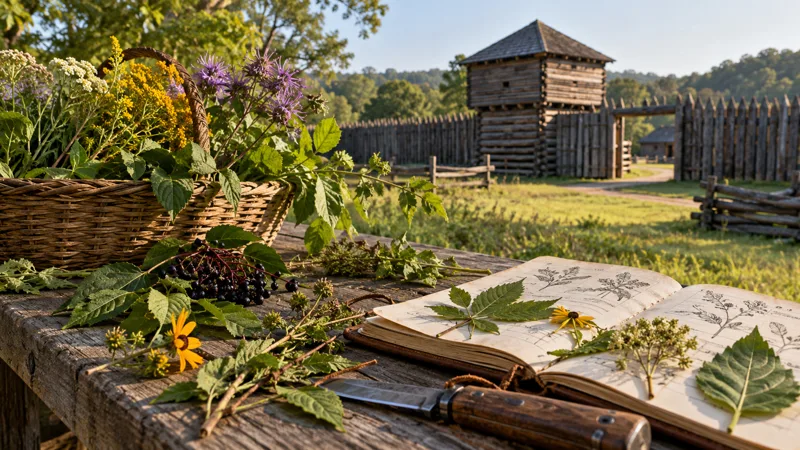
Make the first page of your notebook a list of features to observe. Record whether leaves are opposite or alternate, whether a stem is round or angular, and whether the plant grows as a vine, shrub, tree, or low herb. Sketch the entire plant before concentrating on an attractive leaf. A picture of one detached part can leave out the features needed to distinguish similar species. The National Park Service's plant identification resource is a helpful introduction to noticing the variety and complexity of vegetation; it is not a food identification certificate.
Ask an instructor to explain which features rule out the closest lookalikes. A name offered without that comparison is hard to use independently. Learn where certainty ends: perhaps a specimen lacks flowers, perhaps an important feature is damaged, or perhaps the plant belongs to a difficult group. A useful answer may be that the available evidence is insufficient. Build room for that answer into your notes. Being willing to leave an unknown plant untouched is a skill, not a failure to finish the exercise.
Create a record you can revisit
For each teaching specimen, make a small record with the date, setting, identification offered, distinguishing features, and unresolved questions. Photograph the plant in place when photography is allowed. Include a wider view showing its growth habit, then closer images of relevant features. Keep your own observations separate from the instructor's explanation so that you can see what you actually recognized. Later, compare your record with a regional field guide rather than relying on the memory of a common name alone.
Do not treat a phone application's label as the final decision about eating a plant. Software can be useful for generating possibilities, but it cannot supply missing details or guarantee that a specimen was photographed clearly. Common names create another problem because different people may use the same name for different plants. When food or health is involved, ask for the scientific name and qualified confirmation. A confident looking screen is not a substitute for a complete identification process.
Understand the three separate decisions
A plant can be identified correctly while still being inappropriate to collect. It may grow on protected land, belong to someone else's garden, or occupy a sensitive habitat. A legal collection can still be unsuitable for food because of contamination or uncertainty about how it must be handled. Keeping these decisions separate prevents a common beginner shortcut: assuming that learning a name settles every other question. Foraging requires identification, authorization, and an appropriate food safety decision, not just a photograph that resembles a guidebook illustration.
Historical uses require the same distinction. Learning that people once used a plant does not establish that every historical practice is safe, effective, or suitable today. An instructor may discuss traditions as cultural information rather than personal advice. Ask which claims describe documented history and which describe present food use. If a lesson includes medicinal references, those belong in a separate conversation with a qualified health professional; they should not become improvised treatments based on a class notebook.
A kit for learning rather than harvesting
For an observation session, a notebook, pencil, charged phone, comfortable footwear, weather appropriate clothing, and drinking water may be more useful than a large knife or collection bag. Confirm the actual equipment list before bringing tools. A clipboard can make sketching easier, while a small ruler in a photograph can help record scale without disturbing the specimen. Bring any accessibility requirements to the organizer's attention early, including standing tolerance, uneven ground, and the need for a place to rest.
Pack a meal or snack that you already know is suitable for you rather than assuming that class materials will provide food. If a cooking demonstration is offered, ask about ingredients, allergens, handwashing, and how samples are served. Participation should not require tasting something you are unsure about. A student can learn through observation and discussion. Declining an unfamiliar sample does not diminish the educational value of understanding how the instructor identifies and handles the ingredient.
Practice without adding pressure
After the class, choose a small observation area that you can revisit with permission. Study a few plants through changing seasons rather than trying to memorize dozens of names in one afternoon. Notice which features persist and which disappear. This repeated contact makes it easier to understand why one encounter may not establish an identity. Keep the activity nonconsumptive while building your knowledge. You can learn a great deal from the same patch of ground without removing anything from it.
A useful home exercise is to explain one plant record to another person. Describe the features you saw before giving the name, then state what remains uncertain. If the explanation depends on saying that it simply looks right, the record needs more work. Ask a qualified instructor to review the reasoning during another class or organized walk. The purpose is to strengthen the evidence behind an identification, not to win an argument about whether you remember a photograph correctly.
Respect the setting and its people
Fort Laurens is a named historic site, so the visit deserves attention to the site's purpose as well as the plants. Stay within the areas opened to visitors, avoid disturbing markers or structures, and follow staff direction when educational activities share space. If the group is discussing traditional knowledge, ask how the source of that knowledge should be credited. A short class does not make a participant an authority on a community's history or a license to present someone else's teaching as personal discovery.
If you write about the outing afterward, distinguish what you attended from what you researched later. Avoid claiming that an archived class offered particular meals, species, or exercises unless you have a reliable record. A practical review can focus on your own learning questions, the equipment that helped, and the next subject you want to study. That creates useful information for another beginner without inventing details to make the event sound more dramatic or complete.
Turn curiosity into a responsible next step
Before seeking another plant session, identify one realistic goal: recognize a small group of local trees, understand a field guide's terminology, or become better at documenting an unknown specimen. Choose instruction that matches that goal and leaves time for questions. Food gathering can wait until qualified guidance, permissions, and handling knowledge are in place. There is no benefit in rushing from first exposure to independent consumption merely because the subject appears in a survival context.
The enduring value of the archived Fort Laurens listing is the reminder that local learning can begin close to home. A careful walk, a well kept notebook, and a willingness to verify uncertainty can produce more lasting knowledge than a rushed search for unusual ingredients. Check the organizer for new dates, follow the site's visitor rules, and let the evidence guide each decision. Plant literacy grows through repeat observation and good instruction; it does not require a risky test of how much a beginner can eat from the landscape.