
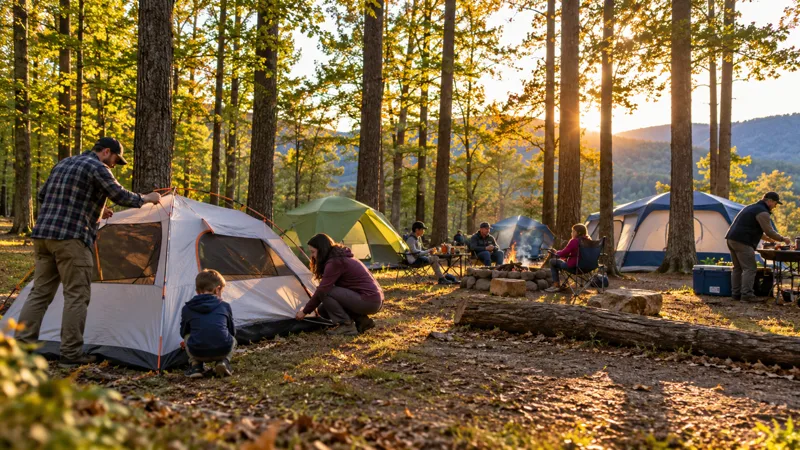
PrepperNet's Bug Out Camp is recorded in this listing for October 16–18, 2026, in Roaring Gap, North Carolina, USA. There is an important date discrepancy: the organizer's current events page shows Bug Out Camp 2026 beginning October 15 at 4 p.m. and directs readers to its member platform for full details. Do not treat the recorded three-day range as a confirmed arrival schedule. Obtain the complete dates, check-in instructions, and venue directly from PrepperNet.
The attached directory source is PrepperShowsUSA's camp entry. As of October 7, the event is upcoming. The organizer describes an annual North Carolina mountain gathering with camping, classes, training, and social connection, but the publicly available overview does not establish the precise curriculum, instructors, fees, or facilities. The guide below independently examines how a camping weekend can test an evacuation plan without turning it into a dangerous or unrealistic exercise.
Define what you are trying to learn
Bug out is a memorable phrase, but household evacuation is a practical decision with a destination and a reason. Begin with a plausible need to leave home under official direction or because the dwelling is unsafe. Identify where you could go, how you would travel, and which people or animals would accompany you. A campground experience can expose packing and comfort problems, but it does not prove that a household has solved road closures, lodging access, medical needs, or reunification.
Choose one manageable objective for the weekend. It might be understanding how long ordinary packing takes, whether a family can locate essential documents, or how comfortably a loaded bag can be carried over a modest distance. Write down the limits of that objective. A supervised camp should not become a private experiment in sleep deprivation, extreme exposure, or rationing. Practical preparation works best when it produces useful observations while maintaining ordinary safety and health needs.
Registration questions come before a loading plan
Ask the organizer whether participation requires membership, separate registration, or an approval process. The public event page directs readers elsewhere for details, so do not assume an open invitation means you can arrive unannounced. Confirm the final address, earliest arrival, departure expectations, parking, vehicle access, and whether late entry is possible. The October 15 start shown by the organizer makes these questions especially important for readers who had planned around October 16.
Ask about accommodation types, water availability, toilets, waste disposal, cooking rules, and weather contingencies. Learn whether particular activities have age limits, prerequisites, or equipment requirements. None should be inferred from the event's title. If you are bringing children or someone who needs an accommodation, describe the relevant needs and request a clear answer about suitability. A general annual-gathering description cannot replace an individual assessment of what your group can safely participate in.
Distinguish the camp bag from the departure bag
A camp bag can be packed for a known schedule and known site. An evacuation bag may need to be accessible quickly and useful at several possible destinations. They overlap, but they are not identical. Camp comforts, hobby equipment, and class-specific tools can make a weekend enjoyable while adding unnecessary complexity to a rapid departure. Keep those categories distinct when reviewing what you take, so the lesson is not simply that every camping item belongs in an emergency kit.
Consider a compact set of personal essentials, then add the items needed for the confirmed camp arrangements. Documents, medication, contact information, lighting, clothing, and communication provisions deserve attention according to individual needs. Obtain professional advice for health-related requirements. A bag that is easy for one adult to carry may not fit another person's abilities. Assigning identical loads to every family member can create avoidable difficulties and obscure the real purpose of the exercise.
Use the vehicle as transport, not a guaranteed refuge
A vehicle offers carrying capacity and familiar controls, but it also depends on passable roads, fuel or charge, mechanical reliability, and safe parking. Before travel, review maintenance, appropriate roadside supplies, and the route to the confirmed venue. Save essential information offline. Identify reasonable rest stops and allow time for delays without making the drive into an endurance test. The recorded location is a town, not proof that a particular road or campsite is suitable for your vehicle.
At home, an evacuation transport plan should also consider what happens if the preferred vehicle is unavailable. Perhaps a relative, accessible transport service, or another arrangement is appropriate; confirm rather than assume. Do not use camp attendance as evidence that you can drive through closed roads or adverse conditions. Follow official instructions and closures. The planning goal is to have options that reduce pressure to make an unsafe journey, not to build confidence in ignoring restrictions.
Walk through a departure without rushing
A rehearsal can begin by listing what must happen before leaving: gather people, locate personal necessities, collect the approved pet supplies, secure only what can be secured safely, and follow the chosen route. Time an ordinary calm walkthrough if useful, but do not make speed the only measure. Note where someone searches, where a container is too heavy, and where an instruction is unclear. Those observations often reveal more than a dramatic practice alarm.
Keep real emergency procedures distinct from the rehearsal. Do not turn off essential medical equipment, shut utility systems without appropriate guidance, or leave vulnerable people without support to simulate independence. A household can learn from describing a difficult step instead of performing it. A tabletop discussion is particularly useful for conditions that cannot be safely reproduced. If the camp offers professional instruction on planning, ask how it can be adapted to your household rather than assuming a demonstration is a universal model.
Sleep and shelter are testable under safe conditions
Once accommodation is confirmed, inspect your shelter and sleeping equipment before departure. Check missing parts, closures, repairs, and how the system fits its user. If a tent is appropriate and allowed, set it up in a safe, ordinary setting before the trip. Manufacturer instructions are a better starting point than improvised changes. A new piece of equipment can look convincing in a shop while proving awkward to assemble or uncomfortable to use.
Use the weekend to note organization: where lighting is kept, how dry clothing is protected, and how footwear is managed around the sleeping area. Do not confuse a camping shelter with protective shelter from every weather hazard. Review the organizer's severe-weather plan and know where participants are directed if conditions become unsafe. Follow official weather guidance and the event's rules. An evacuation plan also needs a destination capable of supporting the people using it, not merely a portable roof.
Food and water need actual arrangements
Ask which meals, if any, are provided and whether participants bring their own cooking equipment. Confirm safe drinking water and container expectations. Familiar food reduces the number of unfamiliar tasks competing for attention. A household with allergies or specific dietary needs should plan those requirements directly rather than expecting a shared meal to accommodate them automatically. Check how food storage and waste are managed at the site.
Cooking systems have different strengths and limitations, including fuel availability, permitted use, maintenance, and weather performance. Do not operate fuel-burning equipment inside tents or other enclosed sleeping spaces. Follow manufacturer and official safety instructions. If water treatment is needed, use the method approved for the setting and understand its limits. A camp is an opportunity to ask qualified questions, not to improvise with untreated sources or unfamiliar wild foods because the event has a survival theme.
Communication should protect privacy as well as connection
Community events can be valuable places to meet people who share interests, but a social introduction does not require disclosing a home address, storage location, medical history, or every detail of a household plan. Share what is necessary for a particular activity and obtain consent before collecting others' information. Ask the organizer about photography expectations. A public image can reveal people or belongings that someone preferred to keep private.
For your own group, agree how to find one another at the site and what to do if a phone is unavailable. Save an organizer contact and a trusted outside contact. A simple check-in routine can reduce confusion without keeping everyone attached to a screen. If radio activities are offered, follow the instructor's guidance and applicable rules rather than assuming ownership of a device permits every use. Communications equipment is helpful when its operators understand its purpose and limitations.
Learning together requires realistic boundaries
Different participants may arrive with different expectations about preparedness. Listen for explanations that identify assumptions, evidence, and limits. A confident statement is not necessarily a suitable recommendation for your home. Ask how a technique changes for children, limited mobility, urban housing, or a different climate. Be wary of treating personal anecdotes as a substitute for professional medical, legal, or technical guidance. You can value another person's experience while still checking whether it applies.
Maintain clear boundaries around tools, demonstrations, and activities that require instruction. Do not copy an unfamiliar procedure away from supervision simply because you saw another participant perform it. If an activity exceeds your comfort or competence, ask for an alternative way to learn. Responsible preparation includes knowing when to seek qualified help. The goal of a community weekend is increased understanding and connection, not proving that you can complete every challenge offered or discussed.
Bring the observations home
After travel, review what the weekend revealed about your actual departure plan. Maybe your bag was manageable but the family documents were hard to find. Maybe the sleeping system worked, while the route plan depended too heavily on live navigation. Identify one improvement to complete soon and another question requiring professional or organizer advice. Separate camp-specific preferences from household emergency needs so that the review stays focused.
Clean and dry gear, replace used supplies, and place essential items where their intended users know to find them. Keep the confirmed destination and communication arrangements current as circumstances change. Before making the trip to Roaring Gap, resolve the date discrepancy through PrepperNet: this listing retains October 16–18, while the organizer's public page begins the camp on October 15. A useful weekend starts with accurate logistics and ends with a more workable household plan.