
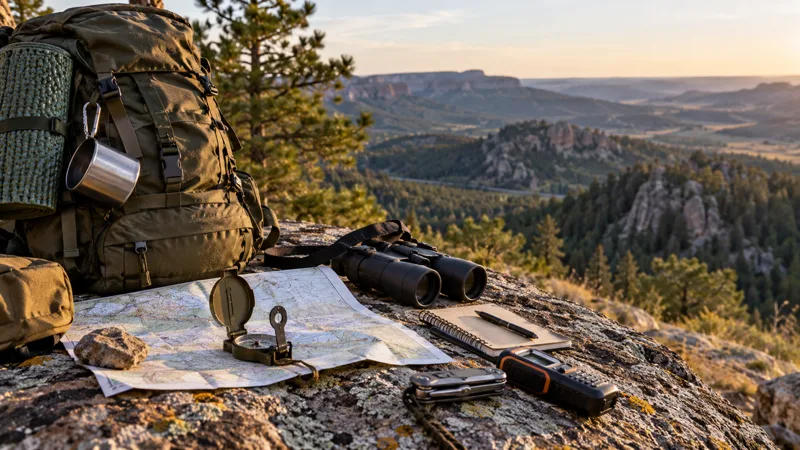
South Dakota Prepper Expo was recorded for October 4, 2026, in Rapid City, South Dakota, USA. This is an archived listing as of October 7: the recorded day has passed. It should not be read as evidence that a future expo has been scheduled or that the event occurred exactly as originally listed.
Archived listing facts and verification limits
- Recorded event date: October 4, 2026.
- Recorded location: Rapid City, SD, USA.
- Category: survival and preparedness.
- Original reference: PrepperShowsUSA.
The referenced website did not provide readable event details during this review. Consequently, the venue, exhibitors, admission arrangements, program, and occurrence of this particular expo are not independently confirmed here. The date and city above preserve the listing's recorded information. Anyone researching a later edition should seek a current organizer announcement and precise venue information before making travel plans.
An expo can still be a useful prompt for household planning without becoming a shopping prescription. The independent guide below focuses on evaluating claims, identifying real gaps, and converting preparedness interest into a manageable plan. It does not describe booths, demonstrations, or speakers at this archived event.
Start with the household problem
Before comparing products, write down the disruption you are trying to manage. A short power outage, a temporary interruption to normal travel, and a need to leave home at official direction involve different decisions. If the problem remains vague, almost any product can sound essential. A specific scenario makes it easier to ask what the item contributes and what responsibilities remain even after you buy it.
Consider a household where two adults commute separately and a child attends school elsewhere. Their first gap may be a communication and collection plan, not an additional storage container. Another household may already have a clear contact arrangement but lack accessible lighting during an outage. Good preparedness begins with those differences. The most compelling display at an expo is not necessarily the most relevant answer.
For Rapid City residents or visitors, use current information from local emergency management and the appropriate weather office to identify actual local concerns. Do not assume that a national vendor's preferred scenario reflects your home's most likely needs. This article does not forecast a particular regional emergency. It recommends connecting general preparedness ideas with authoritative information about the place where you live.
A spending limit can improve your questions
Decide in advance how much you can spend and what that amount must achieve. A budget is not merely a restriction; it forces comparisons. If you choose a large piece of equipment, which smaller needs will remain unresolved? If you buy several inexpensive items, will anyone practice using them? Cost should be judged against the household problem, including storage, upkeep, and the time required to learn.
Separate immediate needs from research candidates. An immediate need is something clearly identified, appropriately specified, and practical to use. A research candidate is interesting but still requires answers about compatibility, safety, or performance. Writing those categories down reduces the pressure to decide while a sales conversation is moving quickly. A special offer does not remove uncertainty about whether the product belongs in your plan.
Bring measurements and relevant specifications when useful. Knowing the space available for storage, the type of device you want to power, or the limitations of your living arrangement can prevent an unsuitable purchase. Avoid sharing unnecessary personal security details with vendors. You can ask practical questions about a product without explaining precisely where valuable equipment will be kept or when your home is unoccupied.
Translate impressive claims into testable questions
When a product is described as reliable, ask what evidence supports that word. Look for the manufacturer's written specifications, instructions, warranty terms, and appropriate certification information where relevant. A demonstration can show an item functioning under selected conditions. It does not necessarily establish durability, performance in your use case, or safe operation by a person who has not received instruction.
For a power product, useful questions include which loads are supported, what limitations apply, how it is recharged, and what additional components are required. For a storage product, ask about suitable contents, environmental limits, and maintenance. For a communication device, investigate service requirements and compatible use. These are categories of inquiry rather than technical endorsements of any product available at an expo.
Be wary of claims that combine many capabilities without discussing boundaries. A compact item marketed as solving several problems may perform each task less conveniently than a simpler alternative. On the other hand, a multipurpose design may be appropriate when space matters and its limits are acceptable. The decision depends on evidence and your intended use, not whether the description sounds more advanced.
Safe power is a planning issue
Fuel-burning equipment deserves particular care because misuse can create a serious hazard. The US Consumer Product Safety Commission's carbon monoxide information is an authoritative starting point for understanding that concern. Follow the equipment manufacturer's instructions and official safety guidance; do not improvise indoor or enclosed operation because weather makes outdoor use inconvenient.
Before buying a generator or other major power device, evaluate whether your property allows the required safe placement and operation. People living in apartments, attached housing, or restricted spaces may face constraints a display cannot resolve. Ask a qualified professional about installation or connection needs. A product's availability for sale does not mean it is suitable for every building or that a household can connect it safely without assistance.
Consider less complex ways to meet smaller needs too. Accessible battery lighting and a plan for charging essential communications may address some disruptions without a major installation. This is not a recommendation for a particular capacity or device. It is a reminder to identify the actual need first and compare solutions that your household can maintain and operate correctly.
Stored supplies must fit everyday life
Food planning works best when it accounts for what people actually eat, dietary requirements, preparation needs, and storage conditions. An unfamiliar product with an appealing shelf-life claim may be less useful than a modest reserve of suitable everyday items that you rotate. Ask how the manufacturer expects the product to be stored and prepared, and do not assume all long-life foods are equally appropriate for every person.
Water arrangements likewise need clear responsibilities. Determine what storage is practical, how containers are maintained, and which official guidance applies to your household. Do not treat a filter demonstration as proof that any available water can be made suitable for drinking. Treatment methods have different limitations, and uncertainty about contamination may require professional or public-health direction rather than experimentation.
Supplies for medicines, assistive devices, infants, or animals may require more specific planning than a general display suggests. Discuss health-related needs with the appropriate professional and ask service providers about continuity arrangements. Avoid buying products promoted as substitutes for necessary medical care. Preparedness should support existing needs, not create a separate plan that forgets the people who will rely on it.
Talk through a disruption without staging danger
A household discussion can reveal gaps without cutting off utilities or creating stressful conditions. Imagine that normal travel is interrupted for the evening. Who communicates with whom? Where is the contact information? Which person checks official updates? What arrangements apply if someone is not at home? The answers are more valuable if every participant understands them in ordinary language. Include people who use different routines or communication methods, and allow them to identify assumptions that do not work for them. A plan that seems clear to its author may still depend on information another household member never received, cannot access, or interprets differently.
Next, imagine a short interruption to power. Locate lighting, check whether everyone can operate it, and identify which information is available without a charged phone. You can do this while normal services remain available. The purpose is to discover inconvenient storage, missing instructions, or conflicting assumptions. There is no need to expose anyone to cold, heat, darkness, or another hazardous condition to learn those lessons.
Write down the unresolved questions and assign sensible follow-up. One person might contact a service provider; another might organize contact details or inspect a stored item according to its instructions. Keep the plan small enough to complete. A long shopping list can feel productive while leaving the most basic agreement unanswered: what will the household actually do when circumstances change?
Evaluate the expo as information
If a future South Dakota event is announced, confirm the venue, dates, admission terms, and exhibitor information through the organizer. Ask whether talks or demonstrations require separate reservations, and whether accessibility arrangements meet your needs. Do not infer those details from a generic preparedness-show website. The archived October date is a reference, not a substitute for a current announcement.
During any expo visit, take notes that preserve the difference between a vendor claim and a verified specification. Record product names, documentation links, and questions still unanswered. If you cannot explain how an item solves a specific household problem, postpone the purchase. A thoughtful visit may end with better information and no new equipment, which can still be a successful outcome.
Afterward, compare the options calmly and complete one practical improvement. Organizing accessible lights, clarifying a contact plan, or arranging qualified advice may contribute more than a dramatic purchase. Use other preparedness listings to locate additional learning, while keeping decisions grounded in current authoritative guidance, your household's real needs, and equipment you can use responsibly.