
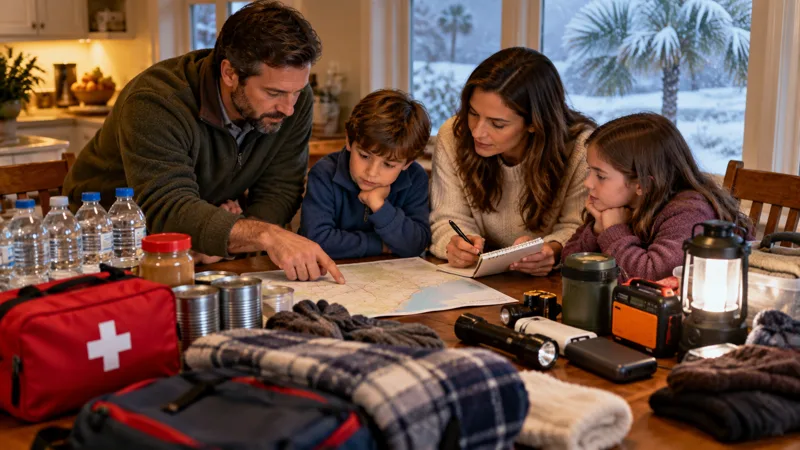
South Carolina winter readiness: prepare for disruption, not a stereotype
South Carolina Winter Weather Preparedness Week is listed for November 29–December 5, 2026, and those dates appear on the current National Weather Service awareness calendar. The original general winter safety page supplies educational resources rather than evidence of a local classroom, admission ticket, or reserved place. Consult current state and local announcements for any specific campaign activities. This article offers an independent household planning exercise that can be used during the awareness week or at another convenient time.
Households sometimes dismiss winter preparation because their memories of recent winters do not include many difficult days. That is a weak basis for a plan. The important question is not how often snow appears in a photograph; it is what the household will do when ordinary services are interrupted. A canceled school day, an unavailable caregiver, or a power outage can create a problem even when the family does not need to travel. Preparing for that disruption is useful without exaggerating the climate or claiming a particular storm is imminent.
Begin with the people, then the supplies
List who normally depends on the home each day. Include people who visit, children who arrive after school, relatives who receive a daily check in, and anyone whose care involves another household. Write down the specific needs rather than a label such as “vulnerable family member.” Someone may need an accessible entrance, reliable refrigeration for a prescribed item, help collecting groceries, or a ride to work. Each requirement suggests a different preparation task and a different person who should help decide the solution.
Talk with those people directly when possible. A well meant plan can overlook what the person actually wants or can use. Ask which interruption would create the most difficulty and what arrangements already exist. Preserve private medical information rather than distributing it in a group chat. Where the plan involves care or equipment, consult the responsible clinician, provider, or qualified professional about suitable backup arrangements. The household can organize communication and access without improvising treatment or technical instructions beyond its knowledge.
Rehearse a school closure without a storm
Choose an ordinary weekday and pretend school or childcare has closed for the following morning. Who receives the announcement? Who can stay with the child? Is the backup person available at the right time, and do they have the necessary pickup permission? Write down the arrangement after everybody agrees. An informal expectation that a relative will help may fall apart if that relative also has a changed work schedule. The rehearsal should reveal those conflicts while there is still time to resolve them.
Include the child's own understanding. Explain where they will go and who will contact them in language appropriate to their age. Keep the message simple and reassuring. If several adults are involved, nominate one person to communicate the final plan so that the child does not hear conflicting instructions. Revisit the arrangement after a change in school, custody, working hours, or transportation. A reliable closure plan reduces the temptation for somebody to make an unnecessary drive simply because no alternative was discussed.
Look at the home after dark
Daylight hides some of the practical problems of losing power. Walk through the rooms in the evening and identify the paths everybody uses. Put ordinary battery lighting where it can be reached without crossing a cluttered room. Check that the people who need it can operate it. A large emergency lantern in a storage box may be less useful than a familiar small light by a bed. Avoid arranging a pretend outage in a way that creates falls or other hazards; this is an observation exercise.
Think about a guest or caregiver arriving after normal lights are unavailable. Can they identify the entrance and reach it without confusion? Does somebody have to come outside to meet them? A clear written address and an agreed contact method can help, particularly when a property has several buildings or entrances. These modest preparations are easy to overlook because they do not look dramatic. They are also the details that determine whether an ordinary task remains manageable during an inconvenient evening.
Make a realistic food plan
Prepare around meals your household already eats. Identify which foods can be used without depending on an appliance that may be unavailable. Consider dietary restrictions, children's preferences, and the ability of the person preparing food. The goal is a workable short term routine, not an impressive stack of unfamiliar supplies. Place the food where the responsible person can find it and track replacement through your normal grocery habits. Use current food safety guidance for storage and discard decisions rather than guessing during an outage.
A useful practice is to write a sample day of meals using only the supplies you intend to reserve. This exposes missing utensils, an assumption about hot water, or a food that one family member cannot tolerate. Do not interpret this as a recommendation to disconnect refrigeration or leave food at unsafe temperatures for an experiment. The exercise takes place on paper or under normal safe kitchen conditions. Its value comes from checking the plan before the household is tired, distracted, and trying to solve several problems at once.
Review heat and power alternatives before they are needed
An alternative appliance is not ready merely because it has been purchased. Read the manufacturer's instructions, understand the intended location, and arrange any required installation or inspection through qualified professionals. Keep documentation accessible. Outdoor cooking or power equipment must not be repurposed as an improvised indoor heat source. The National Weather Service's winter preparation guidance includes fire safety and warns against running a generator in an enclosed space. Follow current official and manufacturer guidance for your particular equipment.
If a safe backup cannot be provided at home, discuss a relocation option before an outage. Confirm that the proposed host is willing and that transport is realistic. A person with essential powered equipment should work with their provider on an appropriate contingency rather than assuming a small consumer battery will meet the need. Write down whom to call and what information they will ask for. A prepared decision to leave for a suitable place can be more practical than trying to recreate every household service with equipment.
Agree on neighbor contact without creating obligation
A neighborhood check in works best when the people involved agree to it. Ask a nearby person whether they would like a message if services are disrupted and which method they prefer. Clarify that an unanswered message has a specific next step, such as contacting an agreed relative, rather than leaving everyone to improvise. Do not assume that a neighbor who is usually available can provide transport, shelter, or medical assistance. Identify the limits so that help remains realistic and respectful.
Keep any shared list small and current. Include the name of the person responsible for maintaining it and a date for review. A list copied repeatedly can expose private information and spread outdated numbers. The practical objective is to reduce isolation and confusion, not to create a new unofficial emergency service. When immediate danger or urgent medical needs are involved, use the appropriate official emergency channels. Everyday contact planning complements professional response; it does not replace it.
Practice interpreting the forecast with your own decisions in mind
Visit the National Weather Service page relevant to your area and learn where warnings, forecast information, and local briefings appear. The Charleston winter resource is one example of a local official starting point. Use the office and location appropriate to your own home and route. Do not treat a single map as a promise about every road or driveway. Write down what decisions the household would change if an official warning applied: postpone a visit, collect necessary supplies earlier, or contact the caregiver.
Keep the decision language concrete. “Monitor the weather” does not say who checks it or what happens next. “Review the official forecast before agreeing to tomorrow's ride” does. If the household uses different devices, make sure each person can locate the same authoritative information. Screenshots should include a timestamp, and old images should not circulate as if they describe current conditions. The awareness week is an opportunity to improve these habits while no urgent decision is required.
Finish the week with an achievable household agreement
At the end of the listed week, gather the decisions on one page. Include the school closure arrangement, a check in contact, the location of lighting and personal necessities, and the process for changing travel. Put an owner beside any unfinished task. Avoid making the document so elaborate that nobody will reread it. The useful test is whether another responsible adult could understand the plan without a long explanation. Ask them to read it and point out what remains unclear.
Review the document after an actual disruption and at the start of the next season. Changes in household membership, mobility, or work patterns may matter more than changes in equipment. Successful winter preparedness in South Carolina means knowing how to keep essential routines manageable when familiar arrangements stop working. It does not require pretending that every day will be a severe winter expedition. A modest, practiced plan gives people room to wait, communicate, and make sensible choices when a disruption finally arrives.
Official resources
Consult the original winter safety source, the Charleston winter weather resource, and NWS preparation guidance. Verify campaign dates in current state or local announcements. Find other planning topics in Survival Skills.