
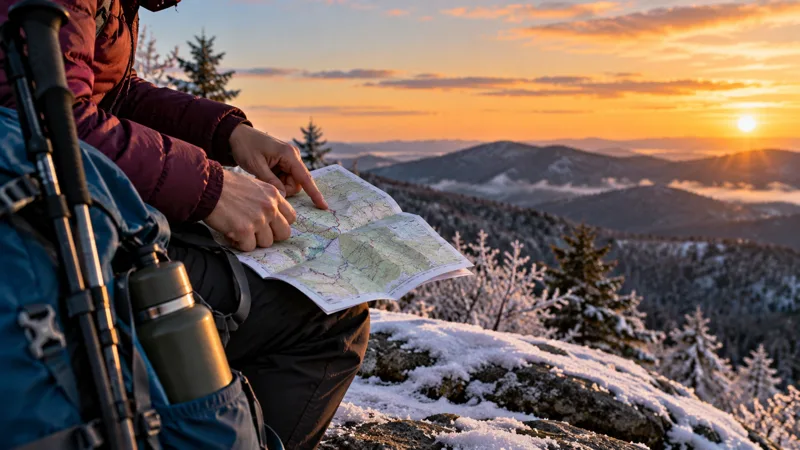
North Carolina's Winter Weather Preparedness Week is scheduled for December 6–12, 2026, in the National Weather Service awareness calendar. It is a statewide public safety campaign, rather than a booked wilderness outing or a course with a single meeting place. For people who enjoy day hikes, the week offers a useful deadline: review how a pleasant winter walk becomes a decision about road access, daylight, changing conditions and the ability to return comfortably.
This guide uses the campaign as a prompt for planning winter day hikes. It does not announce an organized hike during the week. Choose an actual route through its managing agency, then check current access information and the forecast for that location. A date on an awareness calendar says nothing about the weather on your chosen trail.
What the December campaign confirms
- Campaign: Winter Weather Preparedness Week.
- Dates: December 6–12, 2026.
- Area: North Carolina, USA.
- Format: Statewide winter weather awareness and preparedness.
The NWS awareness calendar provides the 2026 dates. The separate NWS winter resources page supplies general winter information; it is not a trail itinerary or a reservation page. Any local talk, guided walk or classroom activity needs its own announcement. Check that announcement for access arrangements rather than treating the statewide campaign as permission to enter a park.
Plan the whole outing, including the drive
Start the plan at your front door, not at the trailhead. Write down the drive, the intended walk and the return journey. A route can be manageable on foot while its access road becomes the weakest part of the outing. Ask the land manager about seasonal gates, parking restrictions and current closures. A navigation application showing a road does not establish that the road is open or appropriate for your vehicle.
Consider what happens if you reach a closed gate after an hour of driving. Decide on an alternative before leaving, preferably one that does not require more travel into uncertain conditions. It might be a shorter managed trail nearer home, a visitor facility that is confirmed open, or simply another day. Do not convert a closure into an invitation to park elsewhere and improvise a longer approach.
Include the return drive when deciding how late to start. A walk ending at dusk may leave several hours of travel still ahead. If the group is tired, wet or hungry, a complicated return journey becomes harder. Keeping the outing modest can preserve the part everyone wanted: an enjoyable walk followed by a routine trip home.
Use a route card that another person can understand
Create a short route card with the park name, trail names, starting parking area, planned direction, estimated return and names of participants. Give it to a trusted person who is staying behind. Agree how you will report your return and what they should do if that report is overdue. A vague message saying you are going hiking in the mountains leaves too much interpretation to someone who may need to explain your plans.
Record the alternative route separately. If you switch before starting, update the contact whenever communication allows. Do not silently change from a short loop to a distant trail and assume the original message still serves its purpose. The value lies in accurate information, not merely in having sent something.
The National Park Service's Hike Smart guidance recommends matching a route to the group, leaving a trip plan and preparing an emergency plan. Those principles also provide a useful framework for walks outside national parks, while the actual rules and conditions still come from the agency managing your destination.
Give daylight its own place in the decision
Choose a turnaround time before you begin. Make it earlier than the latest moment you could theoretically reach the car, allowing room for slower walking and ordinary stops. A scenic destination is optional; returning with a workable margin is part of the plan. Record the turnaround time where everyone can see it, rather than relying on one participant to remember it.
For example, a group might agree to turn at a particular junction if it has not reached that junction by its planned checkpoint. This is a planning example, not a recommended time or distance for every route. The appropriate margin depends on terrain, group pace, conditions and the actual hours of daylight. Choose a shorter trip if you cannot describe the return confidently.
Carry usable lighting even for a daytime outing. Test it beforehand and place it where you can reach it without emptying the bag. Lighting is a backup for delays, not a reason to schedule an unfamiliar winter route into darkness. Consider whether every participant could continue safely if the person carrying the main lamp became separated or needed assistance.
Read the forecast for the place you will walk
Use an official forecast for the destination and review it close to departure. Your home weather may not describe a trail some distance away. Look at the period covering both the walk and the journey home, rather than checking only the temperature at your intended arrival. Read current alerts and the land manager's notices together: one describes weather information, while the other may explain access restrictions.
Make uncertainty visible in the discussion. If the group is debating whether a forecast change will arrive before or after its return, that debate is itself useful information. A shorter route or postponement may be a better fit than trying to make the schedule unusually precise. Avoid treating a favorable screenshot saved several days earlier as a guarantee.
At the trailhead, compare the plan with what you actually find. A closed sign, unexpected surface conditions or a participant already uncomfortable should reopen the decision. Starting because everyone has already driven there is a social pressure, not new evidence that the outing is suitable.
Pack around a delay you can reasonably anticipate
Lay out clothing, food, drinking water, navigation, lighting and personal necessities before packing. Ask a practical question for each item: what problem does this solve during this particular walk? Include a way to protect essential belongings from moisture and clothing appropriate to the expected conditions. Consult the land manager's winter advice for the route, especially where conditions exceed your experience.
Keep a distinct set of supplies in the vehicle, but do not count items left at the parking area as supplies available on the trail. A dry layer in the trunk can help after the walk; it cannot help during an unexpected delay several miles away. This distinction is easy to overlook when making a list from everything you own.
Try the packed bag on during a short, ordinary walk before the trip. Notice pressure points, items you cannot reach easily and whether the weight changes your comfortable pace. Solve these small problems at home. Buying a new pack on the eve of an outing is less useful than understanding how the existing one carries the essentials.
Let the group shape the route
Ask each person about their recent walking experience and any concerns they want considered. Keep the conversation specific: uneven surfaces, pack weight, frequent breaks or discomfort in cold conditions. Nobody needs to disclose private medical details to the whole group. Anyone whose health could affect participation should discuss the outing with their clinician as appropriate.
A group plan should allow people to say they want to turn back without feeling they have ruined the day. Agree in advance that changes will be discussed and that nobody will be casually left to return alone. Choose a route that fits the least experienced participant, rather than hoping they will keep up with the most enthusiastic one.
Assign simple responsibilities without creating a rigid hierarchy. One person may watch time, another carry the map and another hold the contact information. Everyone should still know the basic route and turnaround rule. Shared understanding is more robust than a collection of tasks known only to their individual owners.
Keep practice separate from exposure
Use an easy outing to learn how clothing adjustments, snack access and map checks work for your group. Do not deliberately create a cold emergency to test equipment. Winter skills involving technical terrain, rescue or significant exposure call for qualified instruction and an appropriate supervised setting. Reading this guide or attending an awareness presentation does not establish competence for those activities.
If you discover icy surfaces or conditions beyond the group's ability, reconsider the route rather than assuming an accessory makes the problem disappear. A product demonstration cannot account for every slope, surface or person's technique. The most useful skill may be recognizing that today's destination is outside the plan you prepared.
Keep the car easy to find
Save the parking area's name and location with your route information. At a large or unfamiliar destination, note the trail entrance you used and where the vehicle sits relative to it. Everyone should know that reference. A tired group finishing a walk should not need to reconstruct which of several parking areas was its starting point.
Turn one walk into a better next plan
After returning, take ten minutes to record what differed from expectations. Did the drive take longer? Did breaks happen more often? Was the agreed turnaround time easy to follow? Note practical changes, such as moving a lamp to an accessible pocket or selecting a route with a simpler return, rather than writing a broad resolution to be more prepared.
Close the loop with the person holding your route card. Dry and inspect equipment, replenish consumed supplies and save useful official links with the route notes. During December 6–12, make one improvement that you can verify: an accurate contact plan, a tested light or a better understanding of access restrictions. That is a concrete way to use North Carolina's campaign while keeping the decision to hike grounded in the conditions of the actual day.