
Massachusetts Winter Weather Awareness Week is listed for October 25–31, 2026. The National Weather Service's current awareness calendar confirms that range. As of October 7, the campaign is upcoming. It is a statewide reminder to prepare for winter hazards, rather than evidence of a particular venue, paid workshop, instructor, or daily timetable. The useful question for a Massachusetts household is simple: what would interrupt an ordinary winter day, and what arrangements would keep that interruption manageable?
The dates and the official starting point
The recorded event name is Winter Weather Awareness Week, the location is Massachusetts, USA, and the category is Weather Safety and Preparedness. Consult the NWS awareness and preparedness calendar for the campaign dates and the NWS winter safety hub for general education. A regional page may retain material from a previous campaign; an older headline should not be mistaken for a new 2026 schedule. Any separately advertised community presentation needs its own confirmation of location, access, and timing. This listing does not establish registration requirements or an attendance certificate.
Begin at the front door
A winter plan often starts with equipment inside a cupboard, but the first failure may occur on the short journey between the home and the street. Walk that route while conditions are dry. Identify awkward steps, a dim passage, a gate that sticks, and places where runoff collects. Ask who clears each section and where removed snow can go without obstructing a pedestrian route or another exit. Residents of a multiunit building should clarify responsibility with management instead of assuming a neighbor handles it. An entrance that works for an athletic adult may be difficult for a person using a walker, pushing a stroller, or carrying groceries. The inspection should reflect the people who actually live there. A reachable light switch, usable handrail, and agreed clearing arrangement can matter more than an elaborate emergency purchase.
Design around the people in the household
Gather everyone for a brief conversation about what they rely on each day. One person may need refrigeration for medication, another may need an electrically powered device, and a third may commute before sunrise. Record those dependencies without turning the conversation into an exercise in worst-case imagination. For health needs, ask the clinician, pharmacist, or equipment supplier about an appropriate interruption plan and the limits of any backup. Do not improvise changes to treatment when the lights go out. Include pets, visiting relatives, and someone who might be alone while others are at work. Decide who checks in, how they will communicate, and what happens if a reply does not arrive. A contact list kept on paper can still be useful when a phone is discharged or unavailable. Keep private medical details accessible only to people who need them.
Choose an outage decision before the outage
Remaining home and going elsewhere each involve practical constraints. A resident might have warm clothing and supplies but no safe heating alternative; a friend may offer a room but live across a route that becomes difficult during a storm. Compare those options in advance. Identify an accessible destination, confirm that the host can accommodate the household, and find out how local authorities announce warming locations. Do not assume a public building operates overnight or accepts animals. Decide which conditions should prompt an early move while travel remains feasible, using official instructions and individual health needs. The decision cannot depend only on how brave or uncomfortable someone feels. Transportation, home temperature, power-dependent equipment, and the forecast all affect the choice. If immediate danger develops, call emergency services rather than waiting for a planned contact to become available.
Heating equipment deserves professional attention
The Massachusetts winter storm safety guidance identifies preparation before severe conditions as an important part of readiness. Treat the heating system as a maintenance task with a qualified professional, especially when it has an unresolved fault or unfamiliar controls. Keep the manufacturer's information where an adult can find it. Discuss safe operation, service access, and any fuel-delivery needs before cold weather makes scheduling difficult. Combustion equipment and generators require their specified placement and ventilation; outdoor equipment must stay outdoors and away from openings. Do not substitute a grill, camp stove, or vehicle for an indoor heater. Working smoke and carbon monoxide alarms are essential safeguards, but they do not make an unsuitable heating arrangement safe. A battery power station can support selected electrical loads, yet its capacity and compatibility need careful checking; it should never be assumed to power the entire heating system.
A modest supply system that gets used
Plan meals around foods the household already eats and can prepare safely under the available conditions. A stockpile of unfamiliar ingredients creates another problem when normal cooking is unavailable. Consider the tools required: an opener, serving utensils, drinking containers, and a way to clean hands. Label supplies clearly enough that another household member can use them. Drinking water storage should suit the household and official emergency guidance, with containers maintained according to their instructions. Keep a separate supply for pets where that simplifies the routine. If food safety becomes uncertain after a power loss, consult authoritative food-safety advice; appearance or smell cannot settle every question. Avoid treating freezing outdoor temperatures as a guaranteed refrigerator. The practical aim is a manageable rotation system, with regular replacement through ordinary shopping, instead of a dramatic purchase that remains untouched for years.
Make a commuter plan with a fallback
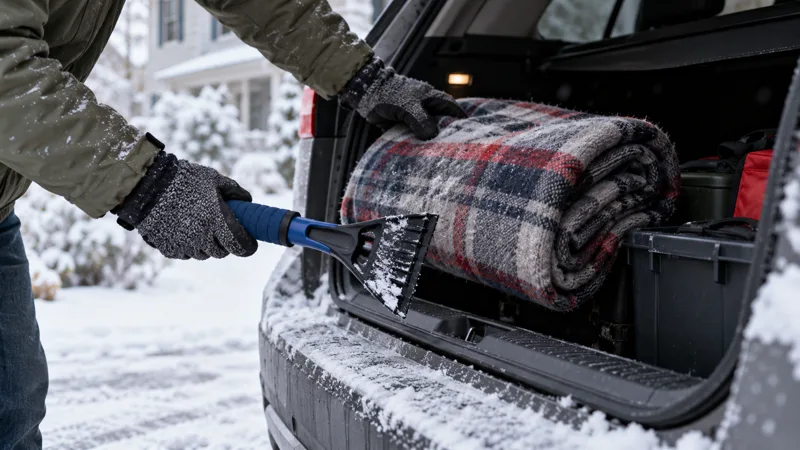
Travel decisions deserve their own page. List normal departure times, destinations, and the earliest point when a cancellation can be requested. Someone who works a shift may need to contact a supervisor before a forecasted disruption rather than discover the policy on the morning of the storm. A transit rider should identify where service notices appear and what a missed connection would mean. A driver should arrange routine vehicle checks with a mechanic, including tires, visibility equipment, and unresolved battery problems. Neither a large vehicle nor four-wheel drive eliminates the consequences of poor visibility or reduced traction. Keep a compact selection of dry layers, lighting, personal necessities, and communication support in the vehicle. The kit is support for an unexpected delay, not permission to continue a trip after authorities advise against it.
Read the forecast as a sequence of decisions
Instead of asking only how much snow is expected, ask when conditions may deteriorate relative to each journey. A moderate forecast can still interfere with school pickup or a late shift. Use the forecast for the actual location, then check official watches, warnings, and local instructions. The weather at a destination may differ from the weather at home. Avoid forwarding an old screenshot without its time and place; an image can circulate long after it stops describing the situation. Set a predictable review routine when a storm is approaching, such as before committing to travel and again before departure. Keep a second information route available if the preferred app fails. A broadcast receiver and a charged phone serve different purposes. Ask household members to explain the next action in their own words, since receiving an alert does not guarantee that everyone understands it.
Compare equipment by the task it solves
Before buying anything, state the task in one sentence. A headlamp may help someone carry supplies on a dark stairway, while a lantern may serve a seated group more comfortably. A rechargeable light offers convenient routine use but still needs an outage charging plan. Disposable-battery equipment provides a different backup, provided the batteries fit and remain serviceable. For footwear, consider grip, fit, warmth, and whether an added traction device can be removed before entering a smooth indoor surface. Follow the product instructions rather than assuming every device works in every setting. Insulated clothing needs to accommodate movement and the layers beneath it. An expensive garment stored far from the exit can be less useful than a familiar coat kept ready. Accessibility, operating simplicity, and maintenance should carry real weight in comparisons.
Give snow removal a realistic workload
Clearing a property is a job, not an endurance contest. Consider who can safely do it, whether a service or neighbor arrangement is needed, and how that agreement works when several homes need help at once. People with health concerns should discuss exertion with a healthcare professional. Mechanical clearing equipment requires training, maintenance, and the manufacturer's operating rules. Keep children and animals away from its working area, and do not improvise repairs while moving parts or power remain engaged. Roof loading, damaged trees, and overhead wires belong to qualified specialists. The campaign is a useful time to obtain service contacts and check access, not to attempt hazardous work on an icy roof. If a blocked exit develops, tell the responsible building manager promptly and follow emergency guidance when access becomes unsafe.
A rehearsal that takes twenty minutes
Choose a calm evening and describe a fictional interruption: the household has lost electricity, one adult is away, and the normal grocery trip has been postponed. Ask each person to find a light, identify the contact list, and explain the next communication step. Leave the utilities operating; a discussion exercise does not require creating a real hazard. Look for friction rather than success theater. Perhaps the light is too high for a child, the charger cable fits the wrong phone, or the pet carrier is behind heavy boxes. Record three improvements and assign an owner and completion date. Repeat a small portion after changes are made. This transforms a campaign week into observable preparation: a clearer entrance, a workable contact arrangement, and supplies that the household can locate and use.
Keep the campaign useful after October
The week ends on October 31, but the household plan should remain easy to adjust. Revisit it after a move, a new medication, a changed commute, or the arrival of a new family member. Save the official source links alongside local emergency contacts and service information. Useful follow-up questions include whether someone can reach the alternate destination without a car, whether the backup power actually supports its intended device, and whether the entry remains accessible after snow is cleared. None of these questions requires attending a class advertised nowhere in the official calendar. They require ordinary conversations and practical checks. Readers can browse other event listings or explore Survival Skills, while keeping local forecasts and professional advice central to decisions that affect health, heating, or travel.