
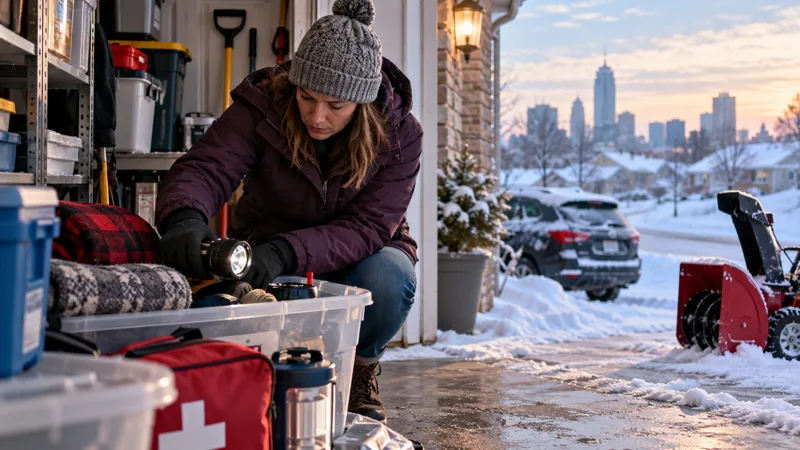
Illinois's preparedness week connects home and travel
Winter Weather Preparedness Week is listed for November 9–13, 2026, in Illinois, USA. That range is confirmed by the National Weather Service awareness and preparedness calendar. It is an upcoming statewide awareness period as of October 7. The observance does not identify one meeting place, instructor, registration system, or daily timetable. Check separate local announcements for any presentation you hope to attend. The campaign date is a useful reminder to prepare, rather than a prediction of weather during that week.
The original NWS winter-safety source provides the broad subject background. This article uses the awareness week as a starting point for an independent guide to coordinating household, commute, and workplace decisions. It does not claim that the suggestions below are official daily campaign themes. The focus is the gap between having supplies somewhere and being able to use them when people are in different places.
Follow one winter day from morning to evening
Begin with a typical household schedule. One person leaves early, another works from home, a child goes to school, and a relative has a midday appointment. Now suppose conditions change before everyone returns. Where does each person obtain official information? Who has keys, medication, suitable clothing, and a charged phone? Which institution controls dismissal or pickup arrangements? This example is hypothetical, but its questions are concrete enough to reveal a weak link.
A shared calendar is not the same as a contingency plan. The calendar says where people intend to be; the plan explains how they communicate when that intention becomes impractical. Agree on the message that means “I am safe and staying here” and identify who coordinates changes. Follow school, employer, and care-provider procedures instead of inventing a competing pickup system. Keep emergency contact details current with those institutions before winter weather makes correction urgent.
Review the return trip as carefully as the outbound journey. A clear morning route does not establish the evening's conditions. An employee who commutes across a larger area may encounter information from more than one official jurisdiction. Save reliable sources for the actual route and check update times. Avoid relying on an old image, a friend's report from another road, or a forecast for a different part of Illinois.
Assign information roles without making one person indispensable
Choose a primary person to monitor official forecasts when disruption becomes possible, then make sure another person knows the same sources. This is a division of work, not a transfer of responsibility for everyone else's safety. Each traveler should understand the current information relevant to their own route. A simple shared message can summarize a change, but the source should remain available for anyone who needs more detail.
Think about how messages reach people. An older relative may prefer a voice call; a teenager may see a text sooner; a worker may be unable to check a phone continuously. Discuss those constraints openly and choose realistic check-in times. A plan requiring immediate replies from everyone may generate confusion instead of reassurance. State what happens if someone cannot answer and when an unanswered message becomes a reason to seek assistance.
Keep a paper copy of essential contacts where it can be found. It should be readable and contain enough context to distinguish similar names. Include the ordinary number for an employer or school when useful, plus appropriate emergency contacts. Update it when arrangements change. A long directory full of obsolete information creates another sorting task at exactly the wrong time.
The vehicle kit should support a safe waiting decision
Supplies cannot turn poor conditions into a safe route. Their role is to support an appropriate decision if travel is delayed or interrupted. Think about communication, lighting, suitable clothing, water, familiar food, and personal needs. Choose items that can tolerate the vehicle's storage conditions and follow their manufacturer instructions. Inspect them periodically rather than assuming that something left in a trunk years ago remains ready.
Accessibility matters. A blanket under a tightly packed load may be impossible to retrieve without stepping outside into unsafe conditions. A charger may fit one passenger's device but not another's. Essential medication should follow professional storage advice rather than being left in a vehicle as a generic solution. Arrange the kit around the people likely to use it. Ask them to find key items during ordinary conditions so that problems emerge safely.
The NWS guidance for being caught in a winter storm explains why vehicle and outdoor decisions deserve special care. Its vehicle advice emphasizes staying with a stranded vehicle rather than wandering into wind-driven snow. If an incident occurs, seek emergency or roadside assistance and follow their directions. Avoid hazardous recovery attempts, untrained towing, or entering traffic to inspect something. This guide does not provide a roadside rescue procedure.
Choose footwear and clothing for transitions
A commute can involve several environments: a warm room, a vehicle, an exposed parking area, and a building entrance. Clothing selected only for the indoor destination may leave a traveler poorly prepared for delay. Keep suitable layers available and consider how they will be carried without becoming wet or difficult to reach. Fit and freedom of movement matter as much as impressive product descriptions.
Footwear should be assessed for the actual task. An attractive office shoe may not suit an outdoor wait, while a heavy boot may be awkward for someone's mobility needs. Ask a qualified retailer or appropriate professional about fit and intended use. If you use a traction accessory, follow its instructions and understand where it should be removed. A product advertised for ice does not establish that every surface or stair becomes safe.
Do a practical check with the belongings normally carried. Can you reach a phone while wearing the chosen gloves? Can you hold a rail and carry the bag without losing balance? Does a hood interfere with seeing around you? These checks are best performed in safe conditions, not on an icy path. Change the arrangement if it makes ordinary movement unnecessarily difficult. Preparation should reduce distraction.
Home readiness must account for whoever arrives first
Imagine that one household member returns while power is unavailable and others remain elsewhere. They should be able to find lighting, understand the current plan, and access an appropriate meal. Supplies requiring a knowledgeable person to unlock, explain, or assemble them are less useful to someone alone. Label key locations and demonstrate unfamiliar controls ahead of time. Do not create instructions for hazardous equipment that exceed the person's competence.
The NWS before-the-storm guidance highlights preparation across homes, workplaces, vehicles, and animal needs. For your household, turn that broad approach into a dependency review. Which heating system requires power? Which food needs refrigeration? Which device supports communication? Obtain professional contingency advice for medical equipment and installed heating systems. An awareness campaign cannot establish how long a specific person can safely remain in an unheated building.
Decide what would trigger moving to a confirmed alternative location. That decision should account for health, available heat, safe access, and current official advice. Include everyone involved and their animals where applicable. Do not rely on a destination that has not agreed to receive you. Keep the route and contact information available, while recognizing that current conditions may require a different response.
Equipment tradeoffs are easier when the job is defined
For lighting, compare reach, controls, stable placement, power compatibility, and maintenance. A small headlamp frees hands, while a room lantern can support shared tasks. A rechargeable device fits a household that reliably maintains charging equipment; another household may prefer replaceable batteries. Test the controls and check the manufacturer's operating and storage instructions. You need not purchase every format to solve one lighting problem.
For communication power, identify the devices that actually need charging and keep the correct cables together. A large battery pack that nobody remembers to charge may provide less dependable support than a modest unit integrated into a regular routine. Record inspection and replacement requirements. Avoid connecting unfamiliar equipment to household wiring or assuming a portable product can support a medical device without appropriate professional confirmation.
For food and water, emphasize familiar use and appropriate storage. Containers should be manageable for those who will lift or pour them. Foods should fit dietary needs and the available preparation methods. Follow current public-health and product guidance for safety. A preparedness shelf is not complete merely because it looks full; people need to know how to use and replenish what it contains.
Use the five days to close five small gaps
You could spend one evening updating contact information, another inspecting lighting, another clarifying commute alternatives, another reviewing medical or heating contingencies with the right professional, and another discussing the whole plan. This is a suggested household rhythm, not the campaign's official schedule. Choose tasks that are specific enough to finish. If a professional appointment is required, booking it is a useful first result even when the visit happens later.
Finish with a short discussion in which each person explains what they would do if they cannot return at the expected time. Look for clear answers rather than perfect wording. Correct ambiguous arrangements and store the revised contact sheet where it is accessible. Set a later review date, especially if household schedules change. The aim is for the plan to remain usable through the season.
November 9–13, 2026 gives Illinois residents a verified awareness window. The valuable outcome is coordination: a traveler who can delay, a household member who can find supplies, and a family that knows how to communicate. Check current local information when weather threatens and keep individual medical or building decisions with qualified professionals. Readiness grows when those ordinary transitions are planned before conditions make them difficult.