
Alabama's awareness week is a planning window
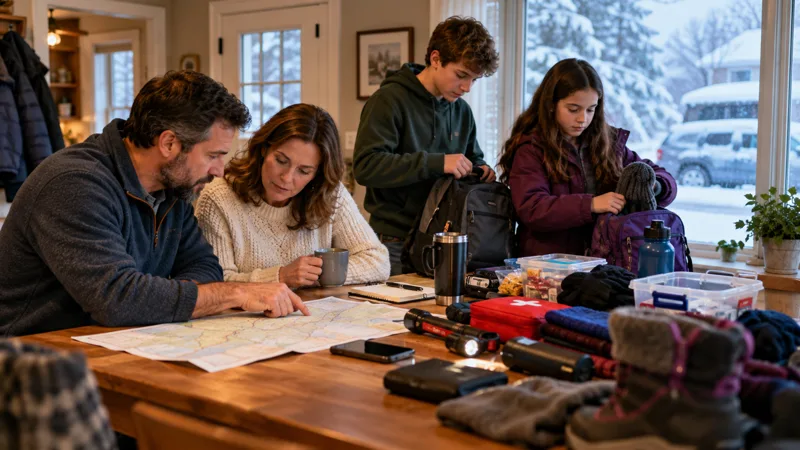
Winter Weather Awareness Week is recorded here for November 8–13, 2026, in Alabama, USA. The National Weather Service awareness and preparedness calendar confirms that Alabama date range. As of October 7, the campaign is upcoming. This is an awareness observance, not a single ticketed class at a named venue. Any local presentation, school activity, or community meeting needs its own announcement. There is no statewide registration or admission arrangement established by this listing.
The original NWS winter-safety link remains the general source for the subject. Use the week to review household and travel decisions before winter disruptions occur. The independent exercises below do not represent an official six-day curriculum. They are a way to make an awareness date useful: identify dependencies, agree on who acts, and decide what information would change a plan. A campaign is successful when ordinary routines become easier to manage safely.
Begin with the possibility of an inconvenient amount of ice
A household can underestimate a winter situation because it does not resemble a dramatic snowstorm. The relevant planning question is not whether the landscape looks impressive. It is whether the route, power supply, or building remains suitable for the people using it. Think about a morning when the driveway appears manageable but a bridge on the commute is affected, or when a modest weather change coincides with an appointment that feels difficult to postpone.
Those examples are hypothetical, not a forecast for the awareness week. Their purpose is to expose habits. Does the family wait for a road to be visibly covered before considering delay? Does someone decide based only on conditions outside the front window? Does an employee assume that an open workplace means every route is safe? Ask these questions before weather makes the answers urgent. Different departure times and destinations can produce different decisions within one household.
Write down a practical alternative for each recurring obligation. An appointment may permit rescheduling or a remote conversation. A school pickup may require communication with the school rather than an improvised change. A work shift may involve an established supervisor procedure. Clarify those arrangements in advance; do not assume an informal household plan overrides the institution's instructions. The ability to delay is a resource worth preparing.
Read the forecast as a changing decision aid
Use official local forecasts and road information for the actual route. Alabama spans different areas, so a statewide statement is not a complete description of one trip. The NWS Birmingham winter-weather page is one regional example of official winter information. Choose the NWS office and location forecast relevant to you, and check update times. An old screenshot may be accurate about what was expected earlier while being unsuitable for the current decision.
Make a habit of reading the explanation as well as the weather symbol. Timing, uncertainty, temperature changes, and the area affected can matter to a commute or a vulnerable household. If information is uncertain, ask what your plan would be under more than one plausible outcome. You do not need to become a meteorologist to avoid putting all preparations behind one narrow prediction. A modest early change may be easier than a rushed response after conditions deteriorate.
Compare the forecast to decision deadlines. Someone responsible for an early shift may need to check the previous evening and again before departure. A household with a long drive may need more time to change arrangements. Decide who checks and how they communicate the result. “I thought you were watching it” is an avoidable failure. Use a reliable information source and a simple message everyone understands.
Map the home's dependence on electricity
Begin in the room where the household spends an ordinary evening. Which objects stop working without power? Lighting is obvious; a router, garage door, cooking appliance, or charging station may be less immediately noticeable. Heating systems can also require electricity even when their fuel is something else. Ask a qualified technician about the particular system rather than assuming it will continue operating. Record the limitation in the family plan.
Next identify personal needs. Medication storage, mobility equipment, medical devices, infant supplies, and communication access can affect whether staying home is appropriate. Discuss medical contingencies with the clinician or equipment supplier. A general awareness article cannot establish backup duration or acceptable temperatures for a person's care. The goal is to have a professional plan and contact route before roads or communications become difficult.
Choose an alternative destination and the conditions for using it. A friend's house is useful only if they have agreed, can receive everyone involved, and remain accessible. A public warming location must be confirmed through current local information, not assumed to operate every winter. Include pets and transportation. Decide early enough that moving does not become a more hazardous choice than it was when the outage began.
Keep warmth decisions separate from dangerous improvisation
Comfort pressure can lead people to use equipment in ways it was never designed to support. During the awareness week, inspect manufacturer instructions for any heater, generator, or other device you expect to rely on. Understand approved placement and operating conditions. The Consumer Product Safety Commission carbon-monoxide information center provides authoritative guidance on the hazard associated with fuel-burning equipment. A generator belongs outdoors, away from openings, according to current official and manufacturer instructions.
Do not use a cooking appliance as an improvised household heater or bring outdoor combustion equipment into an enclosed living space. If you cannot maintain a suitable indoor environment, use the planned relocation and assistance arrangements. A carbon-monoxide alarm is important, but its presence does not make an unsafe operating location acceptable. Consult qualified professionals for installed systems, electrical connections, or repairs. An emergency is a poor time to experiment with an unfamiliar setup.
For low-complexity improvements, consider whether everyone can find lighting and warm clothing. Inspect the devices you already own and keep appropriate spare power supplies accessible. A familiar battery lantern may do more for a household's immediate readiness than an ambitious purchase requiring several unplanned accessories. Select equipment that household members can operate, then demonstrate it during a calm evening.
A short household rehearsal reveals hidden friction
Try a discussion rather than an actual loss of necessary services. Tell the household that a hypothetical outage has begun and ask everyone to explain their first few actions. Nobody needs to turn off medical equipment, heating, or other essential systems. One person might find lighting, another consult official information, and another contact a relative. The exercise exposes confusion without creating the disruption you are trying to prepare for.
Listen for dependencies that cross rooms or people. The only working flashlight may be in a vehicle that is elsewhere. The household contact list may be on the phone with the lowest charge. Someone may know how to open the garage manually while everyone else assumes the door will operate. Follow manufacturer safety instructions for any mechanical arrangement, and obtain professional assistance where required. The useful result is a clarified plan, not a risky demonstration.
Afterward, change only a few things that remove real obstacles. Move a lamp to an accessible location, print essential contacts, or agree on a check-in message. Assign responsibility for replenishing consumables. Avoid creating a maintenance system so elaborate that it is abandoned. A small routine followed consistently can outperform an impressive inventory nobody understands.
Build travel contingencies around the trip's purpose
A trip to collect medication has different flexibility than a recreational drive. Determine which needs can be addressed before worsening conditions and which require professional or local assistance. Keep the vehicle maintained according to its manual, and obtain qualified advice about tires and winter suitability. Supplies in the car should support waiting and communication, but they do not make an unsuitable route safe to drive.
Discuss transportation with people who depend on others. An older relative may have an appointment plan but no plan for the return journey if weather changes. A student may know where to wait but not whom to call after a service cancellation. Write down the agreed contacts and the institution's instructions. Include a realistic response if the usual driver cannot come. Do not encourage an untrained person to attempt hazardous recovery work or walk an unsafe route.
Turn November's reminder into an assigned action
Choose three outcomes for the awareness week: an information source everyone knows, one clarified power or heating contingency, and one travel obligation with an alternative. Put names and review dates beside them. For example, someone can contact the heating contractor, another can confirm a relative's check-in arrangement, and another can inspect household lighting. These are specific enough to complete and easy enough to revisit.
The November 8–13, 2026 observance provides the timing; your household provides the circumstances. Keep the verified campaign date separate from any unannounced local programming. Review current forecasts when weather threatens, seek professional guidance for medical and building needs, and use the planning window to reduce rushed decisions. Alabama winter readiness can begin with a conversation about ordinary obligations and become stronger through a few clear, maintained arrangements.
Include people outside the household
A winter plan can also account for a neighbor who lives alone or a relative across town. Ask what kind of check-in they would welcome and establish boundaries around assistance. Do not promise transportation or repairs you cannot safely provide. A scheduled phone conversation may be the most useful contribution. If there is an urgent threat to health or safety, contact emergency services rather than trying to resolve it through a casual arrangement. Record the agreed contact method so that concern becomes a clear action instead of repeated unanswered messages.