
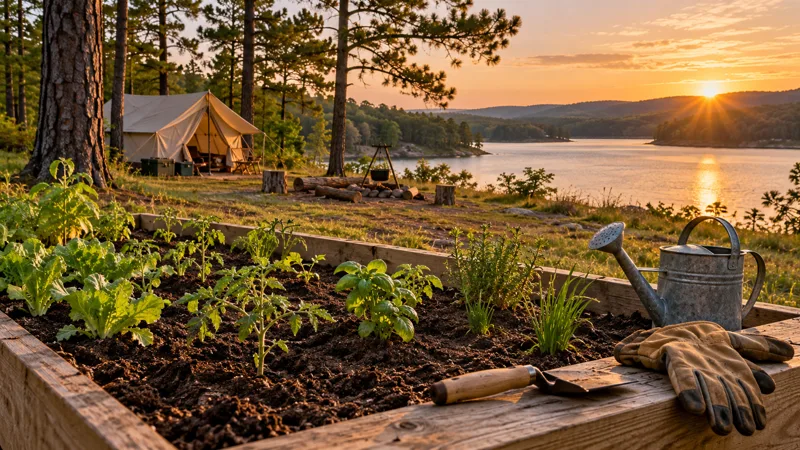
Mountain Readiness Lone Star is announced for March 12–14, 2027, at Salmon Lake Park in Grapeland, Texas, USA. The organizer's events page and dedicated Lone Star page both identify these dates and location. The organizer describes the event around preparedness, homesteading, self-reliance and outdoor learning. For a prospective visitor, the central planning question is how to turn a three-day visit into a manageable educational experience without assuming that every advertised topic or activity will fit their experience.
A multi-day event gives you time to compare explanations, ask follow-up questions and revisit notes. It also requires attention to accommodation, travel, energy and the conditions of any outdoor session. Use the announced dates as a starting point, then confirm the actual 2027 schedule, registration terms and participant requirements before committing to particular activities.
Confirmed announcement and details still to check
- Event: Mountain Readiness Lone Star.
- Dates announced: March 12–14, 2027.
- Venue announced: Salmon Lake Park.
- Location: Grapeland, Texas, USA.
- Official sources: Mountain Readiness events and the Lone Star event page.
The website navigation also contains schedules for other events and years. A 2026 schedule elsewhere on the site should not be treated as the 2027 Lone Star timetable. Confirm the name, year and location on any schedule you save. The announcement does not by itself establish current ticket inventory, a guaranteed instructor appearance, a particular class seat or a credential earned through attendance.
The Lone Star page directs camping arrangements through Salmon Lake Park. Check current accommodation arrangements with the venue separately from event admission. Ask whether any reservation you make covers the nights you need and what arrival, departure and cancellation rules apply. Do not assume that admission includes lodging or that an advertised camping option is available for your preferred dates.
Choose a learning thread for the weekend
Pick one main subject you would like to understand better and one secondary subject. A main thread might be household readiness, a homesteading question or a foundational outdoor skill, depending on the confirmed program. Write what you already know and the question you want answered. This helps distinguish a useful introductory session from something whose prerequisites you do not yet meet.
Leave room for discovery. The goal is not to attend every possible session but to develop a clearer understanding of a few subjects. A visitor who chases unrelated activities may collect plenty of notes without knowing how any of them fit together. A learning thread gives later questions a place to land.
Describe your intended use when asking for advice. Someone interested in a small rented home may need a different application from a person managing land. An instructor can respond more helpfully to a specific situation than to a general request for the best solution. Share only the details needed for the discussion.
Read session descriptions as requirements
When the 2027 program is available, examine each description for format, length, prerequisites and equipment. A lecture, demonstration and supervised practice session create different opportunities. Ask what participants actually do, not merely what topic appears in the title. If a description is unclear, seek clarification before booking.
Check whether a session has a separate reservation, age restriction, fee or attendance limit. This guide does not establish any of those arrangements. Note which activities are confirmed for your admission and which remain possibilities. A general event ticket should not be assumed to give unrestricted access to every specialized activity.
Where the subject involves health, emergency care, tools or another consequential skill, ask what level of instruction is offered and what qualifications are relevant. Treat an introduction as an introduction. Attendance alone does not demonstrate that you can perform a procedure independently, teach it to others or substitute it for professional service.
Plan three days with room to think
Build a draft schedule only after obtaining the correct timetable. Include arrival, orientation, movement between locations and ordinary breaks. Mark one or two priority sessions each day and leave space for questions or a replacement if something changes. A crowded schedule can make the visit feel productive while reducing the time available to understand what you heard.
A possible planning pattern is to use the first day for orientation and foundational material, the middle day for your main subject and the last day for clarification and next steps. This is an example of organizing your visit, not the organizer's published program. Adapt it to the actual sessions and your own energy.
Check how far activities are from each other and whether the site can accommodate your access needs. Ask the organizer about appropriate arrangements before arrival. Do not infer that photographs of the venue describe every route, surface or facility you will use. A short break may need more time if moving between areas is demanding.
Separate event readiness from camping readiness
Create two packing lists if you intend to stay at the venue: one for attending sessions and another for overnight arrangements. The first should reflect the organizer's instructions, personal necessities, weather-appropriate clothing, drinking water, food arrangements and a way to take notes. The second depends on the accommodation you actually reserve.
Do not use the existence of a campground as proof that your camping setup suits the expected conditions. Confirm what your reservation provides, what you must bring and which site rules apply. If you are unfamiliar with the equipment, practice its ordinary setup in an appropriate setting before the trip. Arrange suitable instruction for activities beyond your experience.
Keeping the lists separate prevents a common mistake: having an item somewhere in the campsite while needing it during a distant session. Carry the essentials needed for that part of the day and keep the rest organized at your accommodation. Plan how you will secure belongings according to venue rules.
Prepare for outdoor learning without assuming the conditions
Review current official weather information near departure and again during the event. A March date in Texas is not a guarantee of a particular temperature or a dry weekend. Ask how the organizer handles weather changes, where updates appear and what participants should do if an outdoor session is altered.
Follow the specific instructions for a confirmed field activity. Ask whether participants need particular clothing, protective equipment or footwear, and whether the organizer supplies anything. Do not bring specialized tools for participation unless they are requested and permitted. A large bag of equipment can complicate learning if nobody has explained its role.
The National Park Service's Hike Smart guidance recommends matching activity to ability, checking conditions and understanding equipment before use. Those principles provide a useful reminder for outdoor participation, while the event organizer and venue supply the actual session rules. Choose a less demanding activity or decline participation when the fit is unclear.
Be ready to ask for an explanation
In a practical session, tell the instructor when you do not understand a direction or cannot perform a task comfortably. Ask for clarification before proceeding. Avoid copying another participant simply because they seem confident; their experience and equipment may differ from yours. Respect the instructor's safety boundaries and the session's scope.
Observe how a technique is framed. What conditions does it assume? What is the intended outcome? When would the instructor advise against it? Record those limits alongside the method. A note containing only the visible action can become misleading after you forget the circumstances of the demonstration.
When a task needs continuing practice, ask where an appropriate next learning opportunity can be found. Seek qualified training for consequential skills rather than turning an event note into a self-directed emergency experiment. The weekend can identify a useful path forward without completing every step on that path.
Take notes that distinguish observation from advice
Use a simple page for each session: topic, date, instructor or presenter as identified, key question, explanation and follow-up. Mark whether something was demonstrated, stated or inferred by you. If the presenter provides references, record the exact title or link. These distinctions make it easier to check an idea later without accidentally claiming firsthand proof.
Ask permission before recording or photographing instruction and follow the event policy. A written question and a short answer may be more useful than hours of video you never review. Do not capture another person's private information or share an image as proof that they endorse a product or technique.
Set aside time each evening to reread notes. Circle one unclear point to ask about the next day. If you cannot explain an idea in ordinary language, it may need clarification before application. This small review makes the third day valuable because you arrive with questions generated by the first two.
Finish with a practice plan and a few verified contacts
Before leaving, identify what you can safely practice in an ordinary setting, what requires further instruction and what needs more research. Give each category a next action. A household planning exercise might be ready to begin; a technical procedure may remain a training goal. Keep those outcomes separate.
Exchange contact details only with mutual agreement and record why the connection is useful. A vendor, instructor and fellow visitor offer different kinds of information. Follow up with specific questions and verify consequential claims through appropriate sources. Meeting someone during the weekend does not independently establish their expertise.
After returning, share a short account with anyone affected by your plans: the subject investigated, the limits you learned and the next manageable step. Mountain Readiness Lone Star's announced March 12–14, 2027, visit can support that process, provided the current program and reservations are checked. The lasting value is a clearer direction for learning and practice, supported by accurate notes rather than an overloaded schedule.