
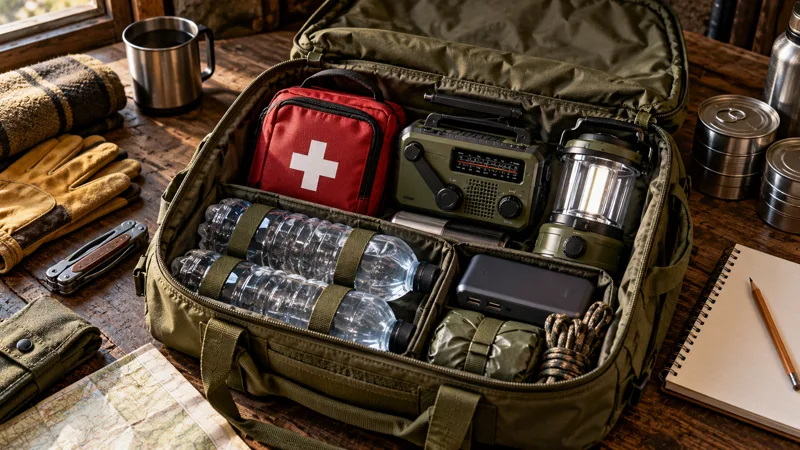
This listing records the Fishersville Prepper Show for February 6–7, 2027, in Fishersville, Virginia, USA. The linked source is PrepperShowsUSA. The source page did not provide readable event details during this review, so the recorded dates and city have not been independently confirmed. Treat them as provisional planning information and obtain a current organizer announcement before paying for travel or assuming that a show will take place.
If the event is confirmed, a useful visit can center on evaluating preparedness claims. A show creates an opportunity to ask questions, inspect products where permitted and obtain written information. It does not make every claim reliable or every purchase suitable. Arrive with a few defined household needs and a method for deciding what deserves further research after you leave.
Verify the show before evaluating its exhibitors
- Recorded name: Fishersville Prepper Show.
- Recorded dates: February 6–7, 2027.
- Recorded city: Fishersville, Virginia, USA.
- Source to consult: PrepperShowsUSA.
- Verification status: Dates, city and operating details require current organizer confirmation.
Ask for the venue, public opening hours, ticket arrangements and the contact responsible for changes. Confirm whether any talks or demonstrations are part of admission and whether separate reservations are needed. This guide does not establish prices, exhibitors, speakers, parking or a curriculum. A previous edition's advertisement is not evidence that the 2027 arrangements are identical.
Keep the confirmation you receive with your travel notes, including its date. If different announcements conflict, ask the organizer to resolve the discrepancy. Do not choose the version that happens to fit your preferred weekend. The basic event check should happen before you devote effort to comparing products you may never encounter there.
Write the need without naming a product
Describe a problem in a sentence, such as needing usable lighting during a household power interruption or wanting a clearer way to organize essential supplies. Include who will use the solution and where it will be kept. Starting with a need makes it easier to recognize whether a demonstration addresses your circumstances or only an impressive scenario.
Then note the limits: available storage, budget, permitted equipment and your willingness to maintain it. An apartment household and a household with substantial outdoor space may need different answers to the same general problem. A product can perform as advertised and still be unsuitable for your building, routine or ability to use it.
Select two or three needs for the visit rather than trying to redesign your entire preparedness plan at once. Bring brief notes about existing equipment and its model numbers where compatibility matters. Keep sensitive personal information out of materials you might hand to a vendor. You can ask useful questions without providing a detailed account of your home or schedule.
Separate a demonstration from a documented claim
When someone demonstrates a product, ask what the demonstration establishes. Does it show one function, a particular setting or an example prepared for the booth? Ask which conditions differ from ordinary use. A quick presentation can help you understand controls and construction, but it rarely answers every question about long-term performance.
Request the exact model name, operating instructions and the source of any stated test result. A claim about a product family may not apply to the model on the table. Likewise, an accessory shown in a demonstration may not be included in the quoted price. Write down those distinctions while the person explaining them is available.
The Federal Trade Commission's advertising guidance states that advertising claims should be truthful and supported by evidence. For a visitor, a practical consequence is to ask for support rather than treating confidence, popularity or a compelling story as proof. This is a research habit, not an accusation that a particular exhibitor is misleading anyone.
Ask questions that reveal the limits
Use questions that invite a specific answer: under what conditions should this item not be used? What maintenance does the owner perform? Which consumables are required? What does the warranty exclude? An answer that identifies limitations can be more useful than an uninterrupted list of benefits because it helps you decide whether your intended use is reasonable.
For equipment that depends on charging, replacement parts or a subscription, ask where those dependencies appear in the instructions. Consider what happens when you cannot obtain a replacement immediately. This does not mean every dependency makes a product poor; it means the dependency belongs in the decision and the cost calculation.
Do not use an informal booth explanation as authority for medical treatment, electrical work or another activity requiring professional expertise. Ask what recognized training or qualified advice is appropriate. If a claim would affect someone's health or safety, verify it through the relevant authoritative source before relying on it.
Build a comparison note that survives the show
For each serious candidate, record the model, the price as quoted, what is included, its stated limits and the official contact. Add a separate space for unanswered questions. Distinguish something you observed from something you were told. This prevents a later conversation from turning a vendor's explanation into your own supposed test result.
With permission, photograph a label or information sheet rather than relying on a hurried memory of specifications. Follow the event's photography rules. Avoid capturing other visitors' private information. If materials are unavailable, write down a web address and model identifier so you can find the official documentation afterward.
A comparison is useful even when candidates solve the problem differently. One option may require more storage, another more maintenance and another training before use. Compare those tradeoffs against the original need. A larger set of features should not automatically win if the household will never use or support them.
Count ownership costs, not just a show price
Set a spending limit that includes the visit itself. Travel, admission if required, meals and any accommodation reduce the money available for household improvements. Leave room for follow-up research and training. A useful visit can end with no purchase if you discover that a different approach better addresses your needs.
For a proposed purchase, list accessories, consumables, maintenance, storage and possible shipping costs. Ask whether the displayed price includes the exact configuration you are considering. If a lower-cost version lacks something essential to your use, compare the complete versions instead of their headline prices.
Request written terms for returns and warranty service before paying. A verbal assurance that you can always get help does not explain who handles a problem, what documents you need or whether shipping is your responsibility. Read the actual terms and retain the receipt. This guide does not promise any particular cancellation right or return policy.
Evaluate education as carefully as equipment
If the confirmed program includes talks or classes, ask what the session is intended to teach and how much supervised practice it offers. A short introduction can be valuable while remaining an introduction. Do not infer certification, instructor credentials or competence to perform a demanding skill from a topic title.
For a training provider, ask about prerequisites, the setting, the participant equipment list and the next step after the session. Check relevant qualifications independently where they matter. If a course description is broad, request a concrete description of the learning outcome before reserving a place.
Keep separate notes on information you want to learn and equipment you want to buy. Sometimes instruction resolves the need without another purchase; sometimes it reveals that the purchase requires capabilities you have not developed. Either discovery can prevent money going toward something the household cannot use well.
Make a follow-up budget with a waiting period
After the visit, review the notes at home alongside your existing supplies. Sort candidates into those ready for a decision, those requiring evidence and those that no longer fit. Choose a reasonable waiting period for nonessential purchases so that a booth conversation does not become the only basis for a lasting commitment.
Allocate the budget by need rather than vendor. If lighting is the priority, compare all credible options for lighting before spending the remaining money on an unrelated offer. Keep a reserve for items you discover need replacement during the inventory. This gives an overlooked practical problem a chance to compete fairly with an engaging demonstration.
For each item you eventually choose, plan where it will live, who will learn its operation and when you will check it. Read instructions before use and arrange appropriate professional help where necessary. An unopened box is an unfinished decision, even when the purchase itself seemed well researched.
Keep unanswered claims visible
If a vendor promises to send documentation later, record the question and an expected follow-up date. Until the material arrives, mark the claim as unresolved. Do not let a friendly conversation close the gap by implication. If the documentation describes a different model or does not address your intended use, ask again or move on. Your decision can remain pending without becoming an argument about the exhibitor's character.
Judge the visit by what you can explain afterward
A productive show visit should leave you able to explain a few things clearly: which need you investigated, what evidence you obtained, which limitations matter and what action comes next. Share those findings with household members who will use the equipment or participate in the plan. Their questions may change the choice, especially if they were absent from the demonstration.
The first action for this Fishersville listing remains verification. February 6–7, 2027, and Fishersville are the recorded details, not independently confirmed arrangements. Once an organizer supplies current information, use the visit as a place to ask precise questions and build a manageable follow-up plan. The strongest purchase is one whose purpose, limits and ongoing costs remain understandable after the show atmosphere has faded.