
Wilderness Survival Basics in Bradford: make the fundamentals work together
Wilderness Survival Basics is listed for October 10–11, 2026 in Bradford, Vermont. The FeralSkills source page identifies Roots School and describes basic subjects including shelter, water, fire and food. Confirm the current registration arrangements, meeting instructions and equipment requirements with the provider before traveling. The listing does not establish every detail of a participant's experience. This independent guide examines how beginning outdoor skills fit together and how to prepare useful questions for instruction. It is not a field procedure for building shelters, treating water, lighting fires or identifying edible plants.
Begin with a likely problem, not a dramatic scenario
For many beginners, the most relevant difficulty is an ordinary outing that takes longer than expected. A wrong turn, a delayed return or changing weather can create practical needs without resembling a survival television program. Describe one such situation from your usual activities. What information would be missing? Which supplies would be hard to access? Who would know you were delayed? These questions make the fundamentals concrete. They also prevent a course from becoming an excuse to plan unnecessary hardship as a test of character.
A practical goal might be to pack and explain a day kit that supports your real route and conditions. Another might be understanding which decisions should happen before leaving home. Start with one goal you can assess afterward. “Learn survival” is too broad to reveal whether the weekend helped. “Understand why my shelter arrangement suits an unexpected delay” gives the instructor a useful conversation. It also directs later practice toward a specific weakness rather than toward collecting techniques with little connection to your activities.
Think of protection as a system
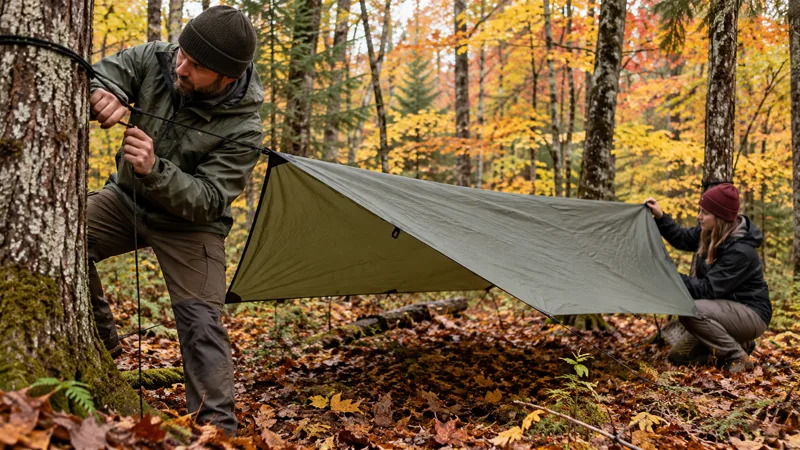
Shelter includes more than a structure. Your clothing, weather information, route choices and ability to change plans all affect exposure. Ask the instructor how these pieces interact in the situations being taught. Do not assume a single improvised design works across different conditions. A supervised demonstration can illustrate a principle while depending on materials or a setting unavailable on your next trip. Write down those dependencies. Knowing when a method is inappropriate is part of learning it, not a qualification added after the interesting lesson.
Compare the demonstrated idea with the ordinary equipment you already carry. If a rain shell is worn out or inaccessible in the bottom of a pack, fixing that issue may matter more than mastering a complicated construction. Ask how to inspect and maintain the relevant equipment, using its instructions. Consider where it can be reached without unpacking everything. Small improvements in access and familiarity are especially helpful for beginners. They let attention remain on the environment and the group instead of on a search through disorganized supplies.
Give water questions precise boundaries
Ask what drinking-water arrangements apply during the course and what participants must bring. If treatment is discussed, identify the actual method, source conditions and limitations covered by the instruction. Do not infer that one product makes every water source acceptable. Follow authoritative guidance and manufacturer directions for your equipment. The National Park Service Ten Essentials framework includes hydration within a broader outdoor planning system. It is a reminder to prepare appropriately, not a universal quantity or treatment procedure for every setting.
For your own outings, decide how water is carried, where a planned refill would come from and what happens if that source is unavailable. A plan relying on a single unverified source can fail even when the treatment equipment works. Ask the provider how beginners should assess such dependencies. Avoid making field practice depend on deliberately running out of water. A calm planning exercise can reveal the same weakness without creating a hazard. Keep individual health needs in the conversation with appropriate medical professionals when relevant.
Learn the decision around fire
Fire attracts attention because the result is visible and satisfying. However, the first questions concern permission, conditions and whether it is the appropriate response. Ask the instructor how the course handles land rules, restrictions, supervision and complete extinguishment. A technique taught on an authorized site should not be transferred to another property without checking the rules. Do not practice in unsafe conditions to see whether the method is reliable. The purpose of instruction is responsible competence, including choosing an alternative when a fire would introduce unacceptable risk.
Notice how the demonstration manages the work area, tools and materials. These arrangements can be more important than the ignition moment shown in a short video. Ask what must be prepared beforehand and which mistakes beginners commonly make. Take notes about the reasoning rather than trying to recreate a procedure later from an incomplete memory. If you want to continue practicing, obtain the provider's recommendation for a suitable setting and supervision. Carry appropriate ordinary equipment for your trips instead of treating a newly observed method as dependable emergency capability.
Keep food planning ordinary before exploring unfamiliar skills
Confirm whether meals are supplied during the Bradford course and whether personal food is required. Bring familiar food suited to the actual arrangements. A course category mentioning food does not mean participants will obtain all nutrition from the landscape. Ask exactly what is taught and how any identification or preparation activity is supervised. Do not eat a plant, mushroom or other wild item based on a picture, an app suggestion or the belief that something similar was shown in class. Qualified, location-specific instruction is essential.
For routine trips, food planning can start with meals and snacks you already tolerate. Consider preparation requirements, storage, waste and what happens if the trip is delayed. An unfamiliar product may look efficient but create inconvenience when you do not know how it is prepared or whether you enjoy it. Test ordinary meal arrangements at home before relying on them outdoors. A useful survival foundation includes familiarity and dependable planning. It does not require turning every outing into an experiment with unfamiliar ingredients.
Connect the fundamentals through time
A delay changes more than one need. It can affect available daylight, clothing, food, water and communication at the same time. Ask the instructor how a participant should recognize when the original plan no longer fits. Avoid seeking one rigid priority list that overrides the actual situation. Training should help you gather relevant information and choose appropriate action under the provider's guidance. A beginner's important skill is noticing the change early enough to ask for help or alter the route before several small problems accumulate.
Use a written trip plan to make time visible. The National Park Service trip-planning guide offers an official framework for itinerary and emergency information. Choose a return expectation and a trusted contact arrangement suited to the activity. Do not simply tell someone you will be back eventually. If plans change, communicate the revision when practical. The planning process is not separate from outdoor skill. It gives others useful information and provides you with a reason to review progress during the day.
Use tools with the instruction they require
If cutting tools or other specialized equipment appear in the course, follow the provider's list and supervision. Ask how to choose a suitable model, maintain it and recognize when a task exceeds your ability. Do not buy a large blade because it looks associated with survival. Tool choice should reflect the task, control, experience and rules of the setting. A tool that remains safely unused is preferable to an unfamiliar one handled casually. Qualified instruction should explain the workspace and decision as well as the movement.
Keep equipment discussions practical. What problem does an item solve? What happens when it is wet, damaged or misplaced? Can another member of the group understand its use? Where does it fit in the pack? These questions reveal whether an item contributes to a system or merely occupies space. After class, write down which equipment you used and which remained unexplained. Ask for clarification before making a purchase. More gear can make a beginner's pack heavier without making decisions easier or supplying the skills the course was meant to develop.
Choose manageable practice after the weekend
Ask the instructor for an appropriate progression. You may be able to practice pack organization, clothing adjustments or route explanation independently in ordinary conditions, while other techniques require supervision or permission. Keep those categories clear. Do not test an improvised shelter in hazardous weather or deliberately remove essential supplies to make practice authentic. Learning should create evidence under suitable conditions. If a technique cannot be rehearsed safely in your current setting, choose another practice task or arrange further qualified instruction.
Make the first review short. Explain one principle from the course, identify its limitations and show how it changes your usual plan. If you cannot explain it, reread approved materials or contact the provider rather than filling the gap with a random video. A modest task repeated accurately is valuable. Record the date and the observation you want to revisit. This turns practice into a routine rather than a burst of enthusiasm that disappears after the new equipment is put away.
Leave with questions as well as answers
A successful introductory course can reveal how much remains to learn. That is useful, especially when the new questions are specific. You might need separate navigation education, recognized first-aid training or advice on equipment fit. Choose the next step according to your actual activities. Do not try to become proficient in every wilderness subject at once. Keeping a small practice list allows attention and money to go toward the matters most likely to improve your ordinary outings.
The Bradford Wilderness Survival Basics listing is an opportunity to investigate the connections among shelter, water, fire and food. Confirm its current details directly and arrive with a realistic learning goal. The lasting foundation is the ability to recognize needs, understand dependencies, ask for appropriate instruction and change a plan before a problem grows. A dependable outdoor system combines planning, familiar equipment and responsibly practiced skills. Its success is measured by useful decisions and a safe return, rather than by how many dramatic techniques you can describe.