
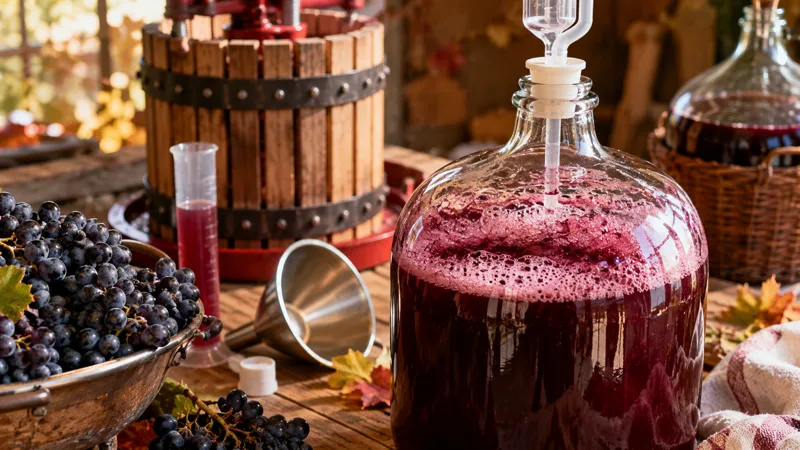
Event details
- Dates: November 15, 2026
- Location: MNSI, 1721 E. Sprague Rd., Seven Hills, OH 44131
- Type: Homesteading Skills
Wine making as a lesson in careful household processes
Fall – Wine Making is listed for November 15, 2026, at MNSI, 1721 East Sprague Road, Seven Hills, Ohio 44131. Confirm the current date, availability, arrival instructions, and participation requirements with the organizer through the linked Survival School source. The listing's homesteading category does not establish a particular recipe, a sampling arrangement, or any permission to manufacture or sell alcohol. This guide concerns learning, documentation, and questions to ask at a future class. It does not provide a fermentation recipe or instructions for distillation.
A household craft can be interesting because it makes consistency visible. Measurements, cleanliness, labeling, timing, and records determine whether a process can be understood and repeated. Wine making is one possible context for studying those habits, but it is not an essential emergency supply or a substitute for food, water, and communication planning. Treat the course as an elective learning activity. Its value can lie in better process discipline even if the participant decides not to continue the hobby at home.
Clarify the scope of the class
Ask what the session actually covers. Is it an introduction, an observation of a prepared demonstration, or supervised work with supplied materials? Find out whether the program discusses the process from beginning to end or focuses on one stage. A short class may use samples prepared earlier, and that should be made clear. Understanding which stages you observe helps you judge what you learned rather than assuming that everything seen in a classroom occurred during the same morning or afternoon.
Ask whether any sampling is offered and what participation limits apply. Do not infer that a class includes alcohol consumption merely because its subject is wine. If you prefer to observe without tasting, ask whether that is supported. Clarify age requirements directly with the provider and check applicable rules through official authorities when considering home activity. The event title is not legal advice. Keeping the educational scope clear avoids turning a practical demonstration into assumptions about what every participant can or should do afterward.
Start with a process map
Before thinking about equipment, ask the instructor to describe the major stages and the purpose of each. Record where decisions occur and what information is needed at those points. A process map is different from a recipe: it helps you understand what must be controlled without supplying proportions or directions you may not be qualified to use. This can reveal why a stage that looks inactive still requires attention and why an attractive finished sample does not explain the work that came before it.
For each stage, ask what would make the instructor pause, reject material, or seek another source of guidance. Beginners often remember successful steps and overlook the conditions that prevent a process from proceeding. Those limits are part of the lesson. A clear explanation should distinguish observation from guesswork. If a claim is based only on appearance or anecdote, ask for a reliable resource before treating it as a standard. Your notes should preserve uncertainty instead of turning it into a confident instruction later.
Make measurements meaningful
Measurement is useful only when the object being measured and the method are understood. Ask which quantities the class tracks, which instruments are used, and what their limitations are. Do not assume that a device gives the correct answer simply because it displays a number. Find out what preparation, calibration, or interpretation the instructor considers necessary. These are questions for the actual method being taught, not a reason to improvise substitutions from equipment that happens to be available at home.
Keep units visible in every record. A number without a unit can become misleading when copied later. Note the instrument and the stage at which a measurement was taken. If a reading seems inconsistent, ask how the instructor checks it rather than choosing the value that best matches your expectation. This habit transfers to many household projects. The useful skill is not memorizing a list of target numbers, but understanding how an observation becomes reliable enough to support the next decision.
Treat cleanliness as part of the work
Ask how the provider manages cleaning and sanitation for the demonstrated process. Those terms may have different meanings in the method, and the distinction should be explained rather than assumed. Use the directions for the actual materials and products involved. Do not mix cleaning chemicals or invent a procedure from a vague recollection of a workshop. The article does not supply a chemical treatment protocol. Qualified instruction and applicable product directions are needed to understand the proper process and its limits.
Notice the workflow around the demonstration. Where are used items placed? How are clean and dirty materials kept separate? How does the instructor prevent confusion between containers? These practical observations may be more useful than a photograph of the finished product. A small teaching space can appear simple because the preparation was completed before students arrived. Ask what that preparation involved. Understanding the complete work area helps you evaluate whether a home project is realistic rather than assuming that the visible table contains everything required.
Keep ingredient identity and source clear
A class should make it possible to identify the material used in a demonstration and where it came from. Ask how ingredients are selected and whether the method is specific to them. Do not substitute unknown wild fruit or another ingredient simply because it seems similar. Identification, suitability, and handling are separate questions. A homesteading course does not automatically provide training in foraging or establish that every natural ingredient is safe or appropriate for the process being discussed.
If allergens or dietary restrictions affect you, ask about ingredients and shared equipment before sampling. Observation is a valid way to participate. Keep food and drinking water arrangements for the day separate from the class materials, especially if refreshments are not confirmed. A participant can learn the process without relying on a demonstration sample as a meal. This makes the educational goal clearer and avoids pressure to consume something merely because others in the room are doing so.
Build a batch record instead of relying on memory
A useful record identifies the method, source, ingredients, equipment, dates, measurements, and decisions. Leave room for observations and questions. Do not create a polished narrative that hides changes or errors. If an instructor adjusts a step, ask why and record the explanation. The purpose is traceability: later, you should be able to understand what happened without reconstructing it from a few photographs. A good record also helps a qualified adviser respond to a problem because it provides facts rather than impressions.
Separate tasting notes from process observations. A preference about flavor does not establish that a preparation is safe or that a method was followed correctly. Likewise, another person's enjoyment is not evidence that the product is appropriate for everyone. Ask how the provider distinguishes quality evaluation from safety and suitability. These categories can be confused in an informal setting where conversation focuses on the finished result. Keeping them separate is a useful habit even if you never produce a batch yourself.
Evaluate the full household commitment
Consider workspace, storage, equipment care, and the time needed after the class. A process may require attention beyond the moment when ingredients are assembled. Ask how a beginner should plan for that commitment and what reliable resources are available. Do not start a large project simply because the initial demonstration looked manageable. A modest learning goal, such as understanding records or reviewing equipment instructions, may be the appropriate next step while you decide whether the hobby fits your household.
Think about who shares the space and what responsibilities they have. Equipment and labeled containers should not create confusion for children, visitors, or other household members. Ask qualified sources about appropriate storage and handling rather than improvising. A clear household arrangement is part of a workable hobby. The project should not depend on everyone remembering an informal instruction that was never written down. If the space or schedule cannot support the process, postponing is a reasonable and responsible decision.
Keep legal and safety questions outside assumption
Rules can depend on location, activity, age, distribution, and other circumstances. Check the appropriate official authorities before beginning an alcohol related home project. Do not treat a class's availability as proof that every intended use is permitted. This guide does not interpret regulations or recommend a production quantity. It also does not discuss distillation, which is a separate activity with its own requirements and hazards. A course about wine should not be used as a shortcut to an unrelated process.
If a provider makes a health claim about the product, distinguish that claim from the craft lesson and seek reliable health guidance. An enjoyable social or educational activity does not need a wellness promise to be worthwhile. Alcohol related choices should remain informed personal decisions, and a participant can decline sampling. The relevant lesson here is careful process management, not a suggestion that making or consuming wine is necessary for self reliance or beneficial to every household.
Bring home the habits, not exaggerated confidence
After the November class, if you attend, record what you actually observed and what still requires guidance. Read the provider's documented resources before attempting a method, and do not reconstruct missing steps from memory. The listed Seven Hills event can be approached as a chance to understand measurement, organization, and traceability. Those habits have value across household projects. A responsible outcome is knowing the process more clearly and recognizing its boundaries, whether you continue wine making or decide that another homesteading skill better fits your goals.