
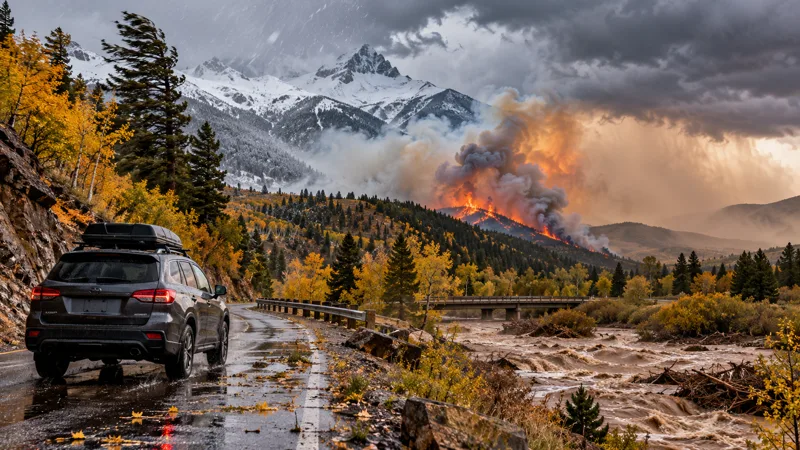
A Colorado fall plan has to handle more than one forecast
The supplied event record lists Fall Campaign: Snow, Flooding, Wind, Wildfires, Dust for September 1–December 31, 2026, in Colorado, USA. The range includes October 7, 2026, so this is an ongoing awareness-period listing rather than an expired one-day appointment. Its linked source is the National Weather Service winter safety page. That page supplies weather safety background, but it does not independently establish this entire campaign's timetable. Consult the relevant Colorado forecast office and local emergency management for current announcements. The discussion below is an editorial planning guide, not a claim about scheduled classes or demonstrations.
The unusual strength of this listing is its combination of hazards. A household can be well prepared for snow yet have no workable answer to an evacuation notice. A traveler may pack cold-weather clothing while overlooking a wind forecast that changes the driving plan. Treat the named hazards as different reasons the day's assumptions could fail. Rather than assigning one enormous emergency bag to every problem, identify the decisions each hazard might require. Some decisions involve remaining indoors. Others involve delaying travel or leaving under official direction. The equipment follows those decisions; it does not replace them.
Start with where your day takes you
Create a short location map: home, work, school, caregiving stops, and the routes connecting them. Include regular recreation and seasonal travel if relevant. For each place, ask who issues alerts and who controls access. A county evacuation notice, a road closure, a school announcement, and a weather warning answer different questions. Knowing where each message comes from helps prevent a confusing stream of information from becoming a collection of disconnected headlines. Subscribe to official channels appropriate to the places you actually use and keep their names recognizable on your devices.
Now look at a realistic day when household members are apart. Who can change their schedule? Who needs someone else to collect them? What destination would work if home became unavailable? These questions expose practical conflicts before an alert arrives. Agree on a primary contact and a fallback method. If several adults may act for the same child or dependent person, establish a clear handoff. Everyone trying to help independently can create confusion about who is going where. A shared plan should reduce competing movements rather than simply encourage each person to drive toward home.
Snow: think in terms of interrupted access
Snow planning begins with access to the things the household needs. That may mean a driveway, an apartment entrance, a transit stop, or the route used by a home-care worker. Identify responsibility for maintaining those paths and what backup exists if the usual person cannot do it. Ask a property manager or service provider how weather delays are communicated. Store essential contact details where they remain available during an outage. Supplies are useful, but they cannot compensate for an unexamined expectation that someone else will always clear the only usable entrance.
The National Weather Service winter resources describe hazards including snow, ice, and wind-driven whiteout conditions. Review the local forecast and travel guidance before departure, including the time conditions are expected to change. Avoid interpreting a clear view from a front window as evidence that a longer route is suitable. For a necessary trip, prepare the vehicle and passengers appropriately and follow closure instructions. For an optional trip, consider postponement early enough that cancellation does not become financially or socially difficult. A decision made calmly the evening before can be more useful than last-minute improvisation at a closed road.
Flooding: route familiarity is not route permission
A road used every week can become unavailable when flooding affects it. The National Weather Service flood safety resources emphasize avoiding flooded roads and following official information. Build alternatives around routes that authorities identify as open, not around a guess that a familiar shortcut will be passable. Do not use a vehicle or your own body to test water depth. A navigation application may continue to offer a route without understanding the hazard. Check current local transportation and emergency instructions, particularly when conditions are changing faster than a map service updates.
At home, review where alerts will reach you and what an instructed departure would require. Identify essential documents, transport needs, and the destination you would consider if authorities direct evacuation. Property-specific drainage or flood mitigation questions belong with qualified professionals and local agencies. This guide cannot assess a building's flood exposure from a state name. If you rent, ask how the property manager communicates urgent conditions. If you travel, learn the host community's warning channels rather than assuming your home county's subscription will cover the unfamiliar location.
Wind: small loose items reveal bigger dependencies
Wind preparation often starts with items outside: unsecured furniture, temporary structures, and other objects that could move. Follow manufacturer instructions and local advice for securing or removing them. Avoid climbing or undertaking hazardous work as conditions deteriorate. Surveying the property early provides time to get professional help for concerns such as damaged trees or structures. The point is not to predict exactly what will fail. It is to reduce obvious preventable problems and recognize which issues exceed an ordinary household task.
Consider indoor consequences as well. If wind interrupts electricity or communications, which functions become difficult? List heating, food storage, lighting, charging, and personal equipment that needs power. Establish safe, approved alternatives and continuity arrangements. Portable power products should be used within their instructions, and fuel-burning equipment requires strict attention to official safety guidance. Never improvise an indoor combustion setup. A backup system becomes useful only when its limitations, maintenance, and safe operating conditions are understood. A storm is a poor time to discover that a device cannot power the essential item you purchased it for.
Wildfire: departure planning is a household coordination problem
For wildfire concerns, use official local evacuation information and follow instructions from emergency authorities. Do not wait for this article or a general weather page to decide a location-specific action. Review in advance how every household member would leave, including transportation, accessibility, pets, and essential personal supplies. Ask who retrieves the portable items and who contacts the agreed destination. Keep responsibilities simple enough that another adult could step in. A plan that requires one absent person to unlock everything is vulnerable before any fire reaches the area.
Smoke and fire are related but different planning issues. Follow authoritative air-quality and public-health guidance for smoke, especially where individual health needs are involved. Consult the relevant clinician for personal medical questions. For evacuation, focus on current instructions and a safe destination rather than attempting amateur fire assessment. Store documents and contact information in an accessible form, but protect sensitive details. Practice locating these materials without rushing. Finding a pet carrier, a spare key, or a current medication list during an ordinary evening is a useful exercise that does not require staging a frightening scenario.
Dust: visibility deserves its own travel decision
Dust in the campaign title is a reminder that a dry forecast does not guarantee an uncomplicated drive. Use current weather and transportation guidance for visibility hazards. If your work or travel takes you through an unfamiliar area, identify the official information channels before leaving. Avoid assuming that experience with snow automatically translates into expertise with every visibility problem. Different hazards call for specific instructions, and a general-purpose checklist cannot replace them. Build time into the itinerary so that delaying departure remains an option rather than a crisis.
A household can discuss visibility concerns without practicing dangerous driving. Look at the trip and identify safe places where a journey could be postponed before entering a problem area. Confirm communication arrangements so a delay does not trigger unnecessary worry. Keep enough ordinary supplies for unexpected waiting, particularly for passengers with specific needs. Explain to children that a changed arrival time may be a deliberate safety decision. Making room for delay is often one of the least expensive improvements available, although it requires cooperation from the people expecting you.
Separate the stay-home kit from the departure kit
Inventory the household's normal emergency supplies according to function: drinking water, food, light, communication, necessary personal items, and safely planned power. Then identify the smaller group of items that could travel promptly if needed. Storage volume and portability solve different problems. A shelf of food can support a disruption at home but cannot all accompany a household on short notice. A compact bag may be convenient for departure but will not support every household need for an extended period. Recognizing that distinction prevents one purchase from being credited with capabilities it does not have.
Inspect existing supplies before buying replacements. Ask whether packages are usable by everyone who might need them, whether devices charge from compatible sources, and whether instructions are accessible. Avoid unfamiliar equipment whose operation depends on a video you cannot retrieve offline. For specialist needs, use advice from the appropriate supplier or professional. Label responsibilities for maintenance and rotation. The practical aim is dependable access to the functions you identified earlier. Owning several products that perform the same optional task does less for readiness than addressing one essential task with no workable fallback.
Build a decision calendar for the campaign range
Use the ongoing September-to-December period to complete a sequence of small improvements. One week can focus on alert subscriptions and contact details; another on home access and winter maintenance; another on departure logistics. Choose dates that fit ordinary life rather than waiting for a warning to create urgency. Record what was completed, what still requires outside help, and who owns the next action. A short, visible record is more useful than a lengthy document that no one opens. Include changes in work, school, or caregiving arrangements as they occur.
At the end of the period, review a real disruption or a brief household discussion. Which message was easy to understand? Which decision required information you did not have? Did someone assume another person had handled a task? Use those answers to revise the plan. The campaign title joins five hazards, but its lasting value is a disciplined way to notice different reasons the same day could change. Consult the National Weather Service winter and flood resources for background and the relevant local authorities for current actions. Preparedness becomes practical when each household member knows where to obtain instructions and how their own responsibilities fit together.