
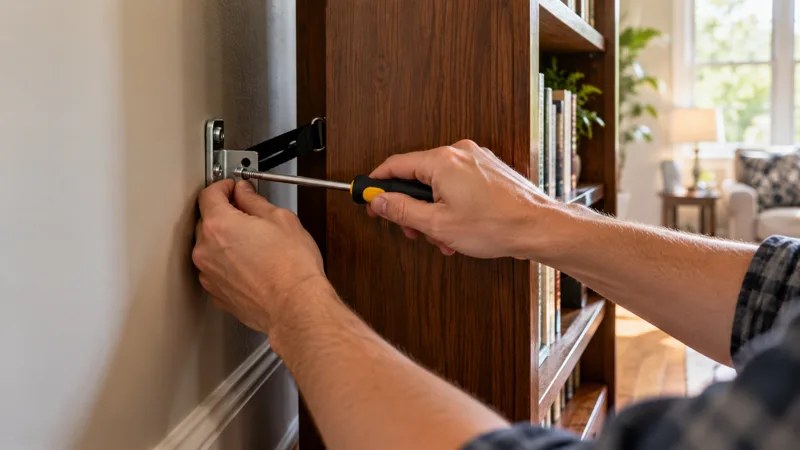
Earthquake awareness can begin with one room and one conversation
Earthquake preparation is easier to start when it is treated as a practical household project. You do not need to imagine every possible outcome or make a building assessment yourself. Begin by learning current official guidance, identifying questions that require qualified help, and making sure the people who share your space understand the plan. A short review that leads to a completed improvement is more useful than an ambitious checklist left untouched.
This listing records Earthquake Preparedness Week for October 11–17, 2026, in South Carolina. Its original National Weather Service link did not provide an accessible campaign page during review, so the exact awareness dates remain unverified. Use the recorded week as a reminder and consult South Carolina Emergency Management Division for current official resources. An awareness week is not a forecast of an earthquake and does not establish a ticketed class or meeting venue.
The recorded awareness listing
- Event name: Earthquake Preparedness Week.
- Recorded dates: October 11–17, 2026.
- Recorded area: South Carolina, USA.
- Category: Weather Safety & Preparedness.
- Original source: National Weather Service earthquake safety link.
- Verification status: specific 2026 campaign dates not independently confirmed.
The original source is the listed National Weather Service link. A working primary starting point is South Carolina Emergency Management Division earthquake guidance. Follow current official instructions rather than relying on a general planning article for an actual emergency.
Understand why local guidance matters
South Carolina Emergency Management Division documents earthquake concerns within the state and provides preparation information. You do not need to calculate local risk from a few historical examples to benefit from that guidance. Use the agency's resources to identify appropriate household actions and questions. The relevant issue is not whether a particular person has felt an earthquake before; it is whether the household knows which official instructions apply.
Keep awareness information separate from prediction. A scheduled drill or campaign does not mean an earthquake is expected during that week. Avoid sharing messages that imply otherwise. When discussing the plan with children or neighbors, explain the distinction plainly. Preparation is a way to make responsibilities clearer and reduce preventable confusion, not a reason to treat a calendar reminder as a warning of a specific event.
Review a room without pretending to be an engineer
Choose a room used often and look for questions raised by the official guidance. Which objects or arrangements should be evaluated? Which changes require permission or qualified work? Write the questions down rather than immediately attempting repairs. Structural concerns, utility systems, and installation tasks may need professionals. This article provides no engineering assessment or instructions for anchoring equipment.
If you rent or share a building, ask the responsible manager about the appropriate process. Record who handles each issue and how a concern should be reported. Do not assume that a household member can alter fixtures or systems merely because preparation is the goal. A useful room review identifies an actionable next step and the person qualified or authorized to take it.
Read the official response before designing a drill
SCEMD recommends practicing the established Drop, Cover, and Hold On response. Read the complete current agency guidance and use official drill material appropriate to the participants and setting. Do not invent a more dramatic version or substitute an action remembered from an old anecdote. The exercise should teach the official response and clarify questions, not test people's willingness to endure discomfort.
Discuss mobility, access, and other participation needs before practice. Seek appropriate guidance from qualified professionals or the responsible organization where necessary. A household drill should be suitable for its actual members. If someone cannot follow the standard practice format, that is a planning question to resolve, not a reason to exclude their needs or pressure them into an unsuitable action.
Make roles visible before people separate
Household members may be at work, school, or elsewhere when an interruption occurs. Ask how each location communicates official instructions and reunification arrangements. Keep those procedures separate rather than assuming one household rule overrides a school's or employer's plan. Learn the current policy from the responsible organization. A family plan should connect with those arrangements, not compete with them.
Identify who receives updates and what information should be shared. A short message should say where the person is, which official instructions they are following, and what action the recipient needs to take. Agree on an appropriate backup if the preferred contact method is unavailable. Do not assume that everyone can use the same device or app, especially when access needs differ.
Keep a contact record understandable
A contact record needs more than names and numbers. Add the role of each contact and the circumstance in which they should be consulted. Include current organizational information for essential responsibilities. Protect sensitive details and share them only with the people who need them. A household plan can be specific without becoming a public record of private information.
Ask another person to explain the record without coaching. If they cannot tell whom to contact or what a label means, revise it. Store the information in an accessible form appropriate to its users. Update it after a move, a changed school, or another major circumstance. A document's value depends on whether it is current and understandable when needed, not on how comprehensive it appears.
Supplies need an owner and an inspection habit
Review the disaster supplies recommended by the official agency and adapt arrangements through appropriate guidance for your circumstances. Follow storage and use instructions for the items you choose. Assign a person to inspect existing supplies and keep the arrangement clear to other users. Do not assume that something purchased years ago remains ready or that everyone remembers where it was placed.
Personal medical needs require individualized advice from the appropriate qualified provider. Ask about contingency arrangements before depending on a general kit. This article supplies no medical treatment or medication-storage protocol. Keep necessary professional instructions accessible to the people responsible for the task, with suitable privacy protections. A supply arrangement is incomplete if the intended user does not know its limits.
Technical systems belong with qualified guidance
Questions about gas, electrical, water, and structural systems should be addressed through the relevant authority, utility, property manager, or qualified professional. Do not manipulate a system as a practice exercise based on a general article. Ask who is authorized to act, which official instructions govern, and how professional assistance is obtained. Record that process accurately.
A household review may reveal that several people have different assumptions about a shutoff or repair task. Resolve the disagreement through qualified guidance rather than a vote. Preparation should reduce unsafe improvisation. Knowing when to leave a task to professionals is a useful outcome of awareness week, even if it does not produce a visible piece of new equipment.
Practice receiving instructions, not just giving them
During a tabletop conversation, provide a simple fictional official notice and ask participants to identify its source, location, time, and requested action. Keep the scenario appropriate and calm. The exercise can reveal that one person notices the headline while another checks the date. Both details matter when deciding whether information applies. Avoid creating realistic-looking false notices that could circulate outside the exercise.
Discuss how the household will verify updates and avoid spreading speculation. A neighbor's observation can be useful without being an official instruction. A social-media screenshot may omit important context. Use current primary sources and the responsible authorities for decisions. The aim is a practical habit of checking applicability, not suspicion of every message or a complicated system nobody can maintain.
Coordinate assistance with clear boundaries
Ask neighbors or relatives what check-in arrangement would be helpful, and agree on limits. Do not promise technical repairs, hazardous travel, or care outside your ability. If someone depends on organized assistance, learn the relevant process in advance. Informal goodwill can complement official support, but neither should be assumed to appear automatically without communication.
Keep agreements current and respectful of privacy. You do not need a person's full medical history to establish a contact arrangement. Ask what should happen if they do not respond and record only the information necessary for that plan. Where concerns arise, use the appropriate professional or emergency process. A clear, modest agreement is more useful than a broad promise to help with anything.
Finish the week with a completed task
Choose one action from the review that can realistically be completed. It may be updating contacts, obtaining a professional assessment, learning the school's reunification procedure, or conducting an appropriate official drill. Assign an owner and a date. If the task is too broad, identify its first concrete step. Mark unresolved questions honestly rather than treating an incomplete plan as finished.
Review what changed and whether other household members understand it. A preparation project that only its author knows about has limited value. Invite feedback about unclear labels or responsibilities. Keep the next review short enough to repeat after circumstances change. Awareness becomes useful through these ordinary maintenance habits, not because one week contains every possible preparation activity.
Use the recorded week as a prompt, not a prediction
The October 11–17 range remains the date recorded by this listing, with its campaign status unverified. Consult SCEMD for current South Carolina guidance and confirm any advertised local activity through its organizer. Do not infer admission, attendance requirements, or a particular venue from an awareness title. The useful work can begin at home regardless of whether a local calendar entry is confirmed.
A strong earthquake preparation review leaves the household with clearer official sources, appropriate professional contacts, and a shared understanding of responsibilities. It also identifies limits: tasks that require qualified work, questions that remain unresolved, and information that should not be treated as prediction. Those distinctions help turn concern into practical, proportionate preparation.