
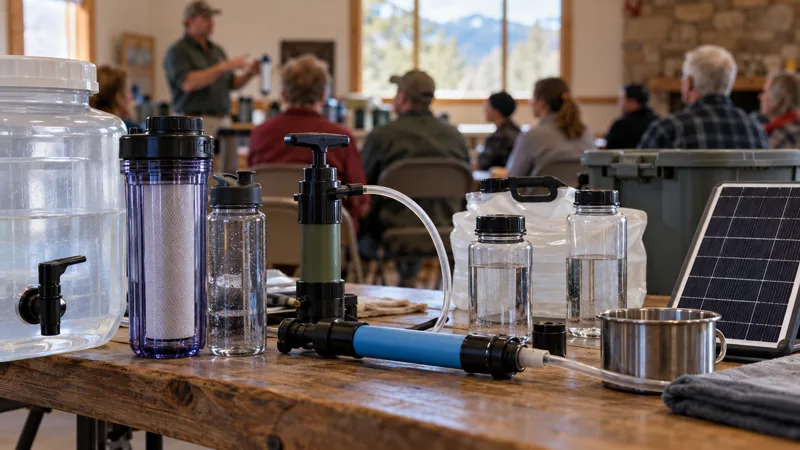
Colorado Prepper Expo is recorded for October 10–12, 2026, in Pueblo, Colorado, USA. As of October 7, these dates are upcoming. However, the recorded range should not be treated as a verified current organizer announcement.
Planning status for the Pueblo listing
- Recorded dates: October 10–12, 2026.
- Recorded city: Pueblo, CO, USA.
- Category: survival and preparedness.
- Original source link: PrepperShowsUSA.
The source website did not return readable event information during this review. The exact venue, opening hours, admission arrangements, exhibitors, and the validity of this particular date range therefore remain unconfirmed. Before paying or traveling, obtain a current announcement from the organizer that specifically identifies the Pueblo event and its dates. This listing preserves the recorded information while making that verification gap clear.
The independent material below is a guide to comparing preparedness options before an expo visit. It does not claim that particular products, speakers, or demonstrations will be present. Its angle is integration: a useful preparedness purchase must work with your household, your space, and the systems you already depend on.
Describe the job before selecting the device
Preparedness equipment is easier to evaluate when you can state its job in one sentence. You might need lighting that every household member can use during an outage, a way to keep important contact information accessible, or a portable arrangement for an officially directed departure. Those jobs are different. A product advertised as essential may solve one well, another poorly, and a third not at all.
Write the need without naming a brand or product type. This keeps the discussion open to simpler alternatives. If the job is to find safe lighting quickly, reorganizing equipment you already own may help more than buying a larger device. If the job involves a critical health need, professional planning may be required before any purchase makes sense. The first question is what must remain possible when ordinary support is interrupted.
Then describe the operating conditions. Who uses the item? Where is it stored? Does it need power, fuel, network service, or a compatible accessory? Can it be handled comfortably by the intended user? A complete description may reveal that two apparently comparable products solve different problems. It also helps you avoid assuming that an impressive display will translate directly to your home.
A household is a network of dependencies
Consider a communication plan. A phone depends on charge, contact information, and a working way to send or receive messages. A backup charging device depends on being charged itself and having the correct connection. A written contact list depends on people knowing where it is. Preparedness improves when you examine the whole chain rather than purchasing one object and declaring communication solved.
The same reasoning applies to cooking, transport, lighting, and heating. Supplies may depend on a preparation method that becomes unavailable. A vehicle may be useful only if roads are open and the driver is fit to travel. A powered device may require installation or maintenance outside your knowledge. List these dependencies before visiting an expo so sales discussions can focus on the missing connection.
Use current local emergency-management information and official forecasts to understand which disruptions deserve attention in your part of Colorado. Pueblo's recorded location does not establish a particular hazard forecast for the expo weekend or for your home. Preparation should reflect the place and household involved, with local guidance taking priority over a vendor's generalized account of what everyone needs.
Compare complete systems, not headline prices
A low purchase price can be attractive while excluding necessary accessories, subscriptions, or maintenance. Ask what must be added before the product performs its intended job. A higher price may include useful support, or it may simply reflect features you will not use. Compare the full practical arrangement rather than assuming either inexpensive or premium is automatically better value.
For a portable power system, ask for written specifications and supported-use information relevant to your actual needs. Confirm charging options, limitations, and any additional components. Do not estimate compatibility from a demonstration involving different equipment. If the planned use concerns essential medical support or building electrical systems, obtain appropriate professional advice rather than relying on a sales conversation.
For storage or transport equipment, think about access and handling. Can the intended user lift or move the load? Does a container fit where it will live? Can important items be reached without unloading everything? A system that is neatly displayed on a table may become awkward in a narrow hallway, crowded vehicle, or room shared with ordinary household activities.
Power equipment must fit safe operation
Major power equipment requires more than a suitable price and output claim. The Consumer Product Safety Commission's carbon monoxide information explains a serious hazard associated with fuel-burning equipment. Follow official guidance and the manufacturer's instructions, and do not improvise operation in indoor or enclosed areas. Bad weather is a reason to plan safe alternatives, not to ignore placement requirements.
Ask a qualified professional about installation, connection, and building-specific concerns. A renter, apartment resident, and homeowner may have different constraints. Confirm permissions and feasibility before buying equipment that needs special placement or installation. The fact that an item is sold at a public expo does not establish that your property can accommodate its safe use.
For smaller needs, investigate whether simpler equipment can do the job. Accessible battery lights may address a lighting gap, while a carefully planned charging arrangement may support ordinary communications. Evaluate these options by their actual purpose and instructions. The goal is to choose a manageable system rather than expand complexity until the household cannot explain how it works.
Demonstrations are evidence with boundaries
A demonstration can answer a narrow question, such as whether a control is understandable or whether a container opens easily. It cannot establish every claim about lifetime durability or real-world performance. Ask what conditions were selected and whether the manufacturer provides evidence for the use you have in mind. A thoughtful vendor should be able to discuss limitations alongside advantages.
Record the difference between something you saw and something you were told. You may have seen a product function once while hearing a much broader claim about reliability. That does not make the demonstration useless; it makes careful notes important. Keep product names, specification links, and unresolved questions so you can compare options after leaving the sales environment.
Do not participate in a risky demonstration simply to test a product's promise. Activities involving sharp tools, flame, chemicals, or unfamiliar food require appropriate supervision and precautions. If the setup or instructions are unclear, observe from a suitable distance or decline. An expo visit is an opportunity to learn, not an obligation to prove confidence with equipment you have never handled.
Prepare for people before preparing for objects
Discuss who will use supplies and how decisions are made. A beautifully organized kit can fail to help if only one person knows its location or purpose. Explain essential items in ordinary language and ask others to show whether the arrangement makes sense to them. This is a usability check, not a contest or a simulated emergency.
Include existing health, dietary, accessibility, and animal-care needs. General preparedness products may not suit everyone. Medicines and assistive devices can require specific arrangements that belong with clinicians, pharmacists, manufacturers, or service providers. Avoid assuming that an ordinary emergency kit replaces that planning. The right answer may be a conversation with a professional rather than a new item from a display.
Communication agreements are equally important. Decide how household members share official updates, what happens if normal travel is disrupted, and which trusted contact can help relay information. Ask people what communication method they can reliably use. A plan that depends on a single app or a person being home at a particular time should have those assumptions stated clearly.
If the expo is confirmed, organize the visit
First verify the dates, venue, daily hours, and admission terms with the current organizer. The recorded three-day range does not establish that the public can attend at every point during those days. Ask whether any talks, demonstrations, or services have separate reservations, and confirm accessibility, parking, and other arrangements relevant to your visit.
Choose a short set of questions to bring. You might want to compare lighting usability, understand a device's service requirements, or identify where to obtain qualified installation advice. This keeps the visit purposeful without making every booth a purchasing opportunity. Decide on a budget in advance and leave room to defer a decision when documentation is incomplete.
Travel plans should remain flexible while the listing is unverified. Do not use this page alone to book nonrefundable accommodation or make a long journey. Seek a specific current announcement, then check ordinary travel and weather information before departure. A reliable event reference should tell you where and when to arrive, not simply name a city and a preparedness category.
Turn comparison into one completed improvement
After a visit or research session, choose one improvement you can complete and explain. Perhaps you will reorganize lighting, update contact information, or arrange professional advice about a power concern. If a purchase is justified, read its instructions, register or document it where appropriate, and make maintenance responsibilities clear. Ownership alone does not create readiness.
Review the choice after ordinary use. Does the item remain accessible? Do intended users understand it? Has the system gained a new dependency you overlooked? These questions help you adjust before an actual disruption. They also create a useful record for the next purchase, replacing impulse with evidence about what your household can operate and maintain.
The Pueblo date range remains a recorded, upcoming listing with unresolved verification. Treat it as a lead to confirm, and use the broader event directory to compare learning opportunities. Preparedness improves when every addition has a clear job, safe operating conditions, and people who understand how it fits into their ordinary life.