
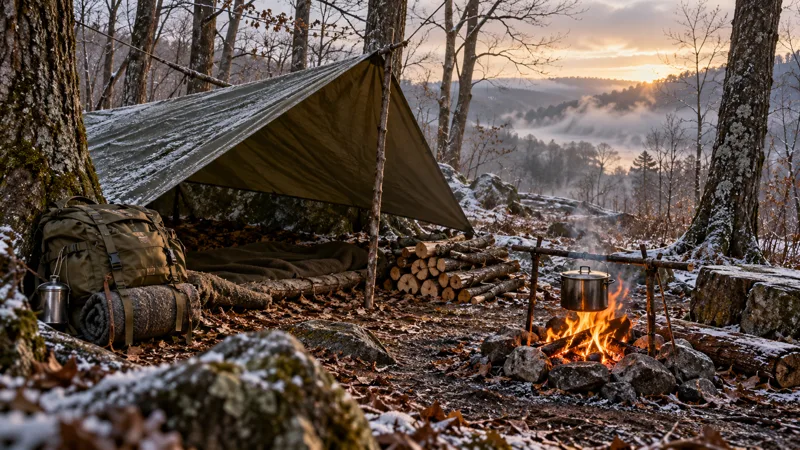
Bushman is listed for 2026-12-10 to 2026-12-13 in Pennsylvania, USA.
Event details
- Dates: 2026-12-10 to 2026-12-13
- Location: Pennsylvania, USA
- Type: BUSHCRAFT & WILDERNESS
View the event source and registration information
Read the course's demands before its romance
Bushman is listed for December 10–13, 2026, in Pennsylvania. The directory links to Coalcracker Bushcraft's course page, which places the offering in Ringtown and describes a combination of wilderness living and practical camp subjects. Confirm the exact schedule directly: the product page's date selection shows December 10–13 while another duration label describes five days and four nights. Do not resolve that inconsistency by guessing. Obtain arrival, departure, prerequisites, and enrollment details from the provider. The planning framework below is independent editorial guidance, not an account of attending the course or a reproduction of its instruction.
An immersive course can appeal because it offers sustained attention to tasks that a brief demonstration cannot explore fully. That appeal deserves a careful readiness discussion. Ask which previous training the school expects and how it evaluates equivalent experience. Its page lists prerequisite courses, so familiarity with camping alone should not be treated as automatic eligibility. Describe your actual background. A suitable provider conversation can reveal whether this offering is the right next step or whether another course would give you a stronger foundation. Choosing a better fit is more useful than pursuing a title for its dramatic sound.
Treat sustainability as a question about the whole system
A claim about long-term living invites questions about resources, maintenance, permissions, labor, and the limits of a teaching exercise. Ask how the provider frames those subjects. A controlled course can illustrate principles without establishing that a participant could legally or practically reproduce the arrangement on any land. You may gain a clearer understanding of the effort behind an ordinary camp task. That understanding is valuable even if it leads you to prefer a simpler modern arrangement for your usual outings. The course's appeal need not depend on promising complete independence from every outside resource.
Write down the system you currently use for an ordinary trip and identify which parts rely on preparation elsewhere. Food, maintained equipment, transport, and information all belong in that record. Then ask how the course helps students examine those dependencies. Avoid treating a small group exercise as proof of indefinite self-sufficiency. The useful outcome is better reasoning about requirements and constraints. A participant who recognizes how much work a task actually involves may make more responsible decisions afterward than someone who remembers only the most impressive finished object or the most colorful historical comparison.
Resolve legal participation separately from registration
The provider page refers to hunting and trapping subjects and mentions Pennsylvania licensing. Course enrollment does not settle legal requirements for an individual activity. Consult the Pennsylvania Game Commission's current regulations, licensing information, and relevant education requirements, then ask the provider what participation entails. Rules can depend on the activity, species, place, equipment, season, and the participant. This article does not interpret those rules for you or supply trapping methods. Its advice is to make the question explicit and obtain the appropriate authoritative answer before assuming that a paid course grants permission to act.
Ask whether every participant must complete the same prerequisites and how an observation-only arrangement, if available, is handled. Obtain the answer directly rather than relying on a directory's shortened description. Keep confirmations and official information with your course planning documents. If a requirement remains unclear, resolve it before purchasing specialized items or traveling. Legal compliance and animal welfare are not details to improvise at check-in. A responsible learning plan gives these questions enough attention and recognizes that a school's promotional page and a public authority's rules serve different purposes.
Evaluate the physical work honestly
The provider describes walking and practical work as part of the offering. Ask about the actual demands, pace, and accommodations rather than inferring them from the word bushcraft. Explain any issue that affects participation privately and obtain appropriate professional guidance where needed. A course with repetitive handwork, carrying, or outdoor tasks may require a different preparation conversation from a classroom presentation. Being honest helps the school advise you. It should not become a contest to demonstrate that you can tolerate every condition without asking how the instruction is organized or what alternatives exist.
Use familiar, safe local activity to evaluate ordinary equipment fit before departure. You do not need to rehearse specialized or hazardous tasks independently. Check whether your pack can be adjusted comfortably and whether footwear suits the required use. Address a persistent problem before travel through appropriate advice. Ask how breaks and personal needs are handled during the course. A realistic participation plan supports attention across several days. Concealing discomfort can reduce the quality of learning and make it harder for instructors to understand why a task is becoming difficult for you.
Audit prescribed equipment without substituting casually
Use the provider's latest required list and ask about any item whose specification you do not understand. Record the exact model when proposing a substitute. An object with a similar name may differ in size, construction, or intended use in a way that affects instruction. Do not arrive with an unfamiliar alternative solely because it was marketed as more advanced. If loan or shared equipment is available, confirm its arrangements. A clear audit distinguishes what you already have, what needs inspection, what needs clarification, and what is genuinely missing.
Keep class equipment organized according to the provider's instructions, with sharp or otherwise hazardous items stored and handled appropriately. Ask before removing or demonstrating anything in a shared area. The event is a supervised learning environment, not permission for students to create their own side exercises. Familiarity with ordinary controls and storage can be checked before leaving home. Specialist maintenance and repairs should remain within suitable guidance. A well-prepared kit is one whose role and condition you understand. Its value does not come from carrying a larger assortment than the school requested.
Plan camp routines from actual facilities
The course page describes overnight arrangements and other logistics, but verify them for the specific session. Ask about shelter expectations, meals, sanitation, water, vehicle access, and personal storage. Clarify what is included and what participants provide. A general phrase about group meals does not establish every meal or every dietary accommodation. If a food concern matters, discuss it before booking. Save the final instructions where you can access them during travel. Ordinary arrangements should be settled before you devote attention to unfamiliar skills or the management of a shared camp.
Think through the first and last hours of the visit. What needs to be accessible on arrival? Where does check-in happen? How will you transport equipment to the approved area? What condition should borrowed items and the site be in at departure? These questions can prevent needless confusion. Do not treat a historical theme as a reason to disregard modern provider requirements or personal needs. The teaching format may invite imagination, but practical participation still depends on clear responsibilities. A simple, workable camp routine can support the course better than an elaborate personal project layered onto it.
Observe maintenance and inspection as closely as construction
A practical project does not end when an object looks finished. Ask what the instructor inspects, how weaknesses are recognized, and what makes continued use inappropriate. These questions are especially relevant when the course introduces unfamiliar tools or construction methods. Record the limitations of the teaching example. Do not turn a demonstration into a general repair procedure for equipment with different requirements. Some damage calls for retirement or professional service. A learner's responsibility includes knowing which question needs qualified help rather than assuming every problem can be solved with the materials at hand.
Notice how the staff arranges the workspace, supervises movement, and cleans up afterward. Those routines are part of the lesson. A spectator may remember a dramatic action while overlooking the controls that made it suitable in that setting. Ask about the reasoning when appropriate and follow the instructor's boundaries. If an activity remains beyond your competence, observe rather than improvising. Your notes should distinguish watching, participating under supervision, and receiving a verified assessment. Each stage can be valuable, but they establish different levels of experience and should be described accurately.
Keep food work within qualified guidance
A course may discuss cooking or processing in its program, but a brief listing does not supply a safe home procedure. Ask what participants will do, what qualified instruction is provided, and which practices require additional training or authoritative food-safety guidance. Do not treat a historical method as automatically suitable for modern independent use. The learning record should preserve the exact context and any limitations. This page offers no processing or preservation protocol. Its purpose is to help you ask the questions that prevent an interesting lesson from becoming an unsupported food practice later.
If a follow-up involves food, use complete reliable instructions appropriate to the actual ingredients and equipment, along with relevant public-health guidance. Resolve allergies and medical concerns with qualified professionals. Keep educational interest separate from claims about health or emergency food supply. A camp demonstration can broaden understanding without proving that a product is shelf-stable or that a process works under every condition. Recognizing that distinction is part of preparedness. It allows you to value the course while acknowledging where the responsibility and expertise for a particular decision lie.
Review the course through practical changes
After returning home, record one planning decision, one equipment observation, and one subject requiring further instruction. Choose a modest review task recommended by the provider rather than attempting the most complex project immediately. Keep legal, safety, and permission questions attached to the task. If your notes leave an important point unclear, ask before proceeding. A complete learning record should improve judgment, not conceal uncertainty behind an impressive course title. Continued practice belongs in an appropriate setting with the conditions and feedback needed for the specific activity.
The December 10–13 listing remains the date reference, with the provider needed to resolve its conflicting duration label and current logistics. Pennsylvania authorities remain the reference for regulated activities. The independent preparation lesson is to evaluate the whole commitment: prerequisites, lawful participation, physical demands, prescribed equipment, camp routines, and follow-up limits. An immersive course can be worthwhile when it reveals how practical systems work and where your knowledge needs to grow. It does not need to promise effortless long-term independence to make your ordinary outdoor planning more thoughtful and dependable.