Learn a material craft by understanding its requirements
A buckskin class can offer a close look at work that a finished object does not reveal. The interesting questions concern the material's origin, the labor involved, the tools used under supervision, and the limits of what a beginner can accomplish during a session. Approach the class as craft instruction rather than a promise that you will immediately be able to reproduce every part of the process independently.
This listing records Braintan Buckskin for October 16–18, 2026, in Randolph, Kansas. The directory page retrieved during review instead displays a single October 16 date with midnight timing fields. The duration therefore needs direct confirmation before attendance. The directory identifies Blackthorn-USA as the host. This article preserves the older date range while making the discrepancy clear, and provides a preparation guide rather than a tanning recipe or biological-material handling protocol.
Listing details to confirm
- Event: Braintan Buckskin.
- Range recorded by this listing: October 16–18, 2026.
- Directory date displayed at review: October 16, 2026.
- Recorded place: Randolph, KS, USA.
- Category: Bushcraft & Wilderness.
- Directory source: FeralSkills.
- Host identified by the directory: Blackthorn-USA.
Read the directory source and contact Blackthorn-USA. Confirm the full schedule, precise arrival point, materials, equipment requirements, and current registration terms. Do not treat midnight fields as a confirmed participant start time or assume the three-day range has been verified.
Ask what the class result actually includes
A craft title does not tell you which stage participants begin with or what they take home. Ask whether materials are supplied, whether work is individual or shared, and what completion means within the available time. A class may provide a valuable introduction even if a project remains unfinished. Understanding that expectation beforehand prevents a learner from judging the experience against a result the organizer never promised.
Ask which parts are demonstrated and which are practiced under supervision. If a finished example is shown, find out how it differs from the participant project. Keep those distinctions in your notes. You want to learn the reasoning and boundaries of the craft, not merely leave with an object. A clear account of the session's scope helps you choose appropriate further instruction afterward.
Material origin belongs in the first conversation
Ask the organizer how class materials are sourced and what information participants need about them. Do not bring unidentified animal material or a specimen collected without appropriate permission. Requirements concerning wildlife and transport depend on the place and material, so consult the relevant current authorities rather than assuming a class invitation authorizes collection. The organizer should explain what participants may bring and what the school supplies.
Keep a simple record of provenance for any material legitimately provided for your project, following the provider's instructions. This is a practical way to avoid confusion later. A material's appearance does not establish its suitability or history. If the source or handling requirements are unclear, ask before participating. Learning a craft responsibly includes knowing when the starting material does not yet have enough information attached to it.
Biological material requires qualified safety guidance
The word braintan should not be interpreted as permission to handle unfamiliar animal tissue at home. Obtain the provider's safety instructions and consult current wildlife and public-health guidance appropriate to the species and source. The Centers for Disease Control and Prevention's chronic wasting disease resource is one relevant primary reference for people considering deer or related-animal materials. Its guidance should be read directly rather than reduced to a folk rule.
This article gives no tissue preparation, cleaning, disposal, or tanning procedure. Ask the instructor which risks and protective arrangements apply to the actual materials used in class. If personal health concerns affect participation, discuss them privately with a qualified professional and the organizer as appropriate. A traditional craft still requires present-day attention to material suitability and safe practice.
Understand the physical work before paying
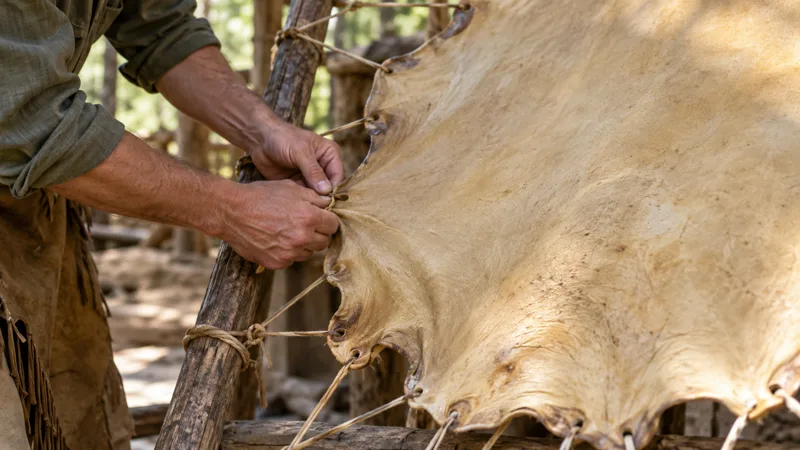
The directory notes that work with raw hides can be physically demanding and messy. Ask the provider what movements, positions, and time commitments the actual session involves. Clarify breaks, workspace arrangements, and whether alternative participation is possible. A learner should not have to guess from a finished garment or a short course description. Practical information helps you decide whether the format suits your abilities.
Discuss access needs ahead of time rather than trying to solve them after arrival. Observation may be a useful alternative for some activities if the organizer permits it, but do not assume that option exists. Ask which clothing and protective equipment are required and whether anything is supplied. Get the current list before purchasing specialized items or bringing tools that the instructor has not approved.
Observe the instructor's workspace decisions
During a supervised session, notice how materials and tools are arranged before the task begins. Where do unused items belong? How does the instructor keep a work area clear? What causes a pause? These decisions can be important parts of craft practice even when they are less visually interesting than the main technique. Ask about them at an appropriate moment and follow the class's stated boundaries.
Do not rearrange another person's project or tool setup to improve your view. Ask where observers should stand and when photographs are allowed. Respect participants' privacy and the provider's rules about recording instruction. A clear learning environment depends on orderly shared space. Those habits also help you understand why a home workspace needs deliberate planning before any independent project is considered.
Keep technique notes attached to conditions
A note that records only an action can omit why it was appropriate. Ask the instructor which conditions or material characteristics matter and what would require a different approach. Record uncertainty honestly. If you do not understand a step, ask rather than copying it from memory later. A class notebook should help you obtain further instruction, not become a recipe assembled from incomplete observations.
Separate what you personally practiced from what you watched. A demonstrated technique may involve experience or safeguards you do not yet possess. Do not assume that seeing it once establishes independent competence. Mark which tasks need more supervised work and which questions remain unresolved. This distinction helps you choose the next class and explain your experience accurately to another instructor.
Ask about care before assuming a use
When a project or sample is completed, ask the provider how its condition should be evaluated and what care directions apply. Do not assume that a material is suitable for a particular garment, tool accessory, or other use merely because it resembles a finished example. Intended use can introduce separate requirements. Obtain instruction appropriate to that use before relying on the object for a demanding task.
Retain the care information with the project record. If you plan to store or transport something from the class, follow the organizer's current instructions and applicable rules. This guide does not offer storage or treatment directions for animal materials. The useful habit is to seek the complete instructions from the person qualified to provide them, rather than improvise because the class has ended.
Give cultural context an identifiable source
Craft discussions may include historical or cultural accounts. Listen carefully and record who is providing the account and what source they recommend. Avoid turning one explanation into a claim about all Indigenous peoples or all traditional practice. Different communities and individuals have different histories and relationships to materials. Respectful learning keeps those distinctions visible.
If you later share your experience, describe your own class and the material you worked with instead of claiming to represent a broad tradition. Ask permission before using another person's story or photograph. A craft can be appreciated without borrowing authority from a history you have not studied. Further reading or conversation with the appropriate source may be a valuable next step in its own right.
Budget for learning time and unfinished work
A project may require further practice beyond the class. Ask what support or follow-up instruction is available and which costs are separate. Do not purchase a large supply of materials before understanding how you will appropriately use and manage them. A smaller supervised project can provide better evidence of interest and suitability than committing immediately to an extensive home setup.
Compare the actual recurring work with your available time. Where will the project happen, who else uses that space, and what qualified advice is still needed? Discuss those questions with the household before beginning. Enthusiasm after a class is useful, but it should lead to a plan whose responsibilities are clear. A finished object is only one possible outcome; a more informed decision about future participation can also be worthwhile.
Choose a follow-up task supported by instruction
Before leaving the session, ask which next learning step fits the experience you demonstrated. It might be another supervised lesson, improving a record of material provenance, or learning more about a tool within a safe instructional format. Do not assume that completing a class means every part of the craft is ready for independent practice. Progress should follow the actual feedback you received.
For primary background on relevant animal-health concerns, consult CDC's chronic wasting disease information and current state wildlife guidance. Use Blackthorn-USA for present course requirements and confirm the October duration directly. The best preparation for Braintan Buckskin is a clear understanding of materials, boundaries, and the learning format. That approach respects the craft while keeping a beginner's expectations honest.