
Event details
- Dates: October 2–4, 2026
- Location: See event listing
- Type: Wilderness Survival
Basic survival is a sequence of manageable decisions
Basic Survival Class was listed for October 2–4, 2026. That range ended before the current October 7 date, so this entry is an archive. The saved listing does not establish a venue; it directs readers to the source listing. Use the FeralSkills page to identify the provider and ask about another edition. Do not treat the archived date as current registration information or assume that the class included particular overnight activities, equipment, or qualifications. Its title is a broad label rather than a verified list of lessons.
For a beginner, the word basic should mean a clear foundation, not a promise that all outdoor problems have simple answers. A useful introductory course helps someone organize information, identify priorities, and recognize when assistance is needed. These notes focus on that decision process. They are an editorial guide to preparing for instruction and making it useful afterward, not a replacement for supervised training. The practical goal is to reduce confusion in ordinary outdoor planning before trying to solve unfamiliar situations with specialized techniques.
Start with a realistic baseline
Write down the kinds of outings you currently take and the conditions you usually encounter. Include who goes with you, how far you travel from easy assistance, and what equipment you know how to use. This description is more useful than deciding that you are either a complete novice or an expert. Experience is specific. Someone who is comfortable on familiar trails can still need instruction in route planning, while someone who owns extensive equipment may not have practiced finding it efficiently in a pack.
List three tasks that would make your normal trips more dependable. You might want to understand a map better, organize an overdue contact plan, or become confident setting up your existing shelter in an approved practice setting. A short course cannot teach everything, but it can address a few real gaps. Bring those goals to a future provider and ask whether the program matches them. If the answer is uncertain, ask for more detail instead of relying on the broad survival label.
Learn the provider's definition of basic
Ask about prerequisites, physical demands, class format, and individual practice opportunities. Find out whether instruction is primarily demonstration, discussion, or supervised activity. Clarify whether first aid training is included or simply mentioned. A general survival class should not be assumed to provide a medical qualification or specialized rescue competence. Request the current equipment list and discuss any item you do not understand. Questions before registration give the organizer a chance to explain the program without forcing you to interpret marketing language on your own.
The October date range alone does not establish camping, food supply, or continuous attendance. Ask where people meet, where they sleep if relevant, and how transport works. Resolve the exact location before making travel plans. A venue described as see event listing is not enough information to book accommodation or calculate a route. Confirm the cancellation policy and weather arrangements through the actual provider. Practical clarity is part of preparation, not an administrative detail to ignore until the day before departure.
Understand a decision before practicing a technique
When an instructor demonstrates a skill, ask what problem it addresses. Then ask what information would make the technique unsuitable. This second question is essential because a skill may work in one set of conditions while another response would be better elsewhere. Avoid memorizing a sequence without understanding its purpose. Beginners can become attached to a new technique simply because it is the one they recently learned. Good instruction helps students decide when to use it and when to ask for another approach.
During practice, distinguish the result from the reasoning. If you complete a task, can you explain why you chose the location, equipment, and sequence? If you cannot, the success may be difficult to repeat. Ask for feedback on the decisions as well as the final object or setup. A class offers the chance to expose uncertainty while help is nearby. Hiding that uncertainty to appear capable wastes one of the main advantages of attending in the first place.
Organize a small and dependable system
A basic kit should be understandable to the person carrying it. Inspect your existing equipment before buying replacements. Locate instructions, check condition, and identify anything you cannot operate confidently. Make a consistent place for frequently used items. You should not need to scatter every possession across the ground to find a light or a personal supply. Organization is an ordinary skill, but it becomes important when time, weather, or attention is limited.
If a provider recommends equipment, ask whether it is necessary for the lesson or an example of one workable option. Consider fit, maintenance, and familiarity alongside weight and price. A complicated object does not become useful merely because it has several functions. Try approved practice with the equipment you actually expect to carry, then identify the specific limitation you want to address. This produces a reasoned purchase decision and leaves more room in your budget for instruction rather than accumulating tools whose roles remain unclear.
Treat navigation as an information check
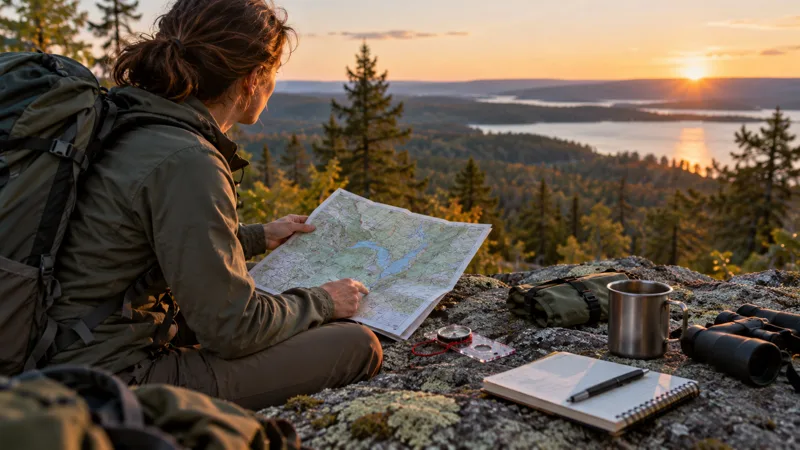
Before an outing, know the intended route and the features that will help confirm progress. Ask an instructor how to connect a map to visible terrain and how to recognize a mismatch. A phone can be one source of information, but you should understand what you would do if that information is unavailable or confusing. Do not turn a beginner exercise into an unsupported trip away from established routes. Practice needs a setting where a misunderstanding can be identified and corrected without adding unnecessary risk.
A useful navigation question is what you expect to see next. If the expected junction or landmark does not appear, the discrepancy deserves attention. Practice explaining the uncertainty to another person instead of quietly guessing. That habit supports better group decisions. It also makes a course lesson more transferable: you are learning to check an assumption, not just to follow one route while an instructor knows the answer. Additional terrain or navigation goals may require dedicated instruction beyond a general introductory class.
Keep water and shelter questions specific
For water equipment, read the manufacturer's directions and ask what the device is designed to address. A course should help clarify limits rather than imply that all methods are interchangeable. Bring the water arrangements required by the provider and do not create a shortage as a personal test. Planning includes supply, carrying capacity, and a response if an expected source is unavailable. The useful beginner outcome is understanding that whole system, not memorizing a product name or assuming that clear water is automatically suitable to drink.
Shelter discussions should include the conditions and location choices that matter. A setup demonstrated on a convenient teaching site does not establish that it is appropriate in every landscape or storm. Ask what could make a site unsuitable and what help would be needed to evaluate an unfamiliar place. Practice your own equipment where permitted and with suitable supervision. The educational goal does not require cutting vegetation, damaging ground, or creating an improvised overnight challenge outside the provider's approved activity.
Build communication into the plan
Make sure someone outside your group has useful outing information when appropriate. That can include the route, vehicle, expected return, and agreed response if you are overdue. The plan should be specific enough to use without requiring the contact to guess where you went. Within the group, agree on how people stay together and how changes are discussed. A communication routine that everyone understands is more dependable than one that exists only in the mind of the most experienced participant.
A course can be a good place to ask about the limits of your communication equipment. Find out which functions require a connection, subscription, battery, or local service. Do not assume that carrying a device guarantees help will arrive quickly. Learn how to provide clear location and situation information through the appropriate system. Follow applicable rules and product directions. The aim is to make requesting assistance more effective, not to replace a reasonable trip plan with confidence that technology can solve any problem afterward.
Learn when to stop a practice activity
Set a limit before practicing outside class. Decide what you are trying to learn, where you have permission, how long the activity will take, and what conditions would end it. Keep practice proportionate to your current knowledge. If equipment is confusing or the weather changes, stopping to ask a question can be the correct outcome. It does not invalidate the session. You have discovered a gap while the activity was deliberately limited rather than after committing to an unnecessarily difficult trip.
Avoid treating discomfort as evidence of learning. A beginner can become tired or cold without understanding a technique any better. Ask the instructor how the exercise is meant to develop competence and what signs indicate that help is needed. Give relevant health or accessibility information through the provider's normal process. Learning works best when expectations and boundaries are visible. A broad survival theme is not permission for an organizer or student to replace clear instruction with an unplanned endurance test.
Carry one improvement into the next outing
After a class, choose one change you can put into normal use. It might be a more accessible pack arrangement, better route notes, or clearer contacts. Write down what you practiced and where supervision or additional knowledge is still needed. That record keeps confidence connected to evidence. The archived October class is part of the event calendar, but the lasting lesson is a simple one: preparedness improves through understandable decisions, appropriate practice, and a willingness to seek help before uncertainty becomes a larger problem.