
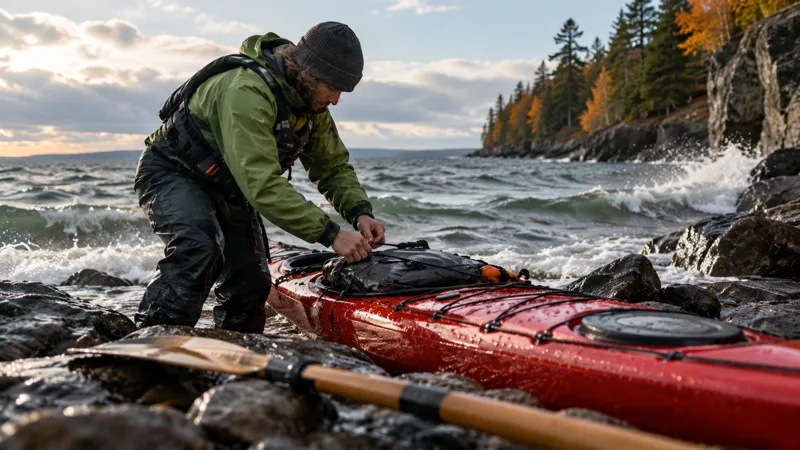
Rough-water education should begin with a clear description of the activity
Rough Water Weekend was listed for October 2–5, 2026, in Cornucopia, WI, USA. Those dates are past as of October 7, 2026, so this is an archived event guide. The original FeralSkills source remains linked for historical reference, but its details could not be independently retrieved during review. The title alone does not establish the type of boat, exact training site, prerequisites, instructor, or exercises. Confirm current arrangements directly with the responsible provider before considering a later opportunity. The discussion below concerns planning questions for water-based education, not a report of what occurred during the recorded weekend.
Rough water is not a single technical category with one simple preparation checklist. A course might involve a particular craft, location, and set of learning conditions that require specific experience and equipment. Before choosing it, ask the provider to describe those conditions plainly. What is the intended starting level? Which skills are prerequisites rather than lessons? What support is available? These questions are especially important when an appealing title makes the activity sound like a general adventure weekend. The decision should rest on documented requirements rather than the confidence created by the event name.
Air comfort does not establish water safety
The National Weather Service's cold-water resources explain that warm air can coexist with hazardous water temperatures and that unexpected immersion can be life-threatening. Its guidance is a reason to take equipment, conditions, and qualified instruction seriously. This article does not provide an immersion response, rescue technique, or medical protocol. Read the official guidance and obtain appropriate practical training for the intended activity. A course decision should recognize that comfortable weather on shore does not independently establish suitable conditions on the water.
Ask the provider how clothing and protective equipment requirements are determined for the specific course. Do not substitute a favorite garment because it worked during a different outing. Describe what you own and seek confirmation of suitability. If individual health circumstances affect participation, discuss them with an appropriate clinician and the course staff in advance. Avoid treating tolerance of discomfort as evidence of safety. Preparation should make learning appropriate for the person and environment, not turn the first session into an experiment with unfamiliar exposure.
Prerequisites deserve an honest conversation
Give the provider a detailed account of your water experience. Explain the craft used, the settings, whether instruction or guidance was present, and how recently you practiced. Strong swimming ability does not answer every question about boat handling, communication, equipment, or changing conditions. Neither does a long history of hiking. Different experiences can support learning without replacing the stated prerequisites. If you are unsure whether a skill meets the requirement, ask for an assessment or a recommended earlier course.
Do not arrive intending to quietly learn a prerequisite while everyone else begins the main activity. That can put pressure on both the student and the group. A provider may recommend another starting point, and that recommendation can be useful rather than disappointing. The right sequence allows attention to be spent on the actual lesson. It also protects the meaning of a course level: a participant should understand which abilities staff expect before instruction begins and which abilities the course is designed to develop.
Inspect personal flotation with knowledgeable help
The U.S. Coast Guard's life jacket guidance emphasizes a serviceable device appropriate to the wearer and activity. Follow its current information, product labels, applicable requirements, and the provider's instructions. Confirm fit and suitability with knowledgeable assistance. Do not infer approval for a specific course from a generic product description. A device that works for one activity or user may have limitations for another. The article cannot inspect your equipment or decide whether it satisfies the course's arrangements.
Check condition and maintenance before travel. Missing labels, damage, or unfamiliar servicing requirements should be resolved early. Ask whether the provider supplies flotation or expects participants to bring it. If borrowing, make sure the item is actually suitable for you rather than simply available. Keep the rest of the equipment discussion equally precise. A correct flotation choice belongs to a broader supervised safety system; it does not make hazardous conditions acceptable by itself or substitute for skills, communication, and responsible decisions.
Equipment checks should be scheduled before the launch
Ask which craft, paddles, protective clothing, signaling equipment, and other items are required or supplied. Obtain the current list rather than reconstructing it from a photograph or old directory entry. Check whether personal equipment must meet particular specifications. Follow manufacturer instructions for maintenance and operation. Avoid modifications intended to solve an imagined problem without consulting the provider or manufacturer. An apparently clever attachment can interfere with the system or create a hazard that is not obvious when the equipment is sitting in a garage.
Prepare ordinary personal items with the same care. Keep dry clothing, necessary personal supplies, and food organized according to the activity's instructions. Understand the limitations of storage products and do not assume every bag labeled water resistant protects submerged contents. Ask how equipment is secured and accessed during training. Follow the instructor's system rather than adopting a separate arrangement from an unrelated video. The preparation goal is a manageable set of known items that the staff can inspect and explain before the group begins.
Forecast information must match the water activity
Ask which official forecasts and observations the provider uses for its decisions. A general land forecast may not answer the same questions as water-specific information. This guide does not set a permissible wind, wave, or temperature threshold. Such decisions depend on the site, craft, participants, and qualified leadership. Learn what information is considered and how a changed plan is communicated. Treat a modified or canceled exercise as a possible example of sound instruction rather than proof that the weekend failed to provide value.
For independent recreation, consult the appropriate authorities and qualified guidance for the actual location. Do not reuse a course's decision merely because the date or general forecast looks similar. Conditions and support can differ in important ways. Keep current access restrictions and notices in view. A familiar place can change, and a successful previous visit is not a standing guarantee. The most transferable lesson is the habit of obtaining relevant information before committing to an activity and recognizing when the information does not support the original intention.
A float plan is written for someone who is not with you
The National Weather Service recommends a float plan as part of cold-water preparation. For a course, follow the provider's actual communication arrangements and ask what information should be shared with your own trusted contact. Do not establish conflicting check-in expectations privately. The contact should understand the itinerary and the agreed response to a missed update. Write in clear terms, explaining unfamiliar place names or abbreviations. A person at home cannot act on information that only makes sense to someone already standing at the launch.
Keep necessary details accessible if a device fails or service is unavailable. Confirm the contact information and finish the communication loop after the activity as agreed. Avoid sending vague messages that leave someone unsure whether a delay is routine or a concern. A clearly labeled practice message can expose confusion before a real outing. This is organizational work rather than a technical rescue procedure. It supports qualified planning by ensuring that important information is understood by the people responsible for using it.
Rescue learning belongs under supervision
If a course includes rescue-related instruction, ask about prerequisites, supervision, equipment, and the safety arrangements used for practice. Do not recreate a demonstration alone or pressure friends to provide an informal training group. A controlled exercise may depend on staff and intervention options that disappear outside the course. Observing it does not establish independent ability. Learn how the provider recommends continuing practice and when further specialist instruction is necessary. Written notes can support memory, but they cannot replace the judgment and feedback supplied by qualified training.
In a real emergency, summon appropriate professional help and follow current official instructions. Avoid turning a general article into a checklist for entering hazardous water. Helping responsibly includes understanding your limitations and not creating an additional casualty. The educational question is how trained people assess and organize the situation, not how quickly a reader can imitate a dramatic maneuver. Keep that boundary clear in conversations after the course, particularly if someone asks you to teach a technique you have only observed or practiced once.
Group communication is part of the equipment system
Ask how instructions, signals, and concerns are communicated during the activity. Wind, distance, and noise can make casual conversation unreliable. Practice the agreed system under staff direction and do not invent alternative signals. A gesture means little if the receiver interprets it differently. Learn how to report a problem early, where questions belong, and what happens when someone needs to stop. These arrangements should be understood before conditions become more demanding, when clarification is harder and divided attention becomes a concern.
Respect the pace and needs of other participants. Do not treat reluctance as weakness or encourage someone to conceal uncertainty. A student who reports a difficulty gives the instructor useful information. A group that rewards silence can miss the same issue until it becomes harder to address. Keep personal ambitions subordinate to the provider's procedures and the shared activity. The value of a rough-water learning opportunity lies partly in making communication more dependable, not merely in completing a challenging exercise or obtaining an impressive photograph.
Carry forward a measured account of the learning
After instruction, record what was practiced, what support was present, and which abilities still need supervised work. Avoid describing attendance as mastery. Review equipment issues precisely before purchasing replacements. Perhaps an item required adjustment, perhaps its placement was inconvenient, or perhaps a different design is appropriate; those are distinct problems. Ask the provider what next training fits your goals. A more demanding event is not automatically the best continuation if a foundational skill still needs attention.
Keep the Cornucopia listing as an archive of October 2–5 and consult the original source and responsible provider for any later event. Because the archived detail page could not be independently retrieved, this guide deliberately avoids naming unverified instructors or exercises. Official National Weather Service cold-water information and Coast Guard flotation guidance provide relevant background. The strongest outcome is a reader who can ask precise questions about conditions, prerequisites, equipment, communication, and supervision before deciding whether a water-based course is an appropriate next step.