
Pennsylvania winter readiness starts with the ordinary workweek
Winter Weather Preparedness Week is recorded in the supplied listing for November 1–6, 2026, in Pennsylvania, USA, with the National Weather Service as its source. Check the official awareness calendar for the current campaign dates and local announcements. This is an awareness-week listing, not evidence of a booked class, a staffed venue, or a registration requirement. The planning discussion here concerns the routines a Pennsylvania household might review before winter affects commuting, school schedules, deliveries, or home services. It does not describe a confirmed program of presentations or promise a particular forecast for that week.
Winter preparedness is often pictured as a pile of supplies beside a fireplace. A more useful first step is following one normal weekday from waking up to returning home. Which parts require electricity, a clear driveway, public transportation, cellular service, or an open childcare facility? What happens if one of those dependencies disappears? The answer may be different for someone working from home, a hospital employee, and a household responsible for an older relative. Build the plan around those actual obligations. An attractive checklist is less helpful than knowing who can change their schedule and who cannot.
Read the forecast for the decisions you must make
The National Weather Service winter safety pages explain that winter storms involve hazards including snow, sleet, freezing rain, and wind-driven low visibility. Use official local forecasts and alerts to understand the conditions relevant to your address and route. A forecast for a nearby city may not capture every problem on a longer commute. Look at timing as well as the headline amount. A modest accumulation arriving during school pickup may disrupt your household more than a larger amount arriving while everyone can remain at home. Translate the forecast into decisions instead of collecting screenshots without an action plan.
Write down the decision you are waiting to make and when it must be made. For example, an appointment might be rescheduled the evening before, while an employer may issue instructions early in the morning. Identify the authoritative source for each decision: the medical office, the school, the transit agency, or the employer. Avoid relying on an unofficial social post about a closure. Keep direct contact details available and check whether automated notices reach everyone who needs them. Forecast literacy and institutional communication should support each other rather than compete for attention.
The commute audit
Review the trip you actually take, including bridges, steep access roads, parking areas, and the final walk from the vehicle or transit stop. This is an observation exercise, not a prediction that one feature will always be unsafe. Ask what alternatives are realistically available and who can authorize a change in plans. A route that looks shorter on a navigation app may be poorly suited to conditions. Follow transportation authorities, road closures, and travel advisories. When delaying a trip is possible, give that option serious consideration before trying to solve every weather problem with equipment.
Maintain the vehicle according to manufacturer guidance and seek professional help for tires, brakes, batteries, or other concerns. Keep needed emergency supplies accessible, including suitable clothing and a way to communicate. Review what each regular passenger needs during an unexpected delay. A child, a person with limited mobility, or a pet may change the practical requirements. Do not put loose equipment where it can interfere with vehicle controls. Preparedness includes ordinary maintenance and packing discipline, not just adding a large bag to the trunk and forgetting about it until spring.
A household outage map
Draw a simple list of functions rather than an electrical diagram: heating, lighting, food storage, water access, cooking, communication, and medical equipment. Identify which require powered systems and which have a safe alternative already approved for your situation. Do not experiment with an improvised heat source or wiring arrangement. Consult the appliance manufacturer, utility, landlord, or qualified technician when a backup arrangement is unclear. An outage plan should explain what to do safely within the limitations of the building. It should not assume that owning a generator automatically makes an installation suitable.
Pay special attention to the time it takes to change arrangements. Contacting a relative about temporary lodging, arranging accessible transport, or obtaining advice about powered medical equipment may become harder after weather worsens. Work through those dependencies before the storm season. Ask the appropriate clinician or equipment supplier about continuity needs; this article cannot set medical device operating plans. Identify who is responsible for checking on the person affected. A written plan with agreed roles can reduce repeated calls and conflicting assumptions when a household is already tired or stressed.
Heating decisions deserve professional guidance
Have regular heating maintenance completed as appropriate for your system and property. Learn which warning signs the manufacturer or service provider says require stopping use or calling for assistance. Verify smoke and carbon monoxide alarms according to their instructions and applicable local requirements. Fuel-burning equipment requires particular care. Follow official guidance and product instructions for generator placement and operation; never use an outdoor combustion device indoors or in an enclosed space. Avoid treating a cracked window as a substitute for a safe installation. This short overview is a prompt to obtain the complete instructions before equipment is needed.
For renters, ask the landlord how heating failures are reported and what emergency contact applies outside office hours. For homeowners, store the service provider's number somewhere accessible without a powered computer. Discuss the point at which the household would relocate rather than remain in a building with inadequate conditions. Individual health needs matter, so obtain relevant professional advice. The purpose of planning is to prevent an avoidable situation from becoming a test of endurance. Remaining stubbornly at home is not an achievement if a safer, workable arrangement is available.
Food, water, and a realistic kitchen routine
Review foods the household already uses and can prepare safely under its planned circumstances. Label storage clearly and rotate supplies through normal meals so that unfamiliar products do not accumulate untouched. Keep the equipment needed to open packages with the food. Think about allergies, texture needs, and dietary requirements. A household may have adequate calories but still lack something a particular person can eat. Ask what preparation requires cooking, refrigeration, or clean water and consult official food safety guidance for outages. Do not use appearance or smell as the sole basis for deciding whether food is safe.
Water planning should account for how the building receives water and whether powered equipment is involved. Discuss household needs and consult local emergency management for recommended storage. Use appropriate containers and maintenance instructions. Keep drinking supplies distinct from water reserved for other purposes so nobody has to guess. If a public water advisory occurs, follow the water provider's current directions for that specific advisory. A treatment method appropriate for one problem may not address another. The awareness week can help you identify these questions while services are working normally.
The doorstep matters as much as the highway
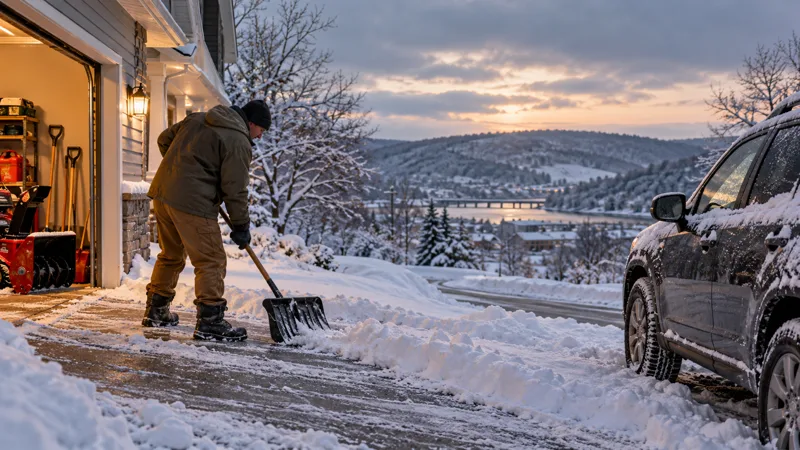
Look at the ordinary path between the home and the outside world: steps, ramps, handrails, exterior lighting, and the area where deliveries arrive. Ask who will keep that path usable and what happens when that person is away or unable to help. Arrange services early if needed. Use snow and ice management products according to instructions and property rules. Respect accessibility needs rather than clearing only a narrow route that works for one agile adult. A dependable entrance can support visitors, carers, deliveries, and emergency responders as well as the household itself.
Do not turn snow removal into an unplanned physical challenge. People with health concerns should seek advice about safe exertion and suitable help. Equipment should be maintained and operated according to its manual. Discuss where cleared snow can go without obstructing drainage, access, or visibility. Keep children and pets away from machinery and hazardous work areas. This part of winter planning is often overlooked because it seems familiar, yet the daily chores are where a rushed household may make preventable mistakes. Schedule time and assistance instead of assuming someone will manage it at the last moment.
School, caregiving, and work handoffs
Write a closure-day plan that includes pickup authorization, backup care, and the person responsible for confirming the latest announcement. Make sure the adults involved agree. A backup contact who has not accepted the responsibility is not a reliable plan. For home care or essential appointments, ask providers about weather disruption procedures. Record which visits can move remotely and which require another arrangement. Protect sensitive details in written copies. The household should be able to share the information necessary for care without exposing an entire medical history to casual readers.
An employer's expectations may also need clarification before severe weather. Find out how absence, remote work, delayed arrival, or shift coverage is handled. Keep personal safety decisions aligned with official restrictions and responsible supervision. Do not assume that a coworker will cover a shift without speaking to them. Where a family has two inflexible schedules, discuss the conflict early and seek practical support. These conversations may feel less exciting than buying winter equipment, but they address the most likely reasons a household might feel pressured into a poorly timed trip.
Review one disruption at a time
Choose a modest scenario for a household discussion: an evening outage, a delayed school opening, or a canceled grocery delivery. Trace what each person would do during the first hour and what information they need. Keep the exercise conversational. Note the missing phone number, inaccessible flashlight, or unclear responsibility. Assign those corrections and finish them. Then try a different scenario another day. Small exercises are easier to repeat and often reveal more useful details than an ambitious simulation that nobody has the time or energy to complete.
Use the Pennsylvania awareness listing as a calendar reminder to make these improvements before winter routines become difficult. Revisit the plan after the first real disruption and ask what actually worked. Keep useful practices, revise assumptions that failed, and replenish supplies that were consumed. Official National Weather Service winter resources provide the weather background; local agencies, utilities, employers, schools, and qualified professionals provide the instructions specific to your circumstances. The outcome is not a promise of uninterrupted life. It is a household that can adjust its ordinary responsibilities with fewer surprises when weather changes the week.