
Archived event: These dates have passed as of October 7, 2026. This page retains the original listing for reference; consult the provider for later offerings.
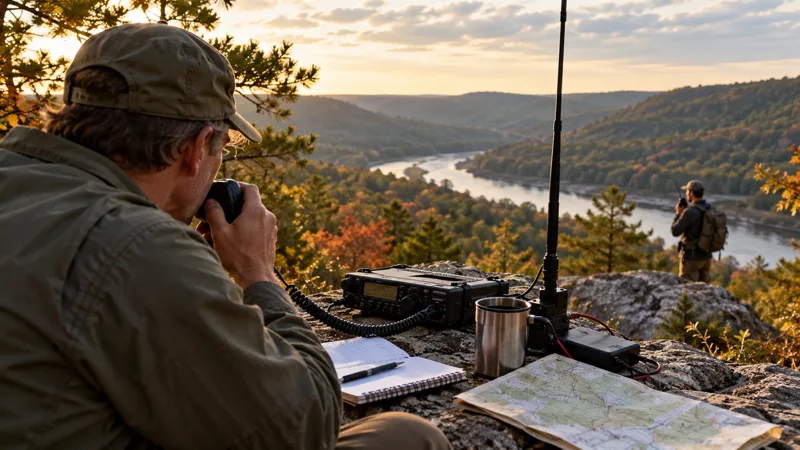
Field Radio Operations was listed for 2026-09-12 to 2026-09-13 in Pennsylvania, USA.
This is an archived event listing. These dates have passed; do not use this page as confirmation of a future edition.
Event details
- Dates: 2026-09-12 to 2026-09-13
- Location: Pennsylvania, USA
- Type: COMMUNICATIONS
View the event source and registration information
Make the communication problem specific
The September 12–13, 2026 Field Radio Operations listing is archived. Its Pennsylvania date and source link remain useful historical information, but they are not an invitation to register for a date that has already passed. The directory identifies Coalcracker Bushcraft as the provider, and the linked provider page is the appropriate place to ask about another offering. This independent guide focuses on preparing for supervised radio learning. It does not provide permission to transmit, select a radio service for you, or establish the legal requirements of a particular device. Those questions require the relevant regulator's current rules.
Begin with a communication scenario rather than a shopping list. Perhaps several people need to coordinate at an approved outdoor venue, or a household wants to understand alternatives when ordinary phone service is unavailable. Identify who is communicating, what information they need, and what circumstances prevent them from using their usual method. This description is more useful to an instructor than saying you want the radio with the greatest advertised range. It also prevents a device purchase from becoming a substitute for a plan. A radio matters when people can operate it lawfully and understand what the other person needs.
Write a message before studying the equipment
A clear message contains a purpose, the relevant facts, and a request or next action. Practice this on paper using a harmless exercise. For example, a participant can describe where the group intends to meet, when to check in, and how to acknowledge receipt. Avoid real medical details, private addresses, or sensitive information in an open practice scenario. The point is to see whether another person can understand the message without repeatedly asking for missing context. If the written version is confusing, changing hardware will not solve that problem.
Read the message aloud slowly and have a partner summarize it. You may discover that your location description relies on a landmark only you recognize, or that a time lacks a date or timezone. Clarify those elements in the written exercise. When attending a class, ask how its instructors organize messages and confirm understanding. Follow the school's actual procedures during practice rather than imposing something you invented at home. Communication is a shared activity; its quality depends on consistent expectations across the group, not just the confidence of the person holding the microphone.
Distinguish familiarity from authorization
A person can know how a control works without being authorized to use it in every setting. Radio services, equipment restrictions, licensing, and identification requirements vary. Before purchasing or operating equipment, review the current guidance from the relevant regulator and ask a qualified instructor to explain the service involved. In the United States, the Federal Communications Commission is the starting authority for this research. Do not infer legality from a seller's description, a menu option, or another person's willingness to transmit. An educational event should clarify lawful use rather than normalize improvising outside applicable rules.
Ask the provider which equipment is supplied and whether students need credentials or preparation before any transmitting exercise. The archived directory describes equipment used during instruction, but arrangements for a future class may differ. If you own a radio, describe its model and ask whether bringing it is useful. Avoid arriving with a collection of newly programmed channels you do not understand. A classroom is a better place to ask about an unfamiliar setting than a field exercise where others may assume the equipment has already been checked. Be explicit about what you have and have not learned.
Build a control map that you can explain
An unfamiliar device can hide ordinary functions behind buttons, combinations, and menu labels. Under appropriate supervision, identify the controls necessary for the lesson and make a simple map of them. Include how to recognize the current operating state and how to avoid an accidental action. Use the manufacturer's documentation for your exact model. A video about a similar-looking radio may describe different behavior. Your notes should connect a function with a purpose rather than merely listing a button sequence. That connection makes the information easier to recall when the screen or arrangement changes.
Keep this control map compact enough to review quickly. A dense page copied from a manual may appear complete but offer little help during practice. Ask an instructor which information belongs on a quick reference and which belongs in the full documentation. Label the notes with the device model and date. If an instructor changes a setting, record why it changed and whether you should leave it that way afterward. This is especially important when using borrowed equipment. You want to return it in the expected condition and avoid carrying a class-specific arrangement into an unrelated setting.
Plan for people who hear differently
Clear communication considers the listener as well as the speaker. Ask participants whether hearing, language, or accessibility needs should shape a supervised exercise. A message might be technically audible yet difficult to understand because of vocabulary, pace, or surrounding activity. Agree on plain language for the practice task and avoid unnecessary shorthand. If someone does not understand, repeat or clarify according to the instructor's procedure. Treat that request as part of the exercise, not a sign that the person is slowing everyone down. A plan that excludes a participant is incomplete even when the hardware works perfectly.
Document agreements in a format people can actually use. Large-print notes, a simple contact card, or an accessible digital copy may be appropriate depending on the group. Confirm that every person recognizes the intended meeting point and the meaning of a successful check-in. Ask what happens if one participant never receives the instruction. This question often reveals that the plan relies too heavily on a single message reaching everyone. The purpose of training is to uncover such gaps in a controlled setting, where they can be discussed calmly before anyone depends on the system.
Terrain lessons should become observations, not promises
Outdoor radio demonstrations may show that communication changes as people move. Record the conditions you observed and let the instructor explain the relevant factors. Avoid translating one successful exercise into a guaranteed distance for future use. Terrain, equipment, operating arrangements, and other circumstances can differ substantially. Your notes should say where the exercise took place, how the group was organized, and what uncertainty remained. A realistic record of a limited demonstration is more valuable than an impressive range claim that no one can reproduce when circumstances change.
When preparing questions, ask how an instructor verifies a communication plan before relying on it. Ask which assumptions need testing and what backup arrangements the group should consider. The answers may focus on people and procedures as much as equipment. A missed check-in, for example, requires an agreed response rather than a last-minute debate. During the actual class, follow its movement boundaries and supervision. Do not wander farther away to test a device on your own. A radio exercise is still an outdoor activity with navigation, access, and group-management requirements.
Power and storage are part of the system
A useful equipment review includes the items between sessions: chargers, compatible power supplies, storage protection, and the way the device is carried. Ask the provider what should arrive charged and what charging facilities are actually available. Do not assume a venue offers an outlet whenever you need one. Use only suitable equipment according to the manufacturer. If you bring spare components, label them and keep them organized. Confusion between similar-looking parts can turn a straightforward task into a frustrating search, especially when several participants share a work area.
Consider how you will maintain the system after class. A device that lives in a drawer without a planned check routine may not be ready when you finally want it. Set a modest review interval based on the manufacturer's guidance and your intended use. Inspect the condition of components, review documentation, and confirm that group contact information remains current. These routines need not involve transmitting. They are opportunities to discover missing accessories and forgotten controls while time is available. Readiness includes being able to locate the appropriate documentation as well as the physical device.
Treat a practice log as an experiment record
For each supervised exercise, note the question being tested, what happened, and what you would change next time. “Could the other participant repeat the meeting instruction correctly?” is a clearer question than “Did the radios work?” The broad version hides important differences between equipment function and communication success. Record any assumption that was wrong. Maybe two people used different names for the same meeting area, or one missed the instruction while doing another task. Those are useful findings. A practice log should explain why the exercise mattered rather than celebrate contact for its own sake.
Include a column for unresolved questions. Some can be answered from the manual; others require the instructor or the regulator. Resist the temptation to fill the gaps with advice from an anonymous discussion when the answer affects legal operation or important equipment behavior. Bring the log to your next training conversation. It gives an instructor a precise place to begin and demonstrates the limits of your current knowledge. Over time, the entries can show genuine progress: clearer messages, better preparation, fewer assumptions, and a more reliable method for confirming that information has been understood.
Use the lesson without depending on one technology
After a course, write a group communication plan that identifies the ordinary method, the alternate arrangement, and the action when neither works. Keep it appropriate to the activity and the people involved. A radio may play a role, but it should not make basic itinerary sharing, meeting instructions, or emergency contacts disappear. Avoid treating a training certificate or a purchased device as proof that every communication problem is solved. Ask the provider what additional study fits your goal and which aspects remain outside the class's scope. Continued learning should follow a real need.
The archived Field Radio Operations entry remains distinct from the broader advice on this page. Its original dates and location are historical facts, while the editorial sections offer questions for future lawful training. Your most useful outcome is a clearer understanding of the whole exchange: who speaks, what they say, who receives it, how understanding is checked, and what happens when the exchange fails. Equipment can support that structure. It cannot replace it. A carefully prepared learner arrives with a meaningful scenario, leaves with honest limits, and practices communication as a shared responsibility rather than a collection of settings.