
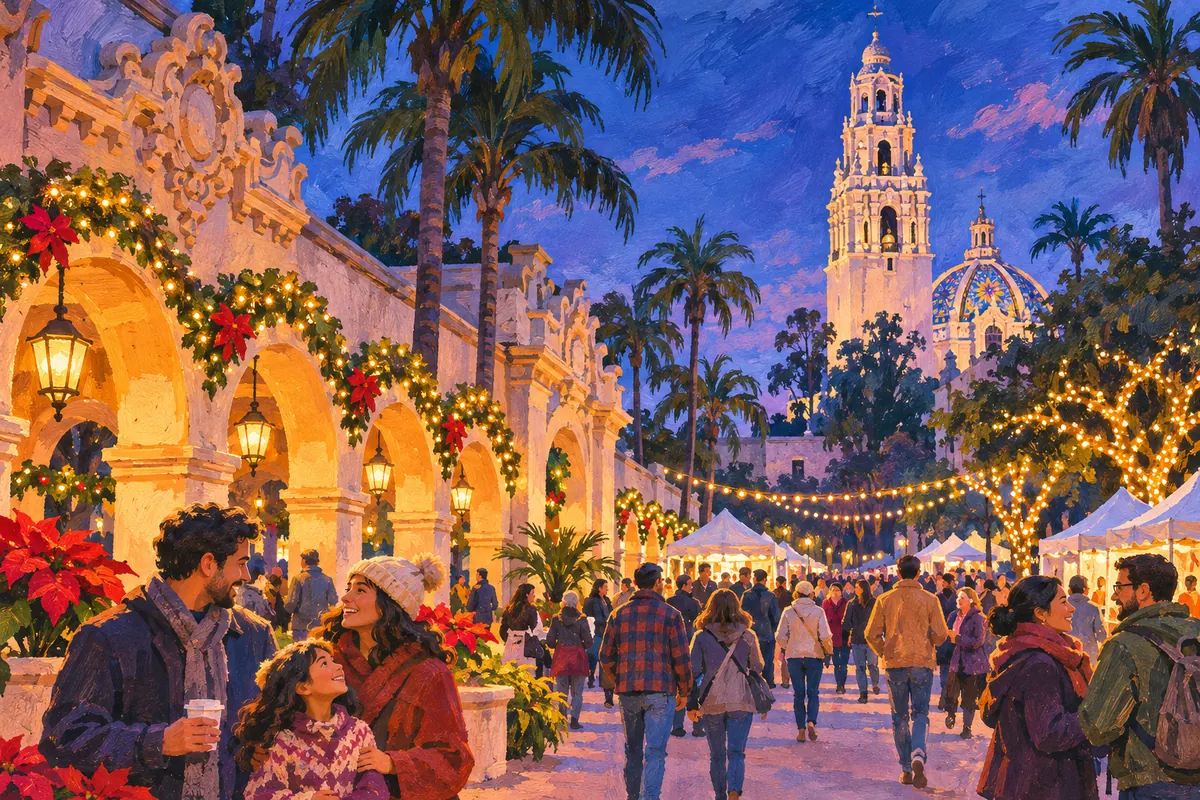
Choose Friday evening or Saturday afternoon
The City of San Diego schedules Balboa Park December Nights for Friday, December 4, 2026, from 4 to 10 p.m. and Saturday, December 5, from noon to 10 p.m. The city describes the festival itself as free. Food, merchandise, and separate attractions can have their own charges or hours. Use the city’s December Nights page for the latest entertainment, map, and getting-there information. Look for the current year on maps and schedules, especially if a search result links to the previous festival.
Friday gives you an evening visit from the start. Saturday gives you a choice between seeing the park in daylight and arriving later for the lights. With children or a visitor who wants fewer surprises along the walking route, the Saturday afternoon window may be easier to plan. If you mainly want to see the park after dark, arrive with time to settle in before dusk and decide how much of the evening you are comfortable spending in the busiest sections.
Use the event map to choose an entry and an exit
Balboa Park is large enough that a generic destination pin can leave you on the wrong side of the festival for your first activity. Open the city’s current map and select a recognizable entrance, then check where it puts you relative to the first stop. Put the exit and pickup route on the same map. It can make sense to leave from a different part of the park, especially if you have walked across several activity areas and your ride is flexible about where to collect you.
Keep a short route and a longer route in mind. For a short route, choose one performance or food stop and spend the rest of the time walking the nearby decorated buildings. On a longer visit, cross the main festival area once and work toward the way out. Avoid scheduling stops at opposite ends of the event close together. A large crowd can make a short distance take much longer than it did during an ordinary visit to the park.
Check transportation for the festival date
Use the city’s Getting There section for parking, shuttle, or access details published for the event. If using transit, verify your own route and return service with San Diego Metropolitan Transit System. Check the actual stop and evening schedule. A return ride after a late performance may have a different connection from the one you used to arrive. If you need an accessible drop-off or shuttle, look up the location and conditions before deciding on an arrival time.
If you plan to drive, save the address and approach for parking rather than directing everyone to the center of Balboa Park. Note a backup option and how long it takes to walk from there. If the group is using two cars, agree on a park landmark after arrival so each driver can use a different lot. A rideshare pickup plan should include a permitted location outside congested approaches and a way for each person to get there comfortably.
Holiday products for this trip
As an Amazon Associate, Survival Scout earns from qualifying purchases. Check specifications and suitability for your trip before buying.
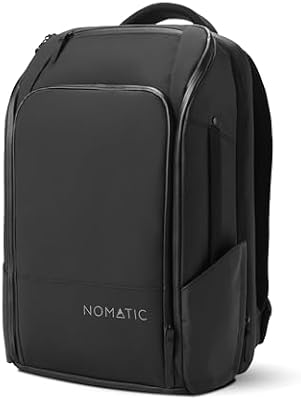



Product prices and availability are accurate as of the last refresh and are subject to change. Any price and availability information displayed on Amazon.com at the time of purchase will apply to the purchase of this product.
Build the visit around one activity
When the city publishes the current entertainment lineup, pick one performance as the centerpiece. Write down the stage name and how it fits into your walking route. Allow extra time if you want a seated break or a close view. If the stage area is full, make a second nearby activity your backup. Treat a program that sends you across the park during peak crowding as optional unless it is the main reason for your visit.
If food is the priority, make your decision early enough to avoid splitting the whole group between long lines. Ask vendors directly about ingredients and food handling where allergies are involved. Carry a familiar snack for children or for anyone who may have limited choices. Plan for how you will manage a plate and a drink while moving through a crowd, or choose a quieter spot to stop. If your group needs a seated meal, consider scheduling one before or after the festival.
Pack for daylight, dusk, and the walk back
Check the forecast for Balboa Park during your visit, including the time you expect to leave. Bring an outer layer you can carry easily if Saturday afternoon is warm and the return walk is cooler. Choose shoes for several hours on paved paths. A compact bag is easier to keep close when you turn or stop in a dense crowd. Before packing a stroller, chair, or bulky camera accessory, check the city’s Know Before You Go information for current event policies.
Save the event map, your transportation details, and the address of your first meeting point. A screenshot can be quicker to open than a webpage while walking. Keep your phone charged and carry a small charger if you expect heavy use for photos and directions. Pack water and any essentials for children within easy reach. If you expect to carry purchases, take a bag you can fold into your daypack and buy larger items near the end of the visit.
Make a shorter loop for mixed ages and mobility
With children, let each child pick one thing to see, such as a light display, a performance, or a decorated building. Keep the first part of the walk short and easy to reverse. Identify a meetup point by a visible building or entrance instead of a movable vendor stall. Decide which adult is with which child before you enter a crowd and take a pause to regroup somewhere that leaves room for people to pass. Pick a shorter route if the group is tiring.
For a visitor who uses a wheelchair or walker, look at the route for ramps, gradients, curb transitions, and surfaces. Consider how much of the visit may involve standing or moving slowly without a place to sit. The daylight window can make it easier to assess the approach and find a rest stop. Confirm the accessible transportation option and route to the departure point separately. If a museum or attraction is part of the outing, check its specific entry arrangements and festival hours.
Plan photos around the park setting
The park’s architecture gives you something to photograph even when a crowded activity area is hard to reach. Look for a place on the edge of a walkway where a wide photo can show the building, the lights, and the people enjoying the event. Get your group out of the pedestrian flow before taking a portrait. If the area is too busy to stop, keep walking and make the photo on a calmer block or earlier in the visit.
Think about how the picture will fit into your itinerary. Photograph exterior details during daylight if that helps you avoid a second walk through the same area. Save one evening photo for a place you already know has room to stand. If you are carrying a dedicated camera, bring only the gear you can use while staying aware of your group and people passing nearby. Confirm any rules on tripods or bulky equipment with the city’s visitor information.
Choose one of two simple itineraries
Friday lights visit: Arrive with enough time to walk from transportation to your first stop. See one performance or food area and take a short route past decorated buildings. Decide on a departure time while you still have a clear view of how crowded the exit route is. Leave the far end of the park for another visit if going there adds too much walking or a second trip through the busiest area.
Saturday daylight visit: Use the early hours to get oriented, find a warm or seated break if needed, and see the part of the park your group is most interested in. Stay through dusk if everyone is comfortable. Leave earlier if it helps you meet a dinner reservation or catch a convenient ride. Keep the final part of the outing near the exit that fits your transportation so you can avoid crossing the festival again.
Confirm the details before heading to Balboa Park
Check the city’s current hours, map, transport information, and stage schedule before leaving. Give everyone the first stop, the meetup point, and the planned return route. If you are meeting people from across the city, tell them which entrance you are using and what time you expect to be there. Choose a backup route in case your first option is crowded or closed. An organized arrival, a manageable walking loop, and a clear way home leave more time to enjoy the festival.
Plan a second park visit around what you missed
If you have another day in San Diego, separate the parts of Balboa Park you want to explore slowly from your festival evening. Look up the ordinary hours for the museum, garden, or building you want to visit, and check its admission separately. A second visit gives you time to walk the grounds in daylight without rushing between stages or food stalls. It also keeps the festival plan short enough for children and for visitors who may enjoy the park more when they can choose their own pace.